Dedicated to Justice.
Devoted to You.
Winning for Your Future.
Devoted to You.
Winning for Your Future.


At Vahdat Weisman Law, we guide clients through every step following a car accident, from immediate safety to the final resolution of your claims, because the choices you make in the first hours and days after a collision can shape the outcome of your medical recovery and your case. Our firm is based in Livonia, Michigan, and we represent clients throughout Michigan and across the United States. This is our up-to-date, three-step guide on what to do after a motor vehicle collision, along with other information to help you prepare for what comes next.
If you are in a car accident, move to a safe location if you can do so without risking further harm, turn on your hazard lights, and call 911 to report the crash. Michigan law requires drivers to report accidents involving injury, death, or significant property damage, and prompt reporting helps emergency responders reach you quickly. Wait for law enforcement to arrive, and provide honest, concise information. Do not speculate about fault, do not apologize, and do not make statements beyond the facts you observed. The officer will prepare an official crash report that serves as important evidence in insurance claims and any future litigation.
Even if you feel okay at the scene, see a medical professional as soon as possible after an accident, because adrenaline can mask symptoms of concussion, internal injury, or soft tissue damage. Tell your provider exactly what happened, where you feel pain, and whether you lost consciousness, felt dizzy, or experienced tingling, numbness, or weakness. Follow all medical advice, attend follow-up appointments, and keep copies of all records, including diagnoses, imaging, prescriptions, referrals, and bills. A clear medical timeline protects your health and also strengthens the connection between the collision and your injuries.
If it is safe, take wide-angle and close-up photographs and video of all vehicles, license plates, skid marks, debris, fluid stains, traffic signals, road conditions, and any visible injuries. Capture the surroundings from multiple perspectives, including each driver’s vantage point just before impact. Ask witnesses to share their names, phone numbers, and brief statements. Exchange information with the other driver, including name, address, phone number, driver’s license number, vehicle identification number, license plate, and insurance details. If a commercial vehicle is involved, record the company name displayed on the truck, the USDOT number, and any identifying unit numbers on the cab or trailer. Preserve dashcam footage if available. Finally, avoid posting about the accident on social media, because public posts can be taken out of context and used against you.
Under Michigan’s no-fault system, most injured people first seek Personal Injury Protection benefits, commonly called PIP, from their own insurer or, if uninsured, from the appropriate insurer under Michigan’s priority rules. PIP can cover reasonable and necessary medical expenses, a portion of lost wages for a defined period, household replacement services, and mileage to medical appointments.
Following recent reforms, drivers may have different PIP medical coverage limits, such as unlimited or capped amounts, and choices made at the time you purchase your policy can impact what benefits are available. You generally must submit a written application for no-fault benefits to the proper insurer within a short timeframe, and the failure to give timely notice can jeopardize benefits. Michigan law also has a one-year-back rule that can limit recovery of PIP benefits to expenses incurred within one year before filing suit, which makes prompt action essential.
When another driver is at fault, you may also bring a third-party negligence claim against that driver for noneconomic damages like pain and suffering and for certain excess economic losses not covered by PIP. Michigan law requires proof that you suffered a serious impairment of body function, which means an impairment that is objectively manifested, affects an important body function, and impacts your general ability to lead your normal life. Evidence that demonstrates the nature and extent of your limitations, such as physician reports, diagnostic imaging, work restrictions, and testimony from family or coworkers, is often critical to meeting this threshold. There are strict time limits for filing negligence lawsuits arising out of motor vehicle collisions, so early legal evaluation is important to preserve your rights.
Michigan follows a “comparative fault” system, which means your percentage of fault may reduce your compensation. In fact, in some circumstances, your ability to recover certain damages can even be barred if your percentage of fault exceeds 50%. Insurance companies often try to assign a larger share of blame to injured people to limit their payouts. Thorough investigation, including obtaining the police report, electronic data recorder downloads, surveillance videos, witness statements, and expert analysis of vehicle damage and roadway evidence, helps counter unfair fault allocations and protects the recovery you deserve.
Your vehicle damage is typically handled under property-damage coverage, collision coverage, or the at-fault driver’s property protection insurance, where applicable. Michigan’s mini-tort law allows you, in some situations, to recover a limited amount from the at-fault driver for vehicle damage not covered by your own insurance, which is often used to help with deductibles. Keep all repair estimates, photographs, towing bills, and rental agreements. If your car is a total loss, gather the title, lienholder information, and documentation of recent maintenance or upgrades that could affect valuation.
If the at-fault driver has no insurance or too little insurance to cover your losses, uninsured motorist and underinsured motorist coverages, often abbreviated to UM and UIM, can be vital. These are contractual coverages with your insurer, and they come with notice requirements and policy conditions that must be followed carefully. Provide prompt notice of potential UM or UIM claims, cooperate with reasonable requests, and avoid giving recorded statements before speaking with counsel. Settlement with the at-fault driver without your insurer’s consent can jeopardize UM or UIM benefits, so you must retain an experienced attorney early.
Hit-and-run crashes require immediate reporting to law enforcement and your insurer, and UM coverage may apply. Commercial trucking collisions involve federal and state regulations on driver qualifications, hours of service, maintenance, and cargo securement, which means evidence such as driver logs, electronic logging device data, and maintenance records must be preserved promptly. Claims involving government vehicles may be subject to strict notice requirements with short deadlines, so you mustn’t delay in contacting counsel. Rideshare incidents involving services like Uber or Lyft may involve layered insurance policies that apply differently depending on whether the driver is offline, waiting for a ride request, or transporting a passenger, and early clarification of the trip status is essential to identify all available coverage.
Above, we discussed several things you should do after a motor vehicle collision. Here are some things you should not do:
Start a dedicated file as soon as you get home. Include the claim numbers, insurance adjuster contact information, the police report number, all medical records and bills, prescriptions and receipts, wage-loss documentation, repair estimates, photographs, and correspondence. Keep a daily recovery journal that describes pain levels, sleep disruption, limitations in activities of daily living, missed work, and emotional impacts. This journal serves as a contemporaneous record that can be persuasive in explaining the real-world effects of injuries on your life. If your job requires physical tasks you cannot perform, ask your employer for a written light-duty or off-work note and keep copies of pay stubs showing your wage loss.
Report the claim to your insurer promptly, provide accurate information, and meet reasonable deadlines. But you need to keep in mind that insurance companies are businesses that care about their bottom line. Be careful with broad medical authorizations. You are not required to discuss the details of your injuries with the at-fault driver’s insurer, and you do not need to accept the first settlement offer you receive. Before you sign a release, understand that it is final. Once you settle and sign, you cannot reopen the claim if you later discover additional injuries. Our attorneys handle communications with insurers to protect your interests, negotiate from a position of strength, and, when necessary, prepare your case for trial.
Car accident cases carry multiple deadlines. There are prompt notice requirements for PIP benefits, contractual deadlines under your policy, and a statute of limitations for negligence claims. If a governmental entity is involved, special notice provisions may apply and require you to provide notice in as little as 60 days. Waiting to speak with an attorney can cause evidence to disappear, surveillance footage to be overwritten, and witnesses to become harder to locate. Early counsel enables immediate preservation letters, prompt evidence collection, and timely filings, keeping every avenue of recovery open.
We move quickly to secure the crash report, scene photographs, 911 audio, bodycam files where available, and electronic data from vehicles. We identify and interview witnesses, canvass nearby businesses for camera footage, and work with accident reconstruction experts when needed. We coordinate with your medical providers to obtain complete records, document future care needs and costs, and develop proof of lost wages and diminished earning capacity. When appropriate, we consult vocational experts and life care planners to present the full picture of your losses. Our trial readiness helps drive fair settlements, and if an insurer refuses to be reasonable, we are prepared to present your case to a jury.
You probably have questions. Our clients have probably had the same ones.
Do I need a lawyer if the insurance company seems cooperative?
Cooperation does not equal fairness. A courteous adjuster may still undervalue pain and suffering, minimize future medical care, or overlook wage loss. Having counsel levels the playing field and ensures you pursue every category of damages available to you.
How much is my case worth?
The value of your case depends on liability, the severity and duration of your injuries, the effect on your daily life, wage loss, future care, and available insurance. We evaluate your medical records, long-term prognosis, and evidence of fault to provide a realistic range and a plan to maximize your recovery.
Should I use my health insurance?
In many cases, you should, especially for coordinated policies or when PIP limits may be reached. We help you navigate coordination of benefits, subrogation, and lien issues to protect your net recovery.
What if I was partially at fault?
You may still recover damages, but your percentage of fault may reduce them. And if you are more than 50% at fault, a portion of your recovery could be completely jeopardized. A thorough investigation is essential to allocate responsibility fairly.
What if I were a passenger?
Passengers often have strong claims, and multiple policies may apply, including the vehicle owner’s policy, the at-fault driver’s policy, and your own UM or UIM policy.
A successful claim may include PIP benefits for medical care and wage loss, non-economic damages for pain and suffering in a third-party action, excess economic losses such as future medical expenses beyond PIP, property damage, and mini-tort recovery where applicable, and UM or UIM benefits in uninsured or underinsured scenarios. Our role is to identify every available path to recovery, comply with all notices and deadlines, present clear medical and economic proof of your losses and each wrongdoer’s liability, and advocate for you at each step.
If you or a loved one has been injured in a car accident, contact Vahdat Weisman Law at (734) 469-4994 for a free consultation. From our office in Livonia, Michigan, we serve clients throughout Michigan and across the country. We will listen to your story, explain your rights, and take immediate steps to protect your claims. There is no upfront fee when you hire us, and we only get paid if we recover compensation for you. The sooner you call, the sooner we can begin preserving evidence and building the strongest possible case on your behalf.
Disclaimer: This information is for educational purposes only and does not constitute legal advice. Every case is unique, and prior results do not guarantee future success.


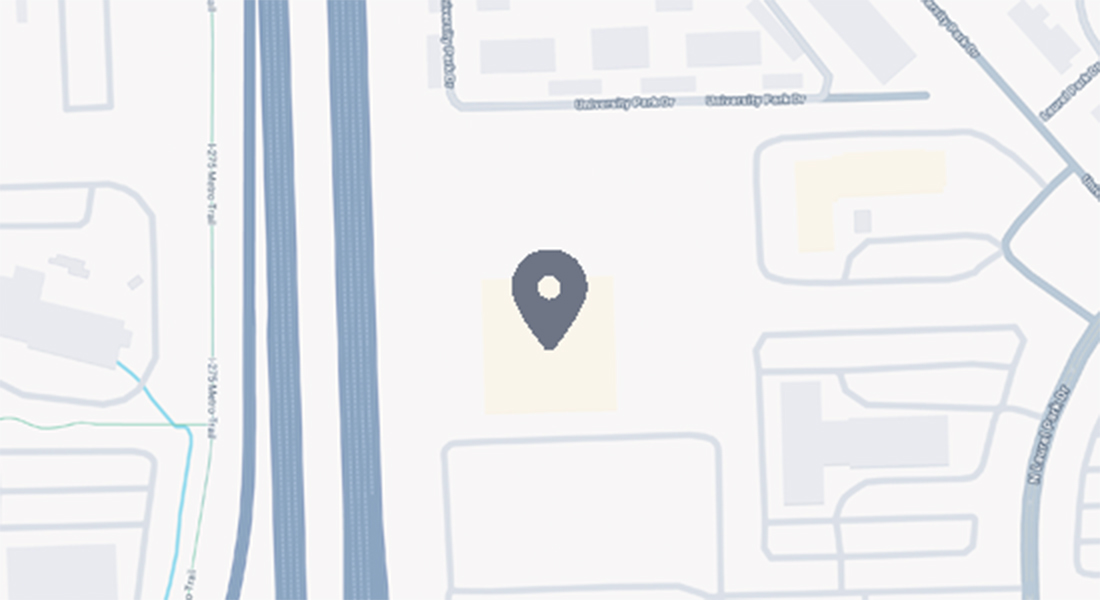
Fighting for injury victims across Michigan, proudly serving clients statewide from our office in Livonia.