Dedicated to Justice.
Devoted to You.
Winning for Your Future.
Devoted to You.
Winning for Your Future.


You hit something you never saw, and now there is a hospital bill, a wrecked car, and a government agency on the other side. A claim is possible, but the clock started the day you were hurt.
The Michigan Department of Transportation tells the public on its own damage claim page that “the majority of damage claims are denied under governmental immunity laws, MCL 691.1402 and MCL 691.1403.”
That is accurate. Governmental agencies in Michigan are immune from tort liability unless a claim fits a statutory exception, and the highway exception is written narrowly. These claims are won, but on details decided long before anyone talks about a settlement.
Vahdat Weisman Law auto accident attorneys handle serious injury claims arising from pothole and road defect crashes across Michigan. Call (734) 469-4994 for a free consultation. No attorney fee unless we recover for you.
Written notice is “a condition to any recovery for injuries sustained by reason of any defective highway,” and you must serve it on the governmental agency within 120 days of the injury, specifying the exact location and nature of the defect, the injury sustained, and the names of any known witnesses (MCL 691.1404(1)). If that deadline passes, the rest of the case does not matter.
The 120 days applies to county road commissions too, and a great deal of published material still says otherwise. For several years after a 2016 Court of Appeals decision, county road commission claims were treated as governed by a 60-day notice provision in the county road law. The Michigan Supreme Court ended that, holding the earlier decision was wrongly decided and that MCL 691.1404’s 120-day provision governs (Estate of Pearce v Eaton County Road Commission, 507 Mich 183 (2021)). If you have read that Michigan gives you 60 days for a county road, that page is out of date.
Subsection (3) provides longer periods in two situations: a person under 18 has 180 days from the injury, and a person physically or mentally incapable of giving notice has 180 days after that incapacity ends.
Where the State is the defendant, the notice goes to the clerk of the Court of Claims, and filing it there constitutes compliance with MCL 600.6431, the general notice statute for claims against the state (MCL 691.1404(2)).
Michigan courts enforce the 120 days strictly. The Supreme Court rejected a judicially created exception for cases where the agency suffered no prejudice, and applied the statute as written (Rowland .v. Washtenaw County Road Commission, 477 Mic.h 197 (2007)). Even where notice is timely, courts also look at whether its content reasonably apprised the agency of the claim.
The lawsuit itself carries a two-year limitations period under MCL 691.1411(2), not the three years that applies to ordinary Michigan injury claims. Serving notice does not extend it, and meeting one deadline does not meet the other.
Notice served on the wrong agency does not preserve your claim against the right one.
MDOT maintains state trunklines, the routes carrying I, US, and M designations, roughly eight percent of Michigan’s public road mileage. County road agencies control about 89,600 route miles, the large majority of the state’s roads. Cities and villages maintain the streets inside their boundaries, and a municipal corporation has no duty to repair or maintain county or state highways running through it (MCL 691.1402(2)).
Route markers are a reasonable first indication, not a conclusive one, and jurisdiction can change at a boundary that is invisible from the road. For Southeast Michigan, MDOT directs the public to the SEMCOG road jurisdiction map; elsewhere, the county road commission or municipal engineering department can confirm. We verify jurisdiction from agency records.
The agency with jurisdiction must “maintain the highway in reasonable repair so that it is reasonably safe and convenient for public travel,” but that duty extends only to “the improved portion of the highway designed for vehicular travel,” and expressly excludes sidewalks, trailways, crosswalks and other installations outside that portion (MCL 691.1402(1)). The subsection opens with “Except as provided in section 2a,” and MCL 691.1402a supplies a separate framework for municipal sidewalks.
How narrowly that language is read comes from Nawrocki v. Macomb County Road Commission, 463 Mich. 143 (2000). The duty is “limited exclusively to dangerous or defective conditions within the actual roadway, paved or unpaved, designed for vehicular travel,” and the exception does not reach points of hazard or areas of special danger outside the actual roadbed. Nawrocki also holds that road agencies “have no duty, under the highway exception, to install, maintain, repair, or improve traffic control devices, including traffic signs.”
Two later decisions show how exacting that is. A highway shoulder is not part of the improved portion designed for vehicular travel (Grimes .v. Department of Transportation, 475 Mich 72 (2006)), and neither is a paved parallel parking lane (Yono .v. Department of Transportation, 499 Mich 636 (2016)).
Your theory is limited too. The highway exception does not reach defective design claims (Plunkett .v Department of Transportation, 286 Mich App 168 (2009)). Only a road that deteriorated into an unrepaired dangerous condition fits.
An agency is liable only if it knew, or in the exercise of reasonable diligence should have known, of the defect and had a reasonable time to repair it (MCL 691.1403). One presumption decides many cases: knowledge of the defect and a reasonable time to repair are conclusively presumed where the defect existed in a readily apparent condition for 30 days or longer before the injury.
Records answer that question: dated photographs from before the crash, including street-level imagery; prior complaints and service requests; 911 and non-emergency call records; maintenance, patching and inspection records; work orders; and reports of earlier crashes at the same location. That material is obtainable, and gathering it does not have to wait for the notice.
Reporting the pothole after your crash does not establish that the agency knew about it before your crash. Those are separate showings.
Natural accumulations of snow and ice on a roadway are generally not actionable against a road agency standing alone, and Plunkett is clear that an accumulation theory does not by itself fit the exception.
What can support a claim is an independent, persistent physical defect in the improved portion of the road, a pothole, a rut, failing pavement, that acted together with the accumulation to cause the crash. A theory that the road was designed to drain poorly runs into the design limitation above. Our winter weather accident page covers cold-weather crash claims more broadly.
MCL 691.1402(3) is narrower than it is often described. It applies where MDOT has contracted with another governmental agency to perform work on a state trunkline, and in that situation the tort action lies against MDOT as though state employees had done the work. It is not a general rule that every private contractor’s hazard on an MDOT project becomes MDOT’s alone.
Where a private contractor’s own conduct created the hazard, you may have a claim against the contractor directly. “A contracting party’s assumption of contractual obligations does not extinguish or limit separately existing common-law or statutory tort duties owed to noncontracting third parties” (Loweke v Ann Arbor Ceiling & Partition Co, 489 Mich 157 (2011)). That is an ordinary negligence claim, with its own limitations period, and governmental immunity does not apply to it at all. Both tracks sometimes need to be preserved at once. Our work zone accident page addresses construction zone crashes.
A hazard that looks like a pothole is also sometimes a utility cut, a settled manhole, or a water main repair that belongs to a utility rather than the road agency.
A successful highway exception claim recovers the damages Michigan allows in an injury case: medical expenses beyond what no-fault pays, wage loss beyond the no-fault period, and, where the statutory threshold is met, noneconomic damages for the injury itself.
While that claim is investigated, your no-fault benefits are the immediate source of medical and wage payments, paid without regard to fault. Our no-fault PIP benefits disputes page explains how those work. If another driver also contributed to the crash, you may have a separate claim against that driver, and Michigan’s comparative fault rules allocate responsibility among everyone involved.
If the only loss is a bent rim and a blown tire, MDOT handles claims under $1,000 administratively through Form 3600, submitted to the regional office for the county where the damage occurred, and states that those investigations “typically take at least 90 days.” For $1,000 or more, MDOT states that recovery requires filing a lawsuit. Our property damage claims page covers the vehicle side, including when it makes sense to use your own collision coverage instead.
An injury claim is governed by the statutes above. A Form 3600 submission is an administrative damage claim; it is not the MCL 691.1404 notice and does not satisfy it.
These cases are decided on jurisdiction, location, agency knowledge and notice, and all four are established with records rather than argument. We confirm which agency controls the road, serve notice that meets the statute’s content requirements, pursue the maintenance and complaint history that speaks to the 30-day presumption, and preserve the roadway evidence before the defect is patched. Where the facts place a defect on a shoulder, or the theory is really about design, you will hear that at the outset.
From our Livonia office, we represent clients throughout Michigan. Founding partners Kara E. Weisman and Jordan S. Vahdat have each been honored as Super Lawyers Rising Stars. Our attorneys are members of the State Bar of Michigan and active in the Michigan Association for Justice. We advance case costs, we work in English and Spanish, and we are available 24/7.
Jordan S. Vahdat is a founding partner of Vahdat Weisman Law in Livonia and handles negligence, premises liability, auto accident, and insurance dispute cases. He has been admitted to all Michigan state courts since 2014, practices in the Eastern District of Michigan, and has served as a case evaluator for the Washtenaw Circuit Trial Court and the 15th District Court since 2020. He is fluent in Spanish.
If a pothole or road defect caused a serious injury, call Vahdat Weisman Law at (734) 469-4994 or contact us online for a free consultation. Available 24/7, serving all of Michigan, with Spanish-speaking staff.
Dedicated to Justice. Devoted to You. Winning for Your Future.
Reviewed by Jordan S. Vahdat, Vahdat Weisman Law. Last reviewed September 2026.
This information is for educational purposes only and does not constitute legal advice. Every case is unique, and prior results do not guarantee future success.




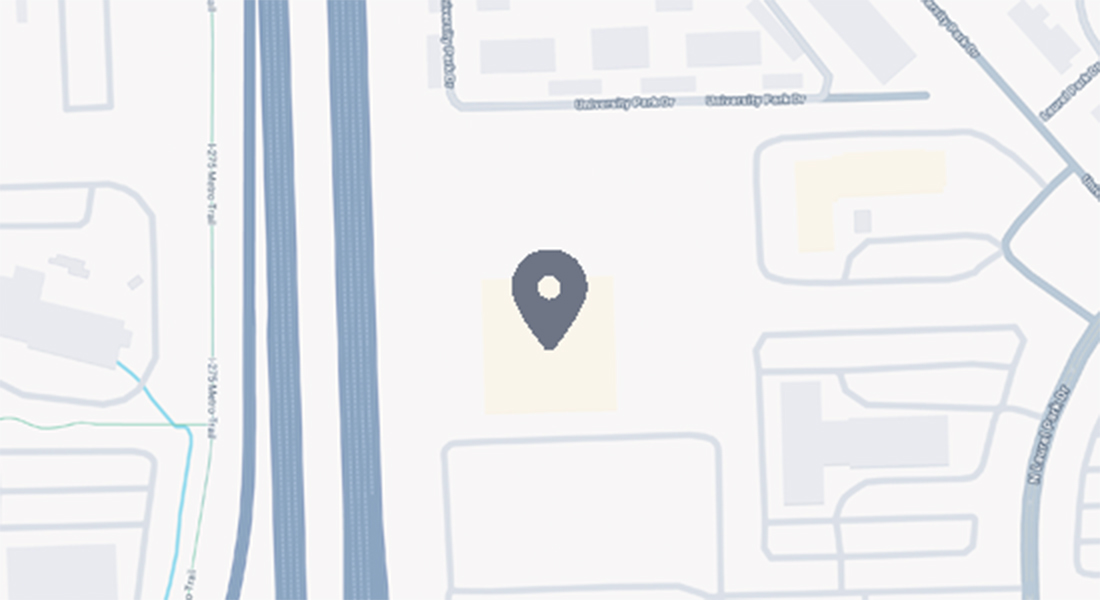
Fighting for injury victims across Michigan, proudly serving clients statewide from our office in Livonia.