Dedicated to Justice.
Devoted to You.
Winning for Your Future.
Devoted to You.
Winning for Your Future.


A spinal cord injury changes a life in an instant and then for the rest of it. It can take away the ability to walk, to use one’s hands, to control basic bodily functions, and it brings a lifetime of care, equipment, and adaptation that most families have no way to pay for on their own. The lifetime cost of a serious paralysis can reach into the millions, far beyond any quick insurance offer, which is why how these cases are handled at the start matters so much.
Vahdat Weisman Law represents people with spinal cord injuries and paralysis in Livonia and across Michigan. Our catastrophic injury lawyers understand the medicine and the Michigan insurance rules that decide whether a catastrophically injured person actually receives the lifetime of care they will need, and we build these cases and protect the recovery with that future in mind.
Doctors classify a spinal cord injury by how much function survives and where, often using the ASIA Impairment Scale, which runs from A, a complete injury with no motor or sensory function in the lowest sacral segments, through grades of incomplete injury where some function is preserved. The distinction is critical: an incomplete injury can allow some recovery, while a complete one generally does not, though recovery in any case depends on the extent and severity, the timing of treatment, and the complications that follow. The level matters too. Damage in the neck causes tetraplegia, affecting the arms, trunk, and legs, with the highest injuries sometimes requiring help to breathe, while damage lower down causes paraplegia, affecting the trunk and legs. An accurate, well-documented diagnosis is the foundation of the case.
Most spinal cord injuries do not involve a cut cord. Bruising, swelling, bleeding, or a bone fragment pressing on the cord can cause the same loss of function, and how quickly that pressure is relieved can change the outcome, because early surgical decompression can sometimes preserve function that delay would lose. That makes the medical care itself part of some cases. A missed unstable fracture, a failure to immobilize the spine, a delayed scan or transfer, or a surgery that came too late to save salvageable function can support a separate medical malpractice claim. Those claims run on Michigan’s stricter malpractice track, a required notice of intent, an 182-day waiting period, an expert affidavit, and a two-year deadline, so they have to be spotted early.
Paralysis is not a single event but the start of a lifetime of medical management, and the secondary risks drive much of its cost and danger. Chief among them is autonomic dysreflexia, a sudden and potentially fatal spike in blood pressure seen in injuries at or above the mid-thoracic level, often triggered by something as ordinary as a full bladder, a bowel problem, or a pressure sore. Add the constant threat of pressure ulcers, respiratory complications, urinary infections, and blood clots, and it becomes clear why a settlement that covers only the first hospitalization leaves a family dangerously exposed. We make sure the case accounts for the full arc of care.
When a spinal cord injury comes from a vehicle crash, Michigan no-fault largely decides whether the lifetime of care gets funded, and the rules are unforgiving. Since the 2019 reforms, drivers can choose their PIP medical coverage: unlimited, $500,000, $250,000, $50,000 for certain Medicaid recipients, or a Medicare-based opt-out. That choice is decisive in a catastrophic case: only an unlimited policy is backstopped by the Michigan Catastrophic Claims Association, the nonprofit reinsurance pool that reimburses the auto insurer once costs pass a high threshold. If the policy were capped, it could be exhausted quickly, and the unpaid future care would have to be pursued as excess economic loss against the at-fault driver.
The benefit families live and die by is attendant care, the daily help with bathing, transfers, breathing, and staying safe that a paralyzed person needs, often around the clock. The catch is that for accidents under post-2019 policies, an insurer is generally required to pay only 56 hours a week when that in-home care is provided by family or household members, so reaching full coverage usually means bringing in a professional agency, whose hours are not subject to that cap, and structuring the care correctly. People injured before June 11, 2019, with benefits that had vested under their policy, are not bound by that cap under the Michigan Supreme Court’s Andary decision. Two deadlines also bite hard: written notice to the insurer is generally due within a year of the crash, and the one-year-back rule limits recovery of benefits to those incurred within a year before suit is filed. We manage all of it so the benefits keep flowing.
A serious spinal cord injury readily meets Michigan’s threshold for suing the at-fault driver: an objectively manifested impairment of an important body function that affects the person’s ability to live their normal life, though it still has to be proven under the statute, and a finding that you were more than half at fault can bar pain-and-suffering damages. These cases often reach beyond the driver. Under the crashworthiness doctrine, a vehicle manufacturer can be liable when a weak roof, a collapsing seatback, or a failed restraint turns a survivable crash into paralysis, claims that depend on preserving the vehicle and its data recorder. When the injury happened at work, workers’ compensation pays first, but a third-party claim can go further, subject to the comp insurer’s lien on any recovery. A fall can give rise to a premises claim. We pursue every avenue the facts support.
Few injuries carry the lifetime cost of paralysis, and proving it takes specialized work: a life-care plan that maps decades of attendant care, equipment and its replacement cycles, home and vehicle modifications, therapy, and the management of complications, and an economist to reduce those future costs to present value against the defense’s attacks. Just as important is protecting the money once it is recovered. A large settlement paid outright can disqualify a disabled person from Medicaid and SSI, so we plan ahead, often with a first-party special needs trust that preserves those benefits, a conservatorship where the person cannot manage funds, and resolution of medical liens, so the recovery actually serves the life it is meant to support.
Depending on the facts, the responsible parties may include an at-fault driver or trucking company, a vehicle or component manufacturer, a property owner, a workplace third party alongside a workers’ compensation claim, or a medical provider whose error caused or worsened the injury. We trace every responsible party and every available policy, because an injury this catastrophic almost always requires more than one source of recovery.
We make sure the injury is fully diagnosed and documented, preserve the vehicle and evidence, fight to secure and protect the no-fault benefits, especially the attendant care that a paralyzed person depends on, identify every responsible party, build the lifetime-care proof, and protect the settlement for the future. From our Livonia office, attorneys Jordan S. Vahdat and Kara E. Weisman handle spinal cord injury and paralysis claims for clients across Metro Detroit and the rest of Michigan on a contingency-fee basis, so there is no attorney fee unless we recover for you.
Vahdat Weisman Law is a personal injury firm based in Livonia, Michigan, representing injury victims and their families throughout the state. Our attorneys, Jordan S. Vahdat and Kara E. Weisman, bring courtroom experience, a record of meaningful results, and a hands-on approach to investigation and case strategy. We prepare every matter as if it will go to trial, positioning clients for stronger settlements and protecting their rights if litigation becomes necessary.
We handle spinal cord injury and paralysis claims on a contingency-fee basis, which means there is no attorney fee unless we recover compensation for you. From our Livonia office, we serve clients across Metro Detroit and the rest of Michigan, and we explain every step in plain language so you can make informed decisions about your case.
If you or a loved one suffered a spinal cord injury or paralysis, contact Vahdat Weisman Law in Livonia today at (734) 469-4994 for a free, confidential consultation. The sooner we hear from you, the sooner we can document the injury and protect the lifetime of benefits your case depends on. Reach out via our contact page to let us know what happened and learn about your options. There is no cost to speak with us about your potential claim.
Disclaimer: This information is for educational purposes only and does not constitute legal advice. Every case is unique, and prior results do not guarantee future success.




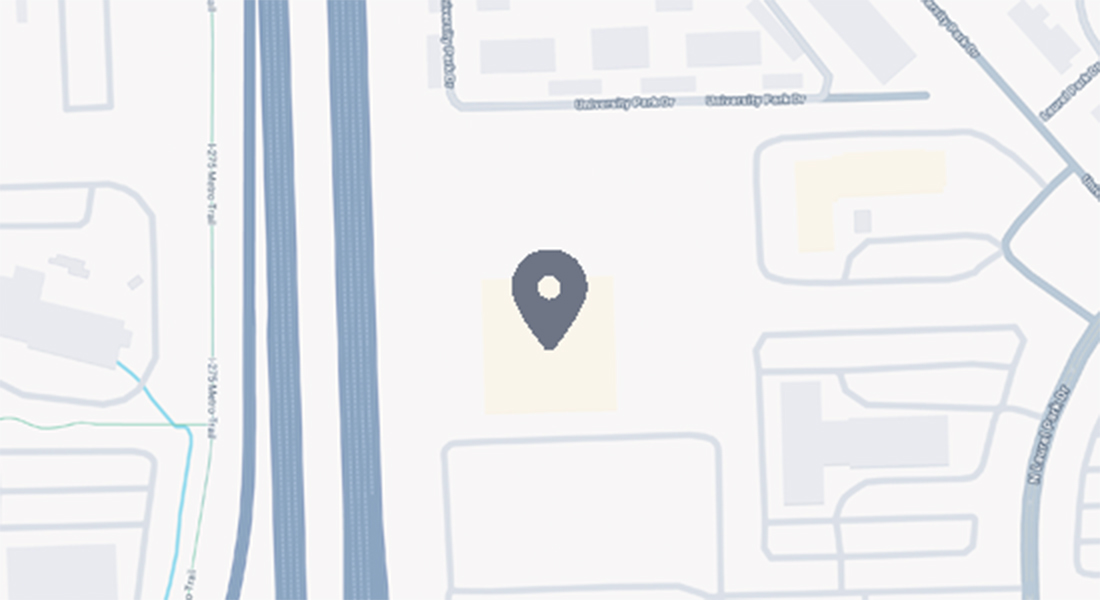
Fighting for injury victims across Michigan, proudly serving clients statewide from our office in Livonia.