Dedicated to Justice.
Devoted to You.
Winning for Your Future.
Devoted to You.
Winning for Your Future.


Vision loss changes how you work, how you move through a room, how much help you need. Whether anyone owes you for it depends on how it happened and who was responsible.
More than 2,000 people injure their eyes at work every day in the United States, according to Prevent Blindness, and 10 to 20 percent of those injuries cause temporary or permanent vision loss. Roughly 90 percent of workplace eye injuries could have been prevented or made less severe by eye protection, a widely cited estimate from the National Institute for Occupational Safety and Health. Preventability is what these cases turn on.
Catastrophic injury attorneys at Vahdat Weisman Law represent Michigan clients who have lost vision. Call (734) 469-4994 for a free consultation. No attorney fee unless we recover for you.
Open globe injuries. A ruptured or penetrated eye is a surgical emergency. In a multi-center study of 1,426 eyes treated at four US tertiary centers from 2018 to 2021, 3.4 percent required primary enucleation, the eye removed, not repaired.
Chemical burns, where alkali generally penetrates faster and deeper than acid. Drain cleaner, lye, wet cement, and degreasers do more harm than their concentration suggests, and damage continues after exposure ends. The pattern is general rather than absolute, and hydrofluoric acid penetrates deeply. Ophthalmologists grade severity on the Roper-Hall and Dua classifications; severe grades carry guarded prognoses.
Sympathetic ophthalmia, or losing the eye that was never injured. A 2022 systematic review of 24 studies put the incidence after open globe injury at about 0.19 percent, 95 percent CI 0.14 to 0.24 percent. Half appear within three months and 90 percent within a year, some decades later. Outcomes track how soon treatment began: a series treated within 15 days of symptom onset reported more than 85 percent of sympathizing eyes at 20/40 or better; another cohort reported about 57.9 percent at 20/50 or better. If you lost one eye and vision in the other is now changing, that may not be unrelated.
Vision loss from brain injury. Damage to the visual pathways produces field cuts such as homonymous hemianopsia, the same half of the field lost in both eyes. In a natural-history series of 254 patients, most improvement came in the first three months; later improvement was mild. These are missed at first because the eyes themselves examine normally. Our traumatic brain injury page covers more.
“Legal blindness” is the Social Security definition of statutory blindness, and it decides benefit eligibility, not every legal question. Under 20 CFR 416.981, blindness for Supplemental Security Income means central visual acuity of 20/200 or less in the better eye with a correcting lens, or a visual field whose widest diameter subtends no more than 20 degrees. Michigan driver licensing, workers’ compensation and tort damages each use their own standards, so you can fall outside that definition and still have a serious permanent loss.
Losing one eye eliminates stereoscopic depth perception and much of your visual field, and monocular vision carries a higher risk of falls and collisions. Ophthalmologists tell monocular patients to wear polycarbonate lenses at all times, and a lifetime of protective eyewear, altered work and caution is part of the damages analysis.
Usually not. Mich Admin Code R 257.2 provides two routes to an unrestricted license: acuity of 20/40 or better with a peripheral field of at least 140 degrees, or acuity worse than 20/40 but no worse than 20/50 with a field from 140 degrees down through 110 degrees, on the prescribed examination statement of an ophthalmologist or optometrist.
The denial and suspension rule, R 257.4, amended effective May 12, 2025, sets four independent grounds, not one both-eyes test: acuity less than 20/60 where recognizable progressive abnormalities are present; acuity less than 20/70 where they are not; acuity of 20/100 or less in one eye with less than 20/50 in the other; or an unaided peripheral field of less than 90 degrees. With one good eye at 20/40 and an adequate field you can still qualify; corrective-lens or daylight-only restrictions are intermediate steps.
Michigan treats loss of an eye as a scheduled specific loss: a set number of weeks. Under MCL 418.361(2), the schedule provides 162 weeks for an eye at 80 percent of the after-tax average weekly wage, subject to the act’s maximum and minimum. For 2026 injuries the maximum is $1,201 per week, the minimum for specific loss and for total and permanent disability $333.47. You do not have to be completely blind in that eye: the same subsection provides that “Eighty percent loss of vision of 1 eye shall constitute the total loss of that eye.” Subsection (3) lists the categories of total and permanent disability, the first “total and permanent loss of sight of both eyes”; whether severe but incomplete bilateral loss fits is a medical question.
If someone other than your employer caused it, a separate claim can run alongside the comp claim: see our third-party work injury, defective machinery, and chemical and toxic exposure pages. MCL 418.827 governs how the two interact: a third-party recovery first covers the expenses of recovery, then reimburses the employer or carrier for compensation paid or payable to the date of recovery, the balance going to you as an advance against future benefits. It lets the carrier sue if you have not within one year, requires certified-mail notice 30 days before suit, and does not treat a natural person in the same employ as an ordinary third party.
Michigan runs its own safety program, so on a construction site here the standard is MIOSHA Construction Safety Standard Part 6, Personal Protective Equipment, effective August 12, 2025, alongside the federal standard it parallels, 29 CFR 1926.102. A safety rule designed to prevent the harm that occurred may be evidence of negligence. Beals v Walker, 416 Mich 469 (1982). An agency citation is not automatically substantive proof.
To recover noneconomic damages from an at-fault driver, you have to clear Michigan’s threshold. MCL 500.3135(1) makes a driver liable for noneconomic loss only for death, serious impairment of body function, or permanent serious disfigurement; subsection (5) defines serious impairment as one objectively manifested, impairing an important body function, and affecting the person’s general ability to lead a normal life.
That threshold governs noneconomic loss only. Subsection (3) preserves tort liability for specified economic losses even where it is not met: allowable expenses above your own coverage level and excess work loss under subsection (3)(c).
Vision loss fits the first two: it is objectively manifested through acuity testing, visual field testing, imaging and surgical records, and vision is plainly an important body function. The contested element is the third, what it did to your life.
McCormick v. Carrier, 487 Mich. 180 (2010), directs courts to focus on how the injury affected bodily functions rather than the injury itself, comparing your life before and after. The 2019 amendments state that the statute codifies and gives full effect to McCormick. Subsection (2)(a) makes the threshold a question of law where there is no factual dispute about the nature and extent of the injuries, and where a dispute exists but is not material.
Your own no-fault benefits may cover medical care, surgeries, prosthetic eyes, low-vision rehabilitation and attendant care without regard to fault. Each item must be an allowable expense under MCL 500.3107, a reasonable charge for a product, service or accommodation reasonably necessary for care, recovery or rehabilitation, subject to the fee schedule in MCL 500.3157 and the coverage level under MCL 500.3107c or 500.3107d. Our no-fault PIP benefits disputes page covers those.
Medical malpractice. Where vision was lost to negligent medical care, MCL 600.1483 caps noneconomic damages. Treasury set the 2026 figures at $596,400 standard and $1,065,000 for the higher tier, which reaches three categories only: hemiplegia, paraplegia, or quadriplegia from brain or spinal cord injury with total permanent functional loss of a limb; permanent cognitive impairment leaving the person incapable of independent decisions and daily living; and permanent loss of or damage to a reproductive organ causing inability to procreate.
Blindness is not among them, so it alone does not move a claim into the higher tier. The cap is aggregate as to all plaintiffs and defendants, so if the same malpractice produced a qualifying consequence, the higher figure governs the total.
Product liability. MCL 600.2946a caps noneconomic damages at the standard figure unless the defect caused death or “permanent loss of a vital bodily function,” and then the higher figure applies. The phrase is undefined and not limited to a list. Lewis v Krogol, 229 Mich App 483; 582 NW2d 524 (1998), rejected both a narrow reading limited to functions necessary to sustain life and a broad reading covering anything pertaining to life, treating it as reaching functions of high importance, and held reasonable minds could find loss of the ability to walk qualified. Whether permanent blindness qualifies is undecided.
Subsection (3) matters as much as the cap: the subsection (1) limitation does not apply where the trier of fact finds the death or loss resulted from the defendant’s gross negligence, or where the court finds the circumstances described in MCL 600.2949a.
Neither cap reaches economic damages. Your future medical care, surgeries, low-vision equipment, home modifications, lost earnings, and attendant care sit outside both, as our page on life care plans and future medical costs explains. Other statutes shape economic recovery: MCL 600.1482 limits past medical and rehabilitation expenses in a malpractice case to amounts actually paid plus amounts you remain liable for, excluding discounts and write-offs; MCL 600.2946a(4) supplies a figure where economic damages cannot readily be ascertained, set by Treasury at $97,770 for 2026.
Eye cases turn on medical specifics: what an alkali exposure means for your prognosis, a sympathetic ophthalmia risk not yet realized, a field cut nobody tied to the head injury. Building the record around those facts, and telling you which caps apply, is the job.
From our Livonia office, we represent injured people across Michigan. Founding partners Kara E. Weisman and Jordan S. Vahdat have each been honored as Super Lawyers Rising Stars. Our attorneys are members of the State Bar of Michigan and active in the Michigan Association for Justice. We advance case costs, we work in English and Spanish, and we are available 24/7.
Jordan S. Vahdat is a founding partner of Vahdat Weisman Law in Livonia and handles negligence, premises liability, auto accident, and insurance dispute cases. He has been admitted in all Michigan state courts since 2014, practices in the Eastern District of Michigan, and has served as a case evaluator for the Washtenaw Circuit Trial Court and the 15th District Court since 2020. He is fluent in Spanish.
If you lost vision because of someone else’s conduct, call Vahdat Weisman Law at (734) 469-4994 or contact us online for a free consultation. Available 24/7, serving Michigan, with Spanish-speaking staff.
Dedicated to Justice. Devoted to You. Winning for Your Future.
Reviewed by Jordan S. Vahdat, Vahdat Weisman Law. Last reviewed September 2026.
This information is for educational purposes only and does not constitute legal advice. Every case is unique, and prior results do not guarantee future success.




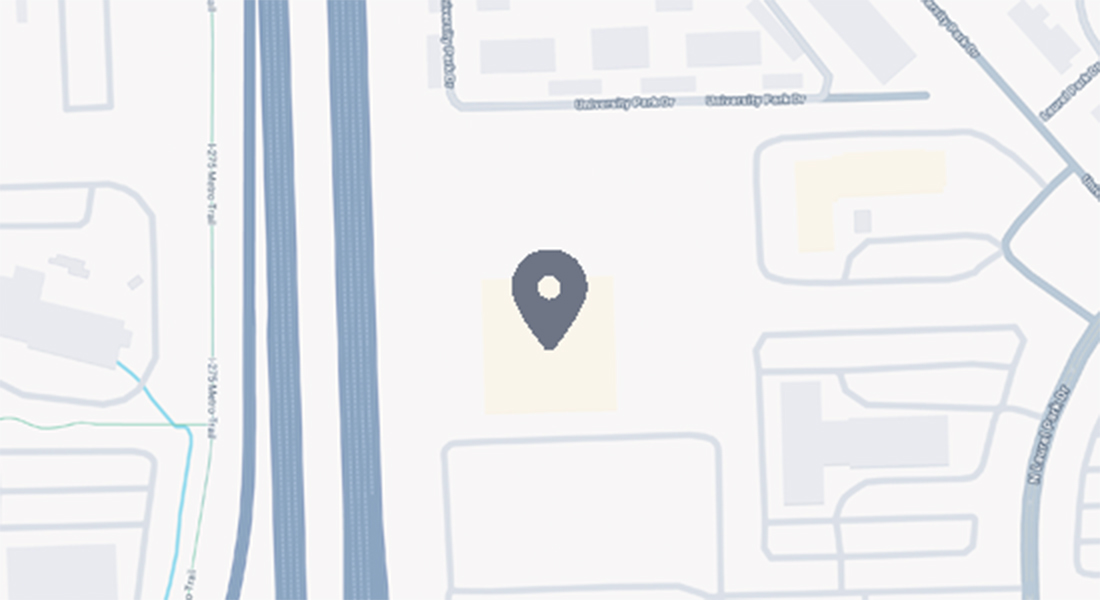
Fighting for injury victims across Michigan, proudly serving clients statewide from our office in Livonia.