Dedicated to Justice.
Devoted to You.
Winning for Your Future.
Devoted to You.
Winning for Your Future.


In stroke care, doctors have a saying: time is brain. Every minute an ischemic stroke goes untreated, brain tissue dies, which is why emergency departments and stroke teams are organized around speed. For a patient who arrives in time and is recognized in time, modern medicine has real answers. Clot-dissolving medication can be given in the first hours. In selected patients, specialists can remove the clot directly from a blocked artery up to a full day after symptoms begin.
None of it happens if nobody recognizes the stroke. Some patients are told they have vertigo, a migraine, anxiety, or too much to drink, and the treatment window closes in a waiting room or on the drive home. Vahdat Weisman Law represents Michigan patients and families living with the consequences of a missed or delayed stroke diagnosis. Call (734) 469-4994 for a free, confidential consultation, any hour of the day. You pay no attorney fee unless we recover compensation for you.
Stroke is one of the few conditions where care is organized around the clock, and the windows have widened. Current guidelines from the American Heart Association and American Stroke Association, updated in 2026, support intravenous clot-dissolving treatment with alteplase or tenecteplase within 4.5 hours of when the patient was last known to be well, and, using advanced brain imaging, in selected patients who woke up with symptoms or arrived between 4.5 and 9 hours. For strokes caused by a large vessel blockage, mechanical thrombectomy can help selected patients as long as 24 hours after onset, and recent guidance has expanded who qualifies.
Two details from those windows decide real cases. First, the clock runs from “last known well,” so a sloppy or undocumented time can wrongly close a window that was actually open. Second, eligibility depends on imaging and clinical findings, which means the question is not just when you arrived but what was done, and how fast, once you did. A generation ago hospitals could often argue nothing would have helped. For many patients today, that argument no longer survives contact with the timeline.
A federal systematic review published by AHRQ, drawing on hundreds of studies, identified stroke as the condition most associated with serious harm from emergency department misdiagnosis, with an average missed-diagnosis rate around 17 percent and far higher rates when patients presented with dizziness or vertigo. The estimates have been debated, but the patterns behind them are well documented:
Not every missed stroke is negligence, and we will tell you honestly when it is not. Some strokes present in ways that would fool a careful physician. Some patients arrive outside every window, and some have conditions that make treatment too dangerous. The legal question is what a reasonably careful provider would have done with the information available at the time, and the answer must come from qualified experts, typically in emergency medicine, neurology, and radiology.
What the experts examine is whether the recognized pathway matched what actually happened: whether stroke was considered, whether the right imaging was obtained and read promptly, whether treatment eligibility was documented, and whether the transfer moved at the speed the condition demanded. Our failure to diagnose page explains how Michigan law treats missed diagnoses generally, and because these cases so often start in an emergency department, they frequently overlap with our emergency room negligence work.
Stroke cases are fought on causation more fiercely than almost any other malpractice claim. The defense typically argues that the stroke, not the delay, caused the harm. Michigan law frames that fight in a specific way.
When the evidence shows the negligence itself, more probably than not, caused the bad outcome, the claim proceeds as a traditional malpractice case. Where the theory is instead that a delay cost the patient a chance at a better result, MCL 600.2912a bars recovery unless the lost opportunity to achieve a better outcome was greater than 50 percent. Which side of that line your facts fall on depends on the imaging, the timing, and what treatment would likely have changed, measured in real functional terms: walking, speaking, swallowing, living independently. Michigan law also recognizes that negligence need not be the only cause, just a proximate one. This analysis is where stroke cases are decided, and it is where we put our effort first, with experts who can quantify what timely treatment would have meant for your specific stroke.
Depending on where the failure happened, responsibility may reach the triage nurse who under-prioritized clear warning signs, the emergency physician who did not pursue imaging or a stroke consult, the radiologist who misread the scan, the neurologist or telestroke service consulted late, the hospital for its stroke protocols, staffing, and transfer arrangements, and in some cases the transferring or receiving facility.
Michigan hospitals answer for their employees acting within their roles, and even where emergency physicians or radiologists are independent contractors, the hospital can be held responsible under ostensible agency when the patient reasonably looked to the hospital for care. That doctrine is fact-specific, and its application to emergency room care remains an active area of Michigan law, which is one more reason these cases must be built carefully from the start. Under the Michigan Supreme Court’s 2024 Stokes decision, standard-of-care experts must match each defendant’s board specialty and meet strict practice-time requirements, though one properly qualified expert can sometimes address more than one provider.
Michigan generally allows two years from the negligent act or omission to file a medical malpractice lawsuit under MCL 600.5805, with an alternative window of six months from when you discovered or reasonably should have discovered the claim, whichever is later, under MCL 600.5838a. The burden of proving late discovery is on the patient, and a six-year outer limit applies with narrow exceptions. Before suing, a notice of intent must be served, generally 182 days ahead, under MCL 600.2912b. A proper, timely notice can pause the limitations clock, but the tolling rules are technical and unforgiving of defects, and wrongful death claims add their own timing wrinkles involving the estate. The complaint must be supported by an affidavit of merit from a qualified expert under MCL 600.2912d.
Stroke cases also have an evidence clock. The records metadata showing when the CT was ordered, performed, and read, the EMS run sheet, the stroke team activation log, and transfer center communications are time-stamped evidence, and some of it is not kept forever. We move to preserve it immediately.
A missed stroke can leave patients and families facing devastating medical, financial, and emotional consequences. Our medical malpractice attorneys represent clients throughout Michigan in complex failure-to-diagnose cases, holding negligent healthcare providers accountable and pursuing the compensation the law allows.
Get the survivor into the best rehabilitation available, and keep every record. Request the complete chart from every facility involved: triage notes, physician notes, imaging with the radiology reports, lab results, transfer paperwork, and discharge instructions, all with timestamps. Write down the timeline while memories are fresh: when symptoms started, who saw them, when you arrived, and what you were told. If anyone knows the exact “last known well” time, write that down too. It matters more than almost anything else.
Then talk to a lawyer before talking to the hospital’s insurer. The mandatory pre-suit process consumes months, and evidence like audit trails and stroke-alert logs will not wait.
Stroke cases require the medicine and the timeline, both reconstructed minute by minute. We prepare every case for trial because that is what moves a defendant to pay what a lifetime of care actually costs: the complete record, the metadata behind it, and experts matched to each defendant under Michigan’s requirements. And we are honest from the first call. If the windows were truly closed, or qualified experts tell us the care was reasonable, we will say so plainly.
Founding partners Kara E. Weisman and Jordan S. Vahdat have each been honored as Super Lawyers Rising Stars, and our attorneys are members of the State Bar of Michigan and active in the Michigan Association for Justice. We advance all case costs, serve all of Michigan from our Livonia office, and have Spanish-speaking staff, with phones answered 24/7.
If a stroke was missed, dismissed, or treated too late, your family deserves to know whether it was preventable. Call Vahdat Weisman Law at (734) 469-4994 or contact us online for a free, confidential consultation. Available 24/7, serving all of Michigan.
Dedicated to Justice. Devoted to You. Winning for Your Future.
This information is for educational purposes only and does not constitute legal advice. Every case is unique, and prior results do not guarantee future success.




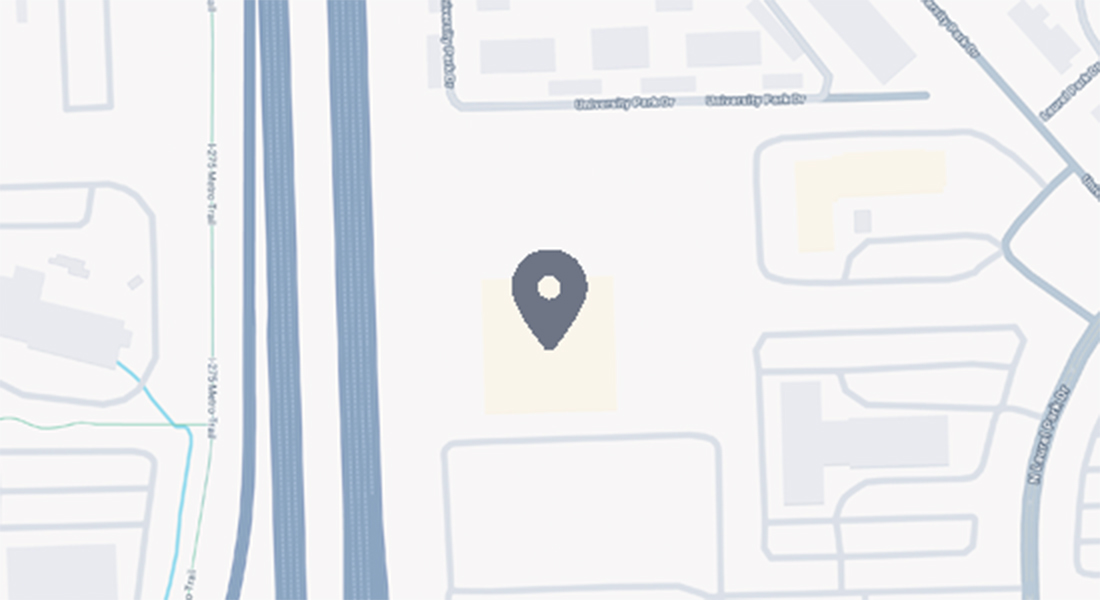
Fighting for injury victims across Michigan, proudly serving clients statewide from our office in Livonia.