Dedicated to Justice.
Devoted to You.
Winning for Your Future.
Devoted to You.
Winning for Your Future.


A cracked furnace heat exchanger can fill an apartment with carbon monoxide overnight. Lead paint dust a toddler breathes for months can change the course of a childhood. Mold spreads behind a wall, asbestos is stirred up in a renovation, and a worker handles a chemical no one warned them about. These injuries do not announce themselves the way a crash does, and one Michigan rule about deadlines can quietly end a valid case before a family even understands what made them sick.
Vahdat Weisman Law represents people harmed by carbon monoxide and toxic exposure in Livonia and across Michigan. These cases turn on swift action and careful proof, and our premises liability lawyers handle the heavy investigative work, preserving the evidence, identifying the source, and lining up the medical and scientific evidence, so an injured family does not have to.
Carbon monoxide is colorless and odorless, and its early symptoms, headache, nausea, dizziness, and confusion, are often mistaken for the flu. Hence, people go back to sleep in the very place that is poisoning them. At high levels, it causes brain injury, lasting neurological damage, and death. The usual sources sit inside the home or building: a cracked or poorly maintained furnace, a malfunctioning water heater, a blocked or disconnected flue, a gas appliance venting into a living space, or a car or generator running near an attached garage. Hotels and motels see these cases too, often from poorly vented pool heaters or boilers. Proof matters from the first hour: a carboxyhemoglobin blood test showing the percentage of carbon monoxide in the blood, and the parts-per-million air readings the fire department or EMS records at the scene, are the kind of objective evidence that wins these cases, and they are easy to lose if no one acts.
A property owner who controls the heating and gas appliances has duties to the people who live there, and a poisoning can support more than one theory at once. There is ordinary negligence, for an appliance the owner failed to maintain or repair. Michigan’s statutory landlord covenant, MCL 554.139, requires that a rental and its common areas be fit for their intended use and kept in reasonable repair. And when the owner violated a safety code or statute, that violation is strong evidence of negligence; in Michigan, it creates a rebuttable presumption that the owner must overcome, rather than automatic liability. When a poisoning is fatal, Michigan’s wrongful death act lets the estate’s personal representative pursue a claim for the family. We dig into which appliance failed, who serviced it, whether the owner ignored complaints, and whether the detectors that should have sounded were ever there.
People assume every Michigan rental must have carbon monoxide detectors. The reality is a patchwork, and getting it right matters. The state construction code, MCL 125.1504f, requires carbon monoxide detectors in new construction, in renovations that require a permit, and when a bedroom is added, to be placed near bedrooms and any attached garage or fuel-burning appliance. On top of that, many cities require detectors and a certificate of compliance before a rental can be occupied, and subsidized housing carries its own standards. So whether a missing detector helps your case depends on which of these rules applies to the building, which is one of the first things we determine.
Carbon monoxide is one of several hidden hazards we handle, and each has its own proof. Lead paint remains in many pre-1978 buildings, where deteriorating paint and dust poison young children and cause developmental and neurological harm; these cases are built on blood-lead-level history, the source of the lead, and neuropsychological testing that documents IQ and learning loss, and federal law requires landlords and sellers of older housing to disclose known lead hazards and provide an EPA pamphlet before a lease or sale. Asbestos disturbed during renovation can cause mesothelioma and other lung diseases decades later, with claims often reaching product manufacturers and contractors. Chemical exposures at home, in products, or on the job can cause burns, poisoning, and long-term illness. We are candid about mold: while a leak that ruins a home is one thing, proving that mold caused a specific personal injury is genuinely hard in Michigan and requires strong medical and scientific evidence, because the courts closely screen this kind of expert testimony.
Toxic-exposure cases turn on causation, and it is rarely simple. We generally have to show two things: that the substance can cause the kind of harm suffered, and that it actually caused this person’s injury, ruling out other explanations. Michigan courts act as gatekeepers over expert testimony, and a recent tightening of the rules puts the burden on us to establish that our experts’ methods are reliable before a jury ever hears them. That is why these claims require an industrial hygienist, a toxicologist, and treating physicians to work together, and why they are not do-it-yourself matters. We assemble that team and carry the proof.
Here is the rule that ends valid claims. Michigan does not follow the “discovery rule” that many states use for slow-developing injuries. Under the Michigan Supreme Court’s decision in Trentadue v. Buckler, a claim generally accrues when the wrong and resulting harm occur, not when the person finally learns the cause, so for an exposure whose effects take time to surface, the clock can be running long before anyone connects the illness to its source. There is a narrow escape hatch: if the responsible party fraudulently concealed the claim or its own identity, a separate rule can give two years from when you discovered or should have discovered it, but that requires active concealment, not mere silence. Separate saving rules can apply in wrongful death and for injured children. The practical lesson is simple: do not wait, because the timeline often decides whether a claim survives at all.
When the exposure happens on the job, the rules shift, but rarely closes the door. Workers’ compensation usually bars an employee from suing their employer directly, with a narrow exception when the employer knew an injury was certain to occur and willfully disregarded that knowledge. More commonly, the real recovery comes from outside the comp system: a claim against the manufacturer of a defective product or chemical, a contractor, or a property owner who is not the employer. Those product and third-party claims, which carry their own three-year deadline, are where many of the largest exposure recoveries are found, so we look well beyond workers’ compensation.
Depending on the facts, the responsible parties may include a landlord or property owner; a heating or appliance contractor who negligently installed or serviced equipment; the manufacturer of a defective furnace, water heater, or detector; a renovation contractor who disturbed asbestos or lead; or a product maker that failed to warn. We trace every responsible party and every available policy, because a catastrophic exposure often requires more than one source of coverage.
We move fast on what these cases demand: send preservation demands so the landlord or insurer cannot scrap the furnace, water heater, or detector before it is examined; gather the carboxyhemoglobin and scene readings; line up the right experts; and identify every responsible party and deadline. From our Livonia office, attorneys Jordan S. Vahdat and Kara E. Weisman handle carbon monoxide and toxic-exposure claims for clients across Metro Detroit and the rest of Michigan on a contingency-fee basis, so there is no attorney fee unless we recover for you.
Vahdat Weisman Law is a personal injury firm based in Livonia, Michigan, representing injury victims and their families throughout the state. Our attorneys, Jordan S. Vahdat and Kara E. Weisman, bring courtroom experience, a record of meaningful results, and a hands-on approach to investigation and case strategy. We prepare every matter as if it will go to trial, positioning clients for stronger settlements and protecting their rights if litigation becomes necessary.
We handle carbon monoxide and toxic-exposure claims on a contingency-fee basis, which means there is no attorney fee unless we recover compensation for you. From our Livonia office, we serve clients across Metro Detroit and the rest of Michigan, and we explain every step in plain language so you can make informed decisions about your case.
If you or your family was harmed by carbon monoxide or toxic exposure, contact Vahdat Weisman Law in Livonia today at (734) 469-4994 for a free, confidential consultation. Because Michigan’s deadlines can run from the time of harm, the sooner we hear from you, the more we can protect. Reach out via our contact page to let us know what happened and learn about your options. There is no cost to speak with us about your potential claim.
Disclaimer: This information is for educational purposes only and does not constitute legal advice. Every case is unique, and prior results do not guarantee future success.




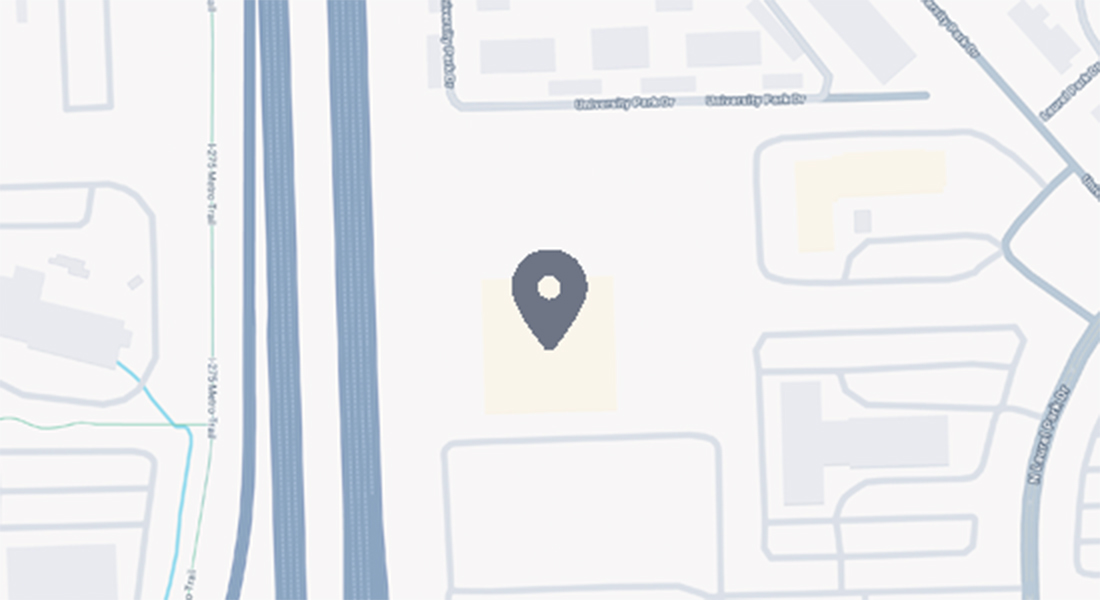
Fighting for injury victims across Michigan, proudly serving clients statewide from our office in Livonia.