Dedicated to Justice.
Devoted to You.
Winning for Your Future.
Devoted to You.
Winning for Your Future.


At Vahdat Weisman Law, our premises liability attorneys help clients in Livonia, across Michigan, and throughout the United States build strong premises liability claims after they are hurt on someone else’s property. Our approach is grounded in evidence, expert analysis, and a clear understanding of the legal duties that property owners and occupiers owe to visitors under Michigan law.
Proving liability is not about guesswork. It is a disciplined process that connects safety rules to the facts of a hazardous condition, shows how a violation of those rules caused an injury, and quantifies the full scope of harm. This page explains the elements we must establish in a premises liability case, the kinds of evidence that persuade judges and juries, and the strategies our team uses to position your case for a favorable settlement or a successful verdict.
Every premises liability case turns on four essential elements: duty, breach, causation, and damages.
Property owners and occupiers in Michigan owe different duties to visitors depending on their legal status. But no matter their status, the guiding principle is reasonable care under the circumstances.
To prove the breach element of your premises liability claim, we often must prove notice, which can be either actual or constructive. Actual notice exists when an owner knew about a hazard, such as a prior complaint about a pothole in a parking lot or an email chain where staff repeatedly reported water pooling in a grocery aisle. Constructive notice exists when the owner should have known about a hazard had they used reasonable care, such as a spill that remained on the floor long enough to become dirty and tracked through the aisle or an exterior stair coated with ice that formed during a known freeze and was not treated despite a standard policy requiring salting.
We establish notice through inspection logs, service tickets, weather data, surveillance video, witness testimony, and digital records that show how long a condition existed and whether reasonable inspections would have uncovered it. Sometimes the evidence of notice is as strong as surveillance video showing that the dangerous condition was there for hours. Other times, it is a “he said, she said” situation. Either way, we know the most persuasive ways to convince a jury that the defendant had notice of the hazard.
Michigan law expressly addresses how open and obvious hazards impact liability and fault allocation, but recent changes have significantly impacted this analysis. Now, the analysis focuses on reasonableness and comparative responsibility rather than a blanket bar to recovery. An owner must still act reasonably in the face of foreseeable risks on their property, and a visitor’s awareness of or opportunity to avoid a hazard may reduce, but does not automatically eliminate, recovery.
Our approach is to document how a condition remained unreasonably dangerous even when visible. For example, we prove that a glare on a freshly waxed floor masked a liquid film, that poor contrast between step edges and treads made the trip hazard impossible to see while walking, that inadequate lighting in a stairwell made the dangerous condition impossible to see, or that snow and ice accumulations were not treated according to policy.
We also anticipate and address defense arguments that a plaintiff should have noticed the danger. Primarily, we do this by demonstrating the necessity of the path, the distractions a reasonable person would encounter, or the design choices that created a trap for the unwary.
Effective premises liability cases are won with meticulous evidence collection. In every case, we act quickly to:
Jurors and claims adjusters want to understand what a reasonably careful property owner would have done under the same circumstances. We work with experts in human factors, building codes, floor friction, slip resistance, snow and ice removal practices, lighting and visibility, retail safety operations, and structural engineering. These specialists test floor surfaces, evaluate the coefficient of friction, simulate sightlines, analyze contrast and illumination, and compare site conditions with applicable codes and industry standards. Their work clarifies how a hazard violated accepted practices, and their opinions connect the dots between those violations and your injury.
Proving causation requires more than stating that a fall occurred. We document the mechanism of injury through photographs of the scene, damage to clothing or footwear, scuff or slide marks on flooring, and any witness statements about how the incident unfolded. We coordinate with medical providers to create a clear timeline that links the incident to your diagnosis, treatment, and prognosis. When appropriate, biomechanical experts explain how a specific fall pattern causes specific injuries, and treating physicians or independent medical experts speak to causation, permanency, and future needs. This level of detail reduces opportunities for an insurer to argue that a preexisting condition or unrelated event is responsible for your symptoms.
A complete damages presentation includes the obvious and the overlooked. We gather all medical bills and records, project future care costs, and quantify lost earnings. We work with vocational experts to evaluate how lasting restrictions affect your ability to work and economists to calculate lifetime losses in present value. We document noneconomic harms with specificity, including pain, mental anguish, sleep disruption, loss of mobility, loss of hobbies, and loss of household services. Photographs, journals, family statements, and therapist notes can make these human losses tangible, and so-called “day in the life” videos can help a mediator or jury understand how the injury has changed your daily routine.
There are several unique aspects of premises liability law in Michigan, including cases involving snow and ice, retail stores, apartments, construction sites, and government-owned property.
In each of these unique cases, we adapt our evidence strategy to the specific standards and records that apply.
Sometimes a hazardous condition exists because a product or design element is defective, such as a walkway coating that becomes dangerously slippery when wet, a handrail bracket that fails under normal load, or a door closer that slams with excessive force. In those cases, we explore potential claims against manufacturers or contractors in addition to claims against the property owner or manager. We secure samples when possible, preserve the product in its post-incident state, and consult engineers who can test and analyze failure modes. Adding responsible parties can increase available insurance coverage and improve your ability to recover full compensation.
Early preservation of evidence is critical because surveillance footage and logs are routinely overwritten. We send immediate preservation notices and follow up with targeted requests. When evidence goes missing after a clear preservation demand, courts may impose sanctions on the party that failed to preserve it. By acting promptly, we either capture the proof we need or create a record that supports strong remedies if materials are destroyed or altered.
Defendants often argue that a plaintiff was distracted, wore improper footwear, or ignored warning signs in premises liability cases. We prepare for these defenses from day one. We collect footwear evidence, examine signage placement and wording, and reconstruct sightlines to show what a careful observer would perceive. We also analyze the necessity of the path you took. For example, if your path was the only exit from a retail line or the only route to a restroom, the defendant cannot reasonably contend that you should have taken a different path. Finally, we evaluate whether a warning was adequate or simply shifted the burden of safety onto the visitor. By addressing comparative fault directly, we protect the value of your case and avoid surprises late in litigation.
Your actions after an incident can help strengthen your case. Reporting the incident promptly, requesting that a manager prepare a written report, taking photographs of the condition and your injuries, preserving footwear and clothing, and obtaining names and contact information for witnesses are all helpful steps. Seeking timely medical care and following treatment recommendations creates a reliable record that connects the event to your symptoms. Keeping a brief journal of pain levels, activity limits, missed work, and out-of-pocket expenses gives us contemporaneous data that supports damages, too.
Deadlines matter. Michigan law sets time limits for filing premises liability lawsuits (typically three years), and claims involving governmental entities may require formal notice within a period significantly shorter than that. If your incident occurred outside Michigan, the law of that state may control the filing deadline and the notice rules. Our team evaluates these issues immediately to preserve your rights, and we track every deadline throughout the life of your case.
We begin with a rapid investigation, preservation letters, and, when possible, a site inspection. We identify all potentially responsible parties, including corporate owners, property managers, maintenance contractors, snow and ice vendors, and product manufacturers. We collect and analyze policies and contracts to determine who controlled the area and who was responsible for performing safety tasks. We also retain the right experts early so testing and analysis can occur while conditions remain similar.
During discovery, we push for complete document production, and we take focused depositions that reveal knowledge of hazards, inspection failures, and budget or staffing choices that undermined safety. We consider alternative dispute resolution when it aligns with your goals, and we prepare every case as if it will be tried so that negotiations occur from a position of strength.
Insurers often argue that hazards were momentary, that staff responded quickly, or that the visitor’s own choices caused the incident. They may offer early settlements before the full extent of injuries is known. We counter by building a timeline that shows how long a hazard existed, quantifying staffing levels and inspection lapses, and refusing to value a case until the medical picture is sufficiently developed. If necessary, we use motions to compel evidence, motions to exclude unreliable defense opinions, and trial briefs that crystallize the legal issues for the court.
Our firm is based in Livonia, Michigan, and we handle premises liability matters throughout Michigan and across the United States. We combine local knowledge with national reach, leveraging a network of experts and a disciplined litigation approach. Clients choose us because we are thorough, responsive, and relentless about obtaining the evidence that convinces insurers, judges, and juries. We understand how to translate safety rules into compelling narratives that show exactly how an owner could have prevented a serious injury with basic care and attention.
If you or a loved one was injured because of a hazardous condition on someone else’s property, contact Vahdat Weisman Law at (734) 469-4994 or fill out our confidential online form. We will evaluate your claim, secure critical evidence, and guide you through each step of the process. The sooner we begin, the better our chances of preserving surveillance footage, maintenance records, and witness memories. Our goal is simple: to prove liability with clarity, present your damages with precision, and pursue the full compensation you deserve.
Disclaimer: This information is for educational purposes only and does not constitute legal advice. Every case is unique, and prior results do not guarantee future success.




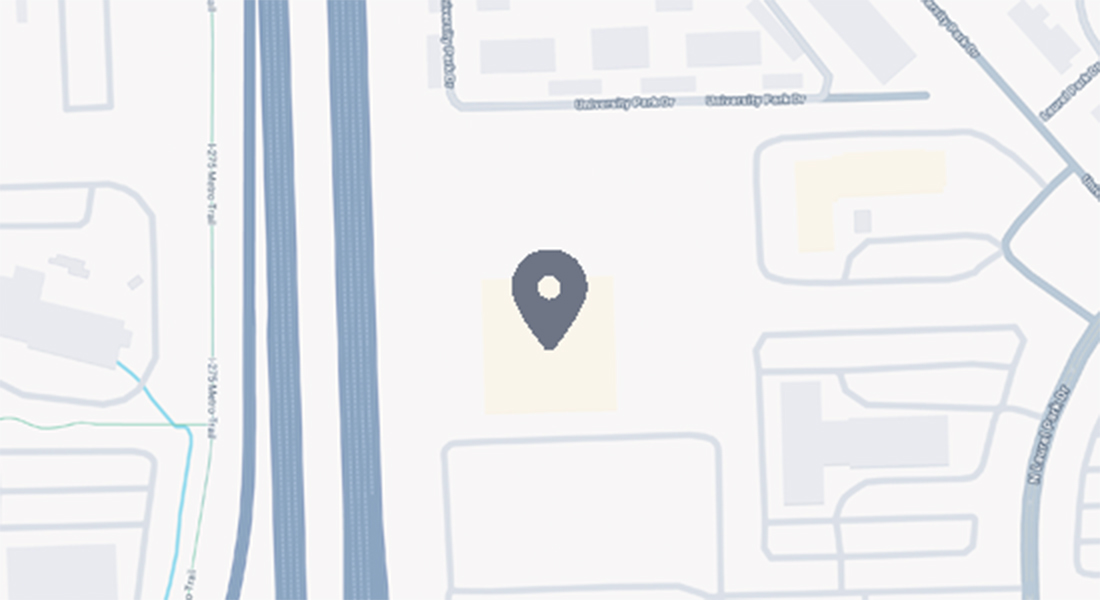
Fighting for injury victims across Michigan, proudly serving clients statewide from our office in Livonia.