Dedicated to Justice.
Devoted to You.
Winning for Your Future.
Devoted to You.
Winning for Your Future.


Falls are the leading cause of death in Michigan construction. In 2024, 12 of the 28 workers killed in the state’s construction industry died in falls, slips, or trips, according to the Bureau of Labor Statistics, and 370 construction and extraction workers died in falls nationally. Behind those numbers are far more workers who survive the fall and live with what it left: spinal injuries, brain injuries, shattered heels and hips, careers in the trades that end in seconds.
If you or someone in your family is one of them, you are probably being told that workers’ comp is all there is. Sometimes that is true. Our job, before anyone accepts that answer, is to check, because falls tend to involve more potential defendants than almost any other construction injury: a general contractor, a property owner, an equipment maker or rental company, another trade’s crew. A claim against any of them runs alongside your comp benefits and can pay what comp never will. Vahdat Weisman Law work injury attorneys investigate fall cases throughout Michigan, and the investigation costs you nothing. Call (734) 469-4994 for a free consultation. You pay no attorney fee unless we recover compensation.
The protections are well known and have been required for decades: guardrails, personal fall arrest systems, covered floor openings, ladders secured with side rails extending three feet above the landing, lifts set up on stable ground. MIOSHA’s Part 45 fall protection standard generally requires protection at six feet in Michigan construction.
Yet fall protection has been the most cited standard on federal OSHA’s top-ten list for fifteen straight years. Preliminary fiscal 2025 data counts 5,914 citations, most of them under the residential six-foot rule, with ladder violations third at 2,405. Each citation is a documented instance of a job where required protection was missing. Enforcement has been pushing in the right direction; fatal-fall investigations under OSHA’s national emphasis program dropped about 20 percent from 2023 to 2024, and MIOSHA runs its own Stop Falls campaign in Michigan. The cases we handle are the ones where the protection was still not there.
Not your employer, in almost every case, no matter how badly the site was run. Michigan’s workers’ comp law makes comp the exclusive remedy against the employer. The narrow exception requires proof that the employer specifically intended the injury, or actually knew injury was certain to occur and disregarded that knowledge, a standard courts apply so strictly that it almost never fits a fall case. Coworkers get similar protection. So the legal work in a fall case is identifying who else owed you a duty, and proving it.
The general contractor. Under Michigan’s common work area doctrine, a GC that fails to take reasonable steps within its supervisory role can be liable for a readily observable, avoidable danger that posed a high degree of risk to a significant number of workers in an area shared by multiple trades. Missing perimeter protection on a floor several crews occupy, an unguarded stairwell shaft, an uncovered opening on a route trades use daily: hazards like these can qualify, and the Michigan Supreme Court applied the doctrine as recently as its 2024 El-Jamaly decision, confirming that the exposed workers need not all be present at the same moment. The doctrine has real limits; a hazard that only your own small crew ever faced usually fails it, and our general contractor and subcontractor liability page explains the four elements and how defense lawyers attack them.
The property owner. An owner that effectively stepped into the general contractor’s role, directing how the work was done and controlling site safety rather than just paying for the project, can face the same analysis under Michigan’s retained control principles. Separately, an owner can be responsible for a dangerous condition of the property itself, and since the Michigan Supreme Court’s 2023 Kandil-Elsayed decision, the fact that a hazard was open and obvious no longer defeats such a claim by itself; it goes to comparative fault instead.
The equipment chain. Ladders that failed, scissor lifts and boom lifts that tipped or collapsed, anchor points and harness hardware that did not hold. Manufacturers face product liability claims, which in Michigan are measured as of the time of manufacture and come with their own statutory defenses and damage rules. Rental companies that supplied damaged or unmaintained equipment face ordinary negligence claims, and companies that only sold the product have narrower, but real, exposure. What all of these cases share is one practical requirement: the equipment itself must be preserved before it disappears back into a rental fleet or a dumpster. More on our defective machinery and equipment page.
Other contractors. The crew that removed a guardrail and did not replace it. The trade that cut a floor opening and left it uncovered for whoever came next. Michigan law recognizes that a contractor owes ordinary care to the workers around its work, separate from what its contract says, and the Michigan Supreme Court reinforced that duty as recently as July 2026. These are ordinary negligence claims, and they are often the strongest cases on a multi-employer site.
Workers’ comp pays medical care and wage-loss benefits, generally 80 percent of your after-tax average weekly wage, capped at a state maximum of $1,201 per week for 2026 injuries. It pays nothing for pain and suffering, nothing for the earning capacity a fall takes from a 35-year-old tradesperson, and nothing to your spouse. A third-party case can add those categories, when the proof supports them, while comp continues. The comp carrier is reimbursed from any recovery under Michigan’s lien statute, sharing the attorney fees and costs of winning it, with the balance treated as a credit against future benefits. That math changes what you actually keep, which is why we run it with you before recommending any settlement.
Two things we tell clients at the start. First, expect the defense to blame you, the harness you were not wearing, the way the ladder was set. Michigan compares fault rather than barring claims, so those arguments reduce rather than end a case unless you were more than half at fault, and the fuller questions- whether anchor points existed, whether the rules were enforced, whether the schedule punished tying off- usually cut the other way. Comp benefits are payable regardless of fault. Second, not every fall produces a lawsuit. A roofer hurt working alone for the roofing company, with no GC, no involved owner, and no equipment failure, may have a comp claim and nothing more. Even then, facts like a failed ladder or a hidden site condition change the answer, so let us check before you assume.
The site changes fast. Guardrails appear, openings get covered, the ladder goes back on the truck. Photographs from coworkers’ phones, the names of everyone on site that day, the equipment itself, and the contracts that assigned safety responsibility are the evidence these cases are built on, and all of it is easiest to get early. On the comp side, report the injury right away; Michigan requires notice to your employer within 90 days and a claim within two years, and waiting helps no one. Get every symptom documented, because back, neck, and head injuries from falls often declare themselves fully over weeks rather than hours.
Be careful with releases, settlement papers, and broad authorizations. Those documents serve the companies that send them, and the wrong signature can affect both cases. Have anything reviewed before you sign it.
Fall cases are built on site evidence: who controlled the work, who saw the hazard, what the contracts said, what the equipment shows. We start that investigation early; we send preservation letters before ladders and lifts vanish; we request the MIOSHA investigation file, and we coordinate the lawsuit with your comp benefits rather than against them, so the two claims do not undercut each other. Founding partners Kara E. Weisman and Jordan S. Vahdat have each been honored as Super Lawyers Rising Stars, and our attorneys are members of the State Bar of Michigan and active in the Michigan Association for Justice. We advance case costs, our phones are answered 24/7, and we serve clients in English and Spanish from our Livonia office. Related pages: third-party work injury claims, scaffolding accidents, and crane accidents.
A fall from height changes a family’s finances for decades, and you should know what your case actually is before anyone else defines it for you. Call Vahdat Weisman Law at (734) 469-4994 or contact us online for a free consultation. Available 24/7, serving all of Michigan, with Spanish-speaking staff.
Dedicated to Justice. Devoted to You. Winning for Your Future.
This information is for educational purposes only and does not constitute legal advice. Every case is unique, and prior results do not guarantee future success.




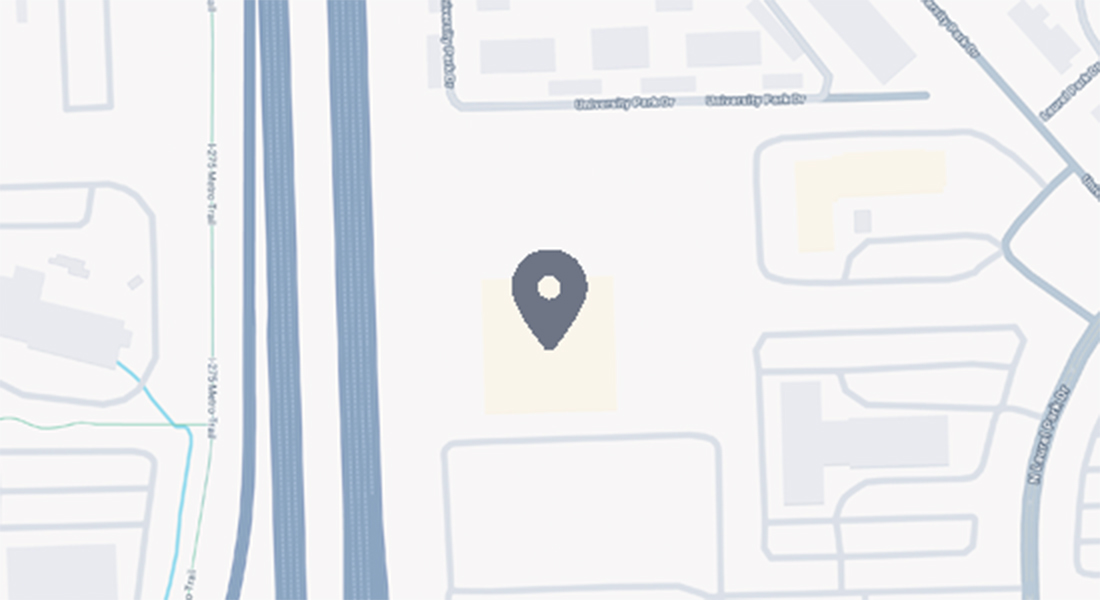
Fighting for injury victims across Michigan, proudly serving clients statewide from our office in Livonia.