Dedicated to Justice.
Devoted to You.
Winning for Your Future.
Devoted to You.
Winning for Your Future.


Three years after the crash, your no-fault wage checks stop, and your back still won’t let you return to your job. Or the hospital and rehabilitation bills have passed the $250,000 medical limit you chose at renewal, and treatment isn’t finished.
Michigan no-fault pays only so much. You can often recover unpaid lost income and medical costs from the driver who caused the crash in what is called an excess economic damages claim. Vahdat Weisman Law auto accident attorneys bring these claims for injured people across Michigan. Call (734) 469-4994 for a free consultation. No attorney fee unless we recover for you.
The no-fault act keeps the at-fault driver liable for “allowable expenses, work loss, and survivor’s loss as defined in sections 3107 to 3110, including all future allowable expenses and work loss, in excess of any applicable limit under section 3107c or the daily, monthly, and 3-year limitations contained in those sections” (MCL 500.3135(3)(c)).
In everyday terms, that covers:
This claim does not require a serious impairment of body function. That threshold limits liability for noneconomic loss, meaning pain and suffering (MCL 500.3135(1)). The excess economic provision stands on its own, though you still must prove negligence, causation, and the amount of the loss.
No-fault work loss pays 85 percent of lost income, up to a cap per 30-day period, for three years from the accident. The cap is $7,455 for accidents from October 1, 2026, through September 30, 2027, and $7,201 for accidents in the prior year, based on the accident date (DIFS Bulletin 2026-20-INS). Our PIP wage loss benefits page explains how the benefit is calculated.
Two kinds of wage loss fall outside PIP:
Income above the cap. For someone earning $11,000 a month before the crash, PIP replaces only part of it. The rest of the lost income during those three years is part of the excess claim.
Income after three years. If the doctors say you cannot go back to your trade, PIP pays nothing in year four. The excess claim can reach those later years, including the rest of a working life, when the evidence supports it (MCL 500.3135(3)(c); Hannay v Department of Transportation, 497 Mich 45 (2014)).
The claim covers income you would have earned, not income you could have earned: “While work-loss damages are compensable under the no-fault act, loss-of-earning-capacity damages are not” (Hannay; Ouellette v Kenealy, 424 Mich 83 (1985)).
In Hannay, a dental assistant hoped to become a hygienist but had not been admitted to a hygiene program. The Court held hygienist wages too speculative and ordered her loss recalculated from her actual earnings.
The claim rests on proof of the career you actually had and where it was headed: pay history, a union wage scale, a written promotion track, an acceptance letter, a signed job offer, an employer’s testimony.
Since mid-2020, many Michigan drivers have chosen a PIP medical limit such as $250,000 or $500,000 instead of unlimited coverage. Once that limit is used up, you can claim reasonable and necessary care above it against the at-fault driver (MCL 500.3135(3)(c)). Our PIP coverage levels page explains each option and who is bound by it.
For people who opted out of PIP medical, the Michigan Supreme Court addressed the claim in Canty v. Mason, Docket No. 167772 (Mich., July 27, 2026). The injured man had waived PIP medical because he had Medicare Parts A and B. The Court held:
If you opted out, give your Medicare or health plan information to every provider and keep what each one billed and was paid. The Court left room to argue that a provider outside Medicare was a reasonable choice in a particular case.
Future care is usually proven through a life care plan built on the treating doctors’ recommendations.
PIP pays up to $20 a day for three years for replacement services: cleaning, yard work, snow removal, and other chores an injured person can no longer do. The excess claim does not reach them. The Michigan Supreme Court held that replacement services are a separate category from allowable expenses, so you cannot recover the cost above the PIP limits from the at-fault driver under MCL 500.3135(3)(c) (Johnson v. Recca, 492 Mich 169 (2012)).
Help directed at the injury itself, such as bathing, dressing, or managing medication, is attendant care, an allowable expense, and the excess can be claimed.
Yes, for the wage portion. The statute gives the at-fault driver “an exemption reducing his or her liability by the amount of taxes that would have been payable on account of income the injured person would have received if he or she had not been injured” (MCL 500.3135(3)(c)). Excess wage loss is measured after taxes, so a gross salary figure overstates it. That differs from the 15 percent reduction applied to PIP wage benefits (MCL 500.3107(1)(b)), and because the exemption speaks to income, it does not reduce excess medical expenses.
A jury that awards future wage loss or future medical expenses states them by year. The court then reduces future economic damages and future medical costs to present value at “a rate of 5% per year, compounded annually” (MCL 600.6306(1)(c)-(d), (2)). The older rule requiring simple interest (Nation v. W.D.E. Electric Co., 454 Mich 489 (1997)) interpreted an earlier version of the statute, which was amended by 2012 PA 608, effective March 28, 2013.
Proof of future loss usually combines treating physicians on restrictions, a vocational expert on what work remains realistic, a life care planner, and an economist who projects wages and costs and applies the statutory reduction.
Your own share of fault. Your percentage of fault reduces economic damages. If your fault is greater than everyone else’s combined, economic damages are still awarded, reduced by your share, while noneconomic damages are barred (MCL 600.2959).
Money already paid. The claim reaches only amounts that exceed PIP, so you do not recover the same dollar twice. After a verdict, the court may also reduce the judgment for medical and economic losses paid by other collateral sources. Still, the court does not deduct benefits paid by someone holding a statutory lien, or a contractual lien properly exercised, and it does not deduct life insurance (MCL 600.6303).
Repayment to whoever paid your bills. If Medicare paid for crash-related care, those were conditional payments that “must be repaid to Medicare when a beneficiary receives a settlement, judgment, award, or other payment” (CMS). Medicaid and many employer health plans have their own reimbursement rights.
The usual source is the at-fault driver’s bodily injury liability coverage. Policies default to $250,000 per person and $500,000 per accident, but a driver may choose limits as low as $50,000 and $100,000 (MCL 500.3009). That one policy limit covers both economic and non-economic damages.
When that limit is too small, look to your own policy next. Underinsured motorist coverage can pay the difference up to its limits, but Michigan does not require it, so the policy language controls (Bianchi v Auto Club of Michigan, 437 Mich 65 (1991)). Our uninsured and underinsured motorist claims page explains how these claims work. A vehicle owner who let the at-fault driver use the car may also be liable under Michigan’s owner liability statute (MCL 257.401).
You generally must file a lawsuit against the at-fault driver within three years (MCL 600.5805(2)). That is a separate clock from the one-year notice and filing rules for PIP claims against your own insurer (MCL 500.3145).
The three-year deadline usually arrives about when PIP wage benefits end. So the case typically has to prove losses that have not happened yet, which is why the statute’s reference to “all future allowable expenses and work loss” matters.
Excess economic claims are built from records: earnings and career path, what the PIP insurer paid and when it stopped, which coverage level and liens apply, and what future care will cost. We assemble that proof alongside any pain and suffering claim against the same driver.
From our Livonia office, we represent injured people and their families throughout Michigan. Founding partners Kara E. Weisman and Jordan S. Vahdat have each been honored as Super Lawyers Rising Stars. Our attorneys are members of the State Bar of Michigan and active in the Michigan Association for Justice. We advance case costs, we work in English and Spanish, and we are available 24/7.
Jordan S. Vahdat is a founding partner of Vahdat Weisman Law in Livonia and handles negligence, premises liability, auto accident, and insurance dispute cases. He has been admitted to all Michigan state courts since 2014, practices in the Eastern District of Michigan, and has served as a case evaluator for the Washtenaw Circuit Trial Court and the 15th District Court since 2020. He is fluent in Spanish.
If no-fault has stopped paying but your losses haven’t, call Vahdat Weisman Law at (734) 469-4994 or contact us online for a free consultation. Available 24/7, serving all of Michigan, with Spanish-speaking staff.
Dedicated to Justice. Devoted to You. Winning for Your Future.
Reviewed by Jordan S. Vahdat, Vahdat Weisman Law. Last reviewed October 2026.
This information is for educational purposes only and does not constitute legal advice. Every case is unique, and prior results do not guarantee future success.




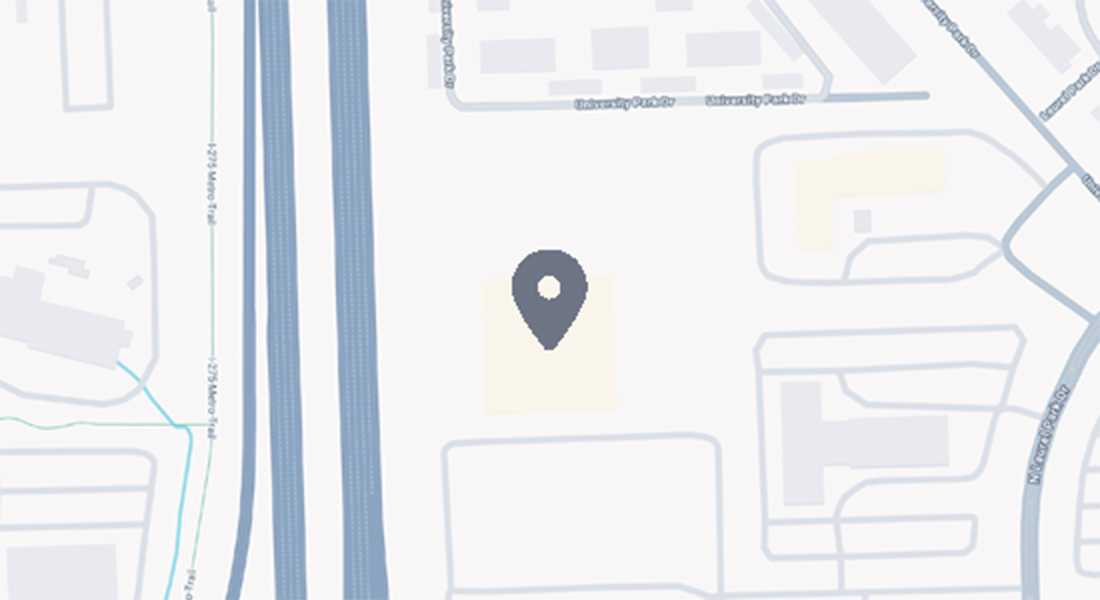
Fighting for injury victims across Michigan, proudly serving clients statewide from our office in Livonia.