Dedicated to Justice.
Devoted to You.
Winning for Your Future.
Devoted to You.
Winning for Your Future.


Your back or neck has not been right since the crash. Maybe the pain runs down a leg or into a hand, maybe a full workday in a chair is no longer possible, and an MRI has now put a name on it: herniated disc, bulging disc, or “degenerative changes.” That last phrase can shape a claim as much as the injury itself.
Vahdat Weisman Law auto accident attorneys represent people with disc, back, and neck injuries from car accidents across Michigan. Call (734) 469-4994 for a free consultation. No attorney fee unless we recover for you.
The discs between your vertebrae act as cushions. A herniated (or “slipped”) disc happens when all or part of a disc is forced through a weakened part of its outer wall, where it can press on a nearby nerve or the spinal cord. Injury or strain can cause it, and the lower back is the most common site, followed by the neck (MedlinePlus, Herniated disk, reviewed August 2024).
Pressure on a nerve root in the lower back is called radiculopathy and can cause sharp pain in the buttock, hip, or leg, sometimes with numbness or weakness (sciatica). In the neck, it can cause pain and numbness that spread into the arm and fingers. Loss of bladder or bowel control needs emergency care.
Care usually starts with rest and pain medication, then physical therapy; some people receive epidural steroid injections, and a discectomy is considered when symptoms persist despite other treatment and time (MedlinePlus, above). The American Association of Neurological Surgeons reports that sciatica and radiculopathy symptoms improve with time in about 9 out of 10 people, and that surgeons sometimes perform fusion to stabilize the spine after disc surgery (AANS, Herniated Disc). MedlinePlus notes that long-term back pain can remain after treatment and that a full return to activity can take several months to a year or more.
An MRI report may use words like disc desiccation, disc bulge, or degenerative disc disease. A defense doctor may point to those findings to argue the disc problem existed before the crash and the crash added nothing.
Those findings are common in people with no pain at all. A systematic review of 33 studies covering 3,110 people without symptoms found disc degeneration on imaging in 37% of 20-year-olds, rising to 96% of 80-year-olds. Disc bulges rose from 30% at age 20 to 84% at age 80, and disc protrusions from 29% to 43% (Brinjikji et al., AJNR Am J Neuroradiol 2015;36(4):811-816, full text at NIH PubMed Central). The authors concluded that many such findings likely reflect normal aging and should be interpreted alongside the patient’s clinical condition.
That cuts both ways. If degeneration on a scan is common in people who feel fine, the scan alone doesn’t explain why you could work, lift, and sleep before the crash but can’t now. The questions that usually carry more weight:
A treating physician who can explain the difference between degeneration on a picture and a change in how the body works is often the key witness in a disc case.
A prior back condition does not disqualify you. Under Michigan law, a careless driver is responsible for the person he or she injures when the person is found. If the crash aggravated a preexisting condition or triggered symptoms from one that had been quiet, you can recover for that aggravation (Wilkinson v Lee, 463 Mich 388 (2000)). Aggravation of a preexisting condition can also satisfy the no-fault threshold where it accelerates or triggers a serious impairment (Fisher v Blankenship, 286 Mich App 54; 777 NW2d 469 (2009)).
Michigan’s model jury instructions follow the same rules. One tells jurors that unusual susceptibility to injury does not relieve the at-fault driver of liability (M Civ JI 50.10). Another tells them to separate the crash-caused damages from the preexisting condition if they can; if they cannot, to assess the entire amount against the defendant (M Civ JI 50.11).
You still have to show a causal link between the crash and the worsening, and the aggravated injury still has to meet the threshold for pain and suffering. You are compensated for what the crash added, not for the condition you already had. Earlier medical records are the baseline against which change is measured.
That timeline is not unusual for neck injuries. Mayo Clinic states that whiplash symptoms “most often start within days of the injury,” and lists tingling or numbness in the arms among them (Mayo Clinic, Whiplash).
The record is what counts. Tell the doctor about the crash, every area that hurts, and anything running into an arm or leg. An MRI isn’t always ordered right away, and that alone doesn’t undermine a claim, but the time between the crash, your first complaint, and your imaging will be examined. Gaps in treatment are a common defense theme in back injury cases, so if you pause care, make sure the reason (cost, a provider’s advice, child care, work) is documented.
Your own no-fault insurer pays personal protection insurance (PIP) benefits regardless of fault. Allowable expenses include “reasonable charges incurred for reasonably necessary products, services and accommodations” for your care, recovery, or rehabilitation (MCL 500.3107(1)(a)). Therapy, injections, and spine surgery can qualify if medical proof shows they are reasonably necessary and related to the crash. Three things shape what is actually paid.
Your coverage level. Since the 2019 reform, Michigan drivers choose a PIP medical limit, and some opted out with qualifying health coverage (MCL 500.3107c). A lower limit can run out during a long course of spine care; see our PIP coverage levels page.
The fee schedule. For injuries on or after June 11, 2019, MCL 500.3157 limits provider payment, generally to a percentage of the Medicare rate (190% for most providers for services after July 1, 2023, with higher tiers for certain hospitals and trauma centers). If you were hurt before June 11, 2019, the amended fee schedule does not apply to you (Andary v USAA Casualty Insurance Co, 512 Mich 207 (2023), addressing MCL 500.3157(7) and (10), and Fremont Insurance Co v Lighthouse Outpatient Center (Mich Ct App, 2025), extending that reasoning to the rest of the schedule).
Review and exams. The insurer may review whether treatment is appropriate under medically accepted standards (MCL 500.3157a) and may require an examination by a physician it selects (MCL 500.3151). You may request the written report of that exam (MCL 500.3152). If an exam leads to a therapy cutoff or a surgery denial, see our insurance medical exams and benefit cutoffs page.
Benefits are overdue 30 days after the insurer receives reasonable proof of the loss, with 12% interest (MCL 500.3142), and a suit for unpaid benefits is subject to the notice and one-year-back rules of MCL 500.3145. See our no-fault PIP benefits disputes page.
PIP does not pay for pain or for the things you can no longer do. For that, you bring a claim against the at-fault driver, which Michigan allows only for death, permanent serious disfigurement, or “serious impairment of body function” (MCL 500.3135(1)). The statute sets three requirements (MCL 500.3135(5)):
In a disc case, the first requirement is usually where the fight is. A description of pain alone is not enough, but evidence of a physical basis for the pain can be, and medical testimony is generally, though not always, required (Patrick v Turkelson, 322 Mich App 595 (2018)). The impairment must be objectively manifested, not the injury itself (McCormick v Carrier, 487 Mich 180 (2010)).
Do I Need Surgery to Have a Case?
No, the statute does not require it. None of the three requirements mentions surgery. Your ability to lead your normal life must be affected, not destroyed, and the impairment need not be permanent or last for a set period (McCormick; Piccione v Gillette, 327 Mich App 16 (2019), a broken collarbone treated with a sling and strap). Surgery can be strong evidence of severity, but a disc injury managed with therapy and injections can still meet the threshold if the evidence supports each element. Our serious impairment threshold page covers the test in depth.
No reliable “average herniated disc settlement” exists for a case nobody has reviewed. Value depends on the threshold evidence, the medical history, the at-fault driver’s coverage, and how life has actually changed. If the disc has injured the spinal cord itself, see our spinal cord injuries and paralysis page. The claim against the at-fault driver generally must be filed within three years of the crash (MCL 600.5805(2)).
Disc cases turn on history and timing: the pre-crash baseline, the first post-crash complaint, the imaging, and a treating physician who can explain causation. We build the PIP claim and the injury claim from the same record so one does not undercut the other.
From our Livonia office, we represent injured people and their families throughout Michigan. Founding partners Kara E. Weisman and Jordan S. Vahdat have each been honored as Super Lawyers Rising Stars. Our attorneys are members of the State Bar of Michigan and active in the Michigan Association for Justice. We advance case costs, we work in English and Spanish, and we are available 24/7.
Jordan S. Vahdat is a founding partner of Vahdat Weisman Law in Livonia and handles negligence, premises liability, auto accident, and insurance dispute cases. He has been admitted to all Michigan state courts since 2014, practices in the Eastern District of Michigan, and has served as a case evaluator for the Washtenaw Circuit Trial Court and the 15th District Court since 2020. He is fluent in Spanish.
If a crash has left you with a herniated disc or a back or neck injury that is not getting better, call Vahdat Weisman Law at (734) 469-4994 or contact us online for a free consultation. Available 24/7, serving all of Michigan, with Spanish-speaking staff.
Dedicated to Justice. Devoted to You. Winning for Your Future.
Reviewed by Jordan S. Vahdat, Vahdat Weisman Law. Last reviewed October 2026.
This information is for educational purposes only and does not constitute legal advice. Every case is unique, and prior results do not guarantee future success.




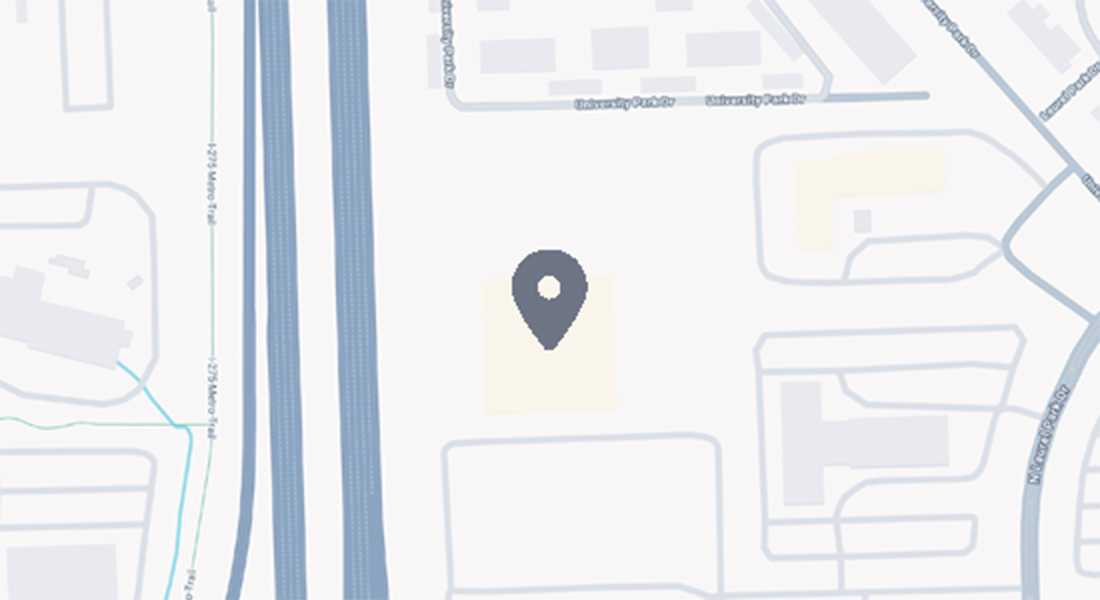
Fighting for injury victims across Michigan, proudly serving clients statewide from our office in Livonia.