Dedicated to Justice.
Devoted to You.
Winning for Your Future.
Devoted to You.
Winning for Your Future.


The phone rings. There was a fall. No one saw it happen, and the facility is “looking into it.” A person who was supposed to be supervised is now in a hospital bed with a broken hip, a brain bleed, or worse, and the family is left piecing together what happened from vague answers.
Falls in nursing homes are common; between half and three-quarters of residents fall each year, and federal research shows roughly one in ten residents who fall suffers a serious injury. Not every fall is preventable, and an honest lawyer will tell you that. But facilities are required by law to assess each resident’s fall risk, plan against it, and staff well enough to carry out the plan, and when a facility identifies a risk and then fails to act on it, the fall that follows may well be negligence. Sorting one from the other is what we do. Vahdat Weisman Law represents Michigan families after serious nursing home falls and the deaths that too often follow them. Call (734) 469-4994 for a free, confidential consultation, any hour. You pay no attorney fee unless we recover compensation.
For an elderly nursing home resident, a hip fracture is one of the most dangerous things that can happen. A study of nursing home residents published in JAMA Internal Medicine found that 36 percent died within six months of a hip fracture, and among residents who could still get around beforehand, more than half died or lost the ability to walk independently within six months. A fall that strikes the head is its own emergency, especially for residents on blood thinners, where a seemingly minor impact can become a fatal brain bleed over hours. Some of the strongest cases we see are not about the fall at all, but about what happened afterward: no head injury assessment, no scheduled neurological checks, no prompt call to the family or to 911 while a resident declined.
This is why we treat “she fell and broke her hip” and “she fell, and six weeks later she was gone” as parts of the same conversation. Whether the death followed directly or through the chain of immobility, pneumonia, and decline, the fall case and the wrongful death case are worked together, and our nursing home wrongful death page explains how Michigan law handles that claim.
Nursing homes certified for Medicare or Medicaid operate under detailed federal requirements, and falls are addressed directly. Under 42 CFR 483.25(d), a facility must keep the environment as free of accident hazards as possible and give each resident adequate supervision and assistive devices to prevent accidents. Federal rules also require a baseline care plan within 48 hours of admission, a comprehensive assessment within 14 days, and a comprehensive care plan within a week after that, revised as the resident’s condition changes.
In practice, the facility is required to know the answers to the questions that decide these cases. Had she fallen before? Was she on sedatives, sleep aids, or blood pressure medications that raise fall risk? Could she get to the bathroom alone at 2 a.m., and if not, what was the toileting plan? Did the interventions in her chart, the low bed, the floor mat, the scheduled checks, actually happen on the overnight shift? Michigan law adds staffing minimums: MCL 333.21720a requires ratios of nursing care personnel of one to eight on mornings, one to twelve on afternoons, and one to fifteen overnight. Those are floors, not measures of adequacy; a shift can meet the ratio and still be unable to carry out the supervision a particular resident’s care plan promised, and the gap between the plan on paper and the staffing in the building is where many of these cases are won or lost.
Two interventions facilities point to deserve scrutiny. Bed and chair alarms sound protective, but a major randomized trial in hospitals found alarms did not reduce falls, and an alarm helps no one if there is no staff member close enough to respond to it. Physical restraints are not the answer either: federal law gives residents the right to be free of restraints imposed for discipline or convenience rather than to treat medical symptoms, and restraints cause injuries and deaths of their own. What actually prevents falls is individualized planning carried out by enough trained people, which is also the intervention that costs facilities the most.
“She was found on the floor.” Families hear that sentence constantly in these cases, and it should prompt questions. Where was the staff assigned to her? When was she last actually seen? Was she assessed for head injury afterward, were neurological checks done and documented on schedule, and was 911 called when her condition changed, or did hours pass first?
Federal oversight gives families reason to look past the facility’s summary. A 2025 HHS Office of Inspector General review found that 43 percent of nursing home falls resulting in major injury and hospitalization were never reported in the federal resident assessment data facilities must maintain, so the official data does not always reflect what happened inside. The fuller story lives in records we know how to demand: staffing schedules and time-clock data for the shift in question, call light logs, internal incident reports where discoverable, care plans with their revision history, medication logs, and the facility’s own fall-risk assessments. An unwitnessed fall does not prove neglect by itself, but it puts the burden of explanation exactly where it belongs.
Michigan nursing home cases can proceed as ordinary negligence, as medical malpractice, or both, and the classification carries real consequences. Claims about custodial basics, a resident dropped during a transfer that required two aides when only one came, a hazard left in a hallway, tend to sound in ordinary negligence. Claims that turn on professional judgment, whether the fall-risk assessment was adequate, whether medications should have been adjusted, sound in medical malpractice, which brings shorter effective deadlines, a required pre-suit notice 182 days before filing, an expert’s affidavit of merit, and caps on non-economic damages. For 2026, those caps are $596,400 in most cases and $1,065,000 only for specific catastrophic injuries defined by statute; a death does not automatically trigger the higher figure. The line between the two tracks is genuinely contested case by case, so we plead to protect both theories and calendar every deadline to the shortest possible clock. Negligence claims generally allow three years; malpractice can effectively require action much sooner, and the expert work takes time before anything is filed. Early is safer.
The state has a role too. Michigan’s licensing agency, LARA, investigates nursing home complaints, ideally filed within 12 months while the trail is fresh, and an investigation can document conditions while they still exist. Michigan’s Attorney General has been active as well: a 2025 settlement resolved state and federal allegations against a chain of Detroit-area facilities that included failure to prevent resident falls alongside understaffing claims, allegations the operator denied. A regulatory complaint pays your family nothing and is no substitute for preserving evidence, but it creates official documentation and protects the residents still inside, and we help families do both.
For a resident who survives, damages include medical expenses, the surgery and rehabilitation that follow a fracture, and the pain, disability, and lost independence the fall caused. Where the fall leads to death, the wrongful death claim brought by the estate’s personal representative covers medical and funeral expenses, conscious pain and suffering where the evidence supports it, and the family’s loss of society and companionship. Medicare and Medicaid often assert liens on these recoveries, and negotiating them down is part of the representation, not an afterthought. We also review the admission paperwork for an arbitration agreement. Federal rules prohibit requiring one as a condition of admission and give residents 30 days to rescind after signing, and whether the person who signed even had legal authority to bind the resident is a question worth asking; these clauses are challenged successfully more often than families expect.
Get your loved one medical care first, and make sure any fall involving the head is promptly evaluated, especially if they take blood thinners. Request the complete chart in writing; residents and their legal representatives are entitled to these records. Photograph the room, the footwear, and any equipment involved. Start a dated log of every conversation with staff, including names. Ask in writing for the facility’s incident report and whether the fall was reported to the state; you may not receive everything, but the requests themselves become part of the record. Do not sign new paperwork the facility brings you after the fall. Then call us, and let the records demands, the staffing analysis, and the deadlines become our work instead of your family’s burden.
Facilities defend fall cases by making the fall sound inevitable. Sometimes it was, and we will tell you so after we investigate. But when it was not, we answer with the facility’s own documents: the risk scores they assigned, the interventions they promised in the care plan, and the staffing they actually ran the night it happened. We handle the negligence-or-malpractice classification that trips up general practitioners, we move early on evidence that goes stale, and we are honest with families about which claims their facts support. We explain every step in plain language, in English or Spanish, for families across Michigan.
Founding partners Kara E. Weisman and Jordan S. Vahdat have each been honored as Super Lawyers Rising Stars, and our attorneys are members of the State Bar of Michigan and active in the Michigan Association for Justice. We advance case costs, and phones are answered 24/7 at our Livonia office. Our main nursing home abuse and neglect page covers the broader duties facilities owe, and our malnutrition and dehydration page addresses another injury pattern that often travels with understaffing.
Your family paid for supervision and has every right to ask whether it was provided. Call Vahdat Weisman Law at (734) 469-4994 or contact us online for a free, confidential consultation. Available 24/7, serving all of Michigan, with Spanish-speaking staff.
Dedicated to Justice. Devoted to You. Winning for Your Future.
This information is for educational purposes only and does not constitute legal advice. Every case is unique, and prior results do not guarantee future success.




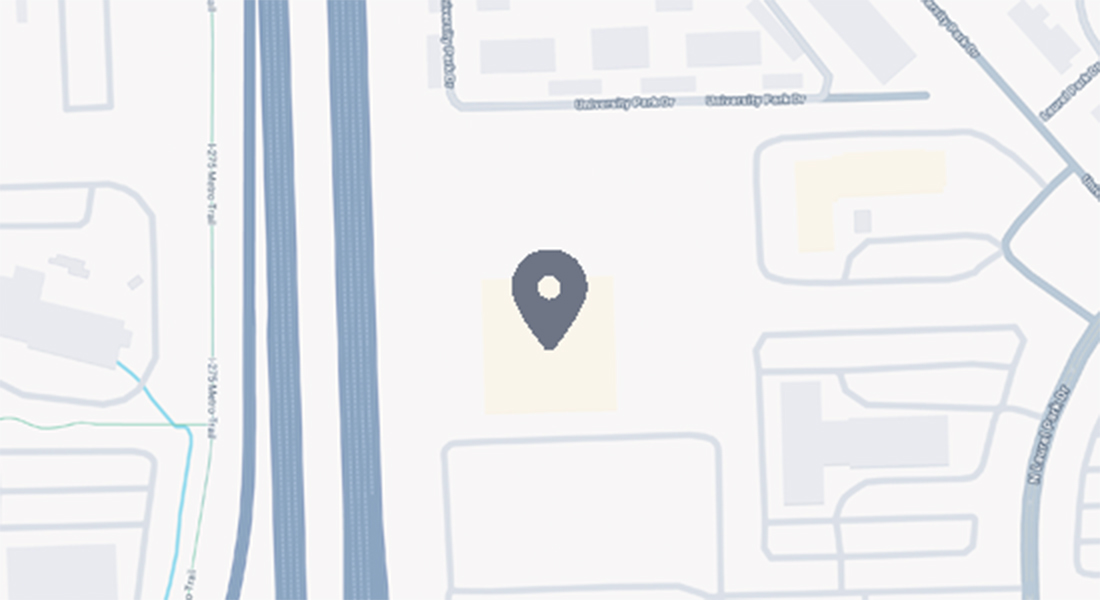
Fighting for injury victims across Michigan, proudly serving clients statewide from our office in Livonia.