Dedicated to Justice.
Devoted to You.
Winning for Your Future.
Devoted to You.
Winning for Your Future.


The call from the facility is usually gentle. She passed peacefully in her sleep. He declined quickly at the end; it was his time. Sometimes that is the whole truth, and part of our job is telling families when it is. But families who spent months watching falls go unexplained, weight disappear, and call lights go unanswered often hang up with a question the facility never quite answers: was this death natural, or was it the result of the care?
Vahdat Weisman Law investigates deaths in Michigan nursing homes, from the first records request through trial when the case demands it. Call (734) 469-4994 for a free, confidential consultation, any hour. You pay no attorney fee unless we recover compensation for your family.
A few choices in the week after a nursing home death quietly shape everything that follows, and no one at the facility will walk you through them.
Fatal neglect is rarely one catastrophic mistake. More often it is a pattern that ends badly: an unassisted fall in the third week of short staffing, a pressure wound that deepened while the chart said “skin intact,” pneumonia from food a swallowing evaluation said he should never have been served, a resident with dementia who walked out an unalarmed door in January. We maintain detailed pages on the failures that most often turn fatal, including falls and fractures, malnutrition and dehydration, sepsis and untreated infections, medication errors, choking and aspiration, wandering and elopement, physical abuse, and restraint injuries. Whatever the mechanism, the legal path below is largely the same, and so is the central question: would proper care more likely than not have prevented this death? That causation question, not the existence of bad care alone, is what these cases must answer.
Michigan’s wrongful death act, MCL 600.2922, governs every fatal claim. Only the personal representative of your loved one’s estate can file, which means a probate estate must be opened first; we handle that step for families routinely, and the personal representative acts on behalf of everyone entitled to share, not just themselves. The statute defines who may recover, generally the spouse, children and descendants, parents, grandparents, siblings, and those entitled under the will, and the probate court approves the final distribution, which keeps a grieving family from having to fight the insurance company and each other at the same time.
The damages the law allows are broader than families expect. Medical, funeral, and burial expenses. The conscious pain and suffering your loved one experienced between injury and death, which in neglect cases can span weeks of documented decline, though proving what a dying person consciously experienced takes careful evidence, and we treat that proof with the seriousness it deserves. The family’s loss of society and companionship, which Michigan treats as a real and substantial injury. And lost financial support where it exists. Two limits deserve honesty: under the Michigan Supreme Court’s 2024 Daher decision, a wrongful death claim cannot recover the earnings the person would have made had they lived, though survivors’ loss of support remains recoverable, and Michigan law does not provide punitive damages, so the case is measured by real losses rather than by the facility’s conduct. Insurers use both rules to argue that an elderly resident’s death is a small case. The categories that remain, conscious suffering and the loss of a mother, father, or spouse, say otherwise.
Michigan classifies each alleged failure in a nursing home death as either ordinary negligence or medical malpractice, under the Supreme Court’s Bryant decision, depending on whether the failure involved professional medical judgment. The distinction has trapped experienced lawyers, and it is not academic. Malpractice claims generally carry a two-year limitations period rather than three, a mandatory pre-suit notice with a waiting period of up to 182 days, an affidavit of merit from a qualified professional, and Michigan’s cap on non-economic damages, which for 2026 is $596,400 for most cases; a higher tier exists only for certain catastrophic injuries defined by statute, and death alone does not trigger it.
Because most fatal neglect involves failures of both kinds, we analyze each failure separately, satisfy the stricter track’s requirements from the start, and treat the earliest deadline as the real one. Wrongful death cases also involve a saving provision, MCL 600.5852, that can give a personal representative additional time after letters of authority issue, but its interaction with the malpractice notice rules is technical and currently the subject of litigation before the Michigan Supreme Court, so no family should estimate its own deadline from a website, ours included. The safe course is the fast one: have the timeline calculated by a lawyer early, while every option is still open.
Two documents shape these cases more than families expect. The first is the arbitration agreement in the admission packet. Do not assume it ends the case: federally certified facilities cannot require arbitration as a condition of admission, residents have a 30-day rescission right, and whether the person who signed had authority to bind the resident is a genuine question in many families. We review the packet in every case; some clauses hold, and many do not.
The second is the lien. Medicare and Medicaid often have repayment claims against any settlement, and resolving them correctly and reducing them where the law allows is part of what determines what your family actually receives. We handle lien resolution as part of the case, not as an afterthought.
Where neglect or abuse is suspected, report it to LARA, whose survey bureau investigates nursing home complaints, and to the Attorney General’s elder abuse resources; Michigan’s Long-Term Care Ombudsman is another advocate families often already know. State findings can become useful evidence, and reporting protects the residents still inside. But a citation pays your family nothing, and a declined investigation ends nothing. The civil case is separate, runs on its own evidence and standard of proof, and is the path Michigan law provides for compensation.
Nursing home death cases are won in the records, and we treat them that way: complete chart review with medical experts, staffing analysis against Michigan’s statutory minimums, the facility’s citation history, and, where the record supports it, the ownership and management decisions behind the understaffing, because the company on the sign is often not the only responsible entity. We handle the probate steps, the classification questions, the notice deadlines, and the arbitration and lien fights so your family carries as little of it as possible. And we are honest at every stage, including when the record shows a death that good care could not have prevented. Families deserve that answer too, and it costs nothing to find out.
Founding partners Kara E. Weisman and Jordan S. Vahdat have each been honored as Super Lawyers Rising Stars, and our attorneys are members of the State Bar of Michigan and active in the Michigan Association for Justice. We advance all case costs, our phones are answered 24/7, and we serve families in English and Spanish from our Livonia office. Our nursing home abuse and neglect attorneys help families understand their rights when a loved one has been harmed by inadequate care, neglect, or mistreatment.
Your family trusted a facility with someone irreplaceable. If that trust was betrayed, you deserve to know what happened, and Michigan law gives your family a way to find out and to be compensated for it. Call Vahdat Weisman Law at (734) 469-4994 or contact us online for a free, confidential consultation. Available 24/7, serving all of Michigan, with Spanish-speaking staff.
Dedicated to Justice. Devoted to You. Winning for Your Future.
This information is for educational purposes only and does not constitute legal advice. Every case is unique, and prior results do not guarantee future success.




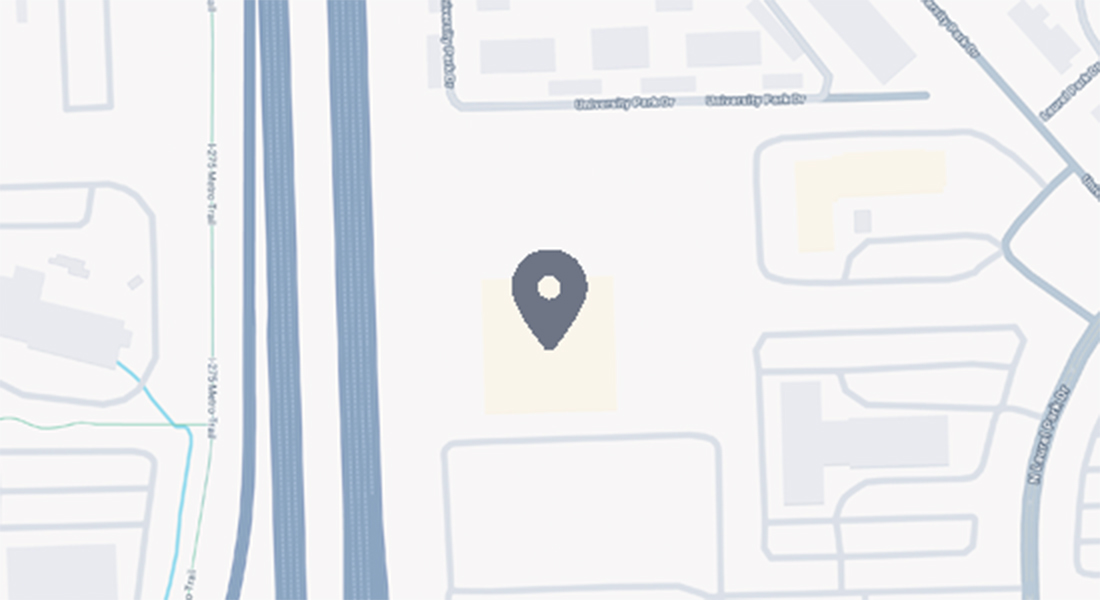
Fighting for injury victims across Michigan, proudly serving clients statewide from our office in Livonia.