Dedicated to Justice.
Devoted to You.
Winning for Your Future.
Devoted to You.
Winning for Your Future.


The discovery usually starts small. A checkbook with entries in handwriting you do not recognize. A ring that is “probably just misplaced.” ATM withdrawals from an account belonging to a woman who has not left the building in two years. A quarterly statement from the facility’s resident trust account that does not add up. Then the small thing leads to a bigger one: a changed beneficiary, a new power of attorney, a car title signed over to an aide who was “like family.”
Financial exploitation hides well, because unlike a bruise, a bank transfer looks routine until someone examines it. Vahdat Weisman Law helps Michigan families investigate financial abuse of nursing home residents, pursue what was taken, and hold accountable both the people who took it and, where the facts support it, the facilities whose failures made the taking possible. Call (734) 469-4994 for a free, confidential consultation. You pay no attorney fee unless we recover for your family.
A nursing home resident often holds a lifetime of savings while depending on others for everything, sometimes with a cognitive decline that clouds her view of her own accounts and an isolation that removes the people who used to help her watch them. The scale of the surrounding problem is documented: in its most recent annual report, released in April 2026, the FBI’s Internet Crime Complaint Center logged more than 201,000 fraud complaints from Americans 60 and older, with reported losses of $7.75 billion, up 59 percent in a single year. Those are national figures for reported internet-era fraud of all kinds, and researchers who study elder financial abuse consistently find that most incidents are never reported at all, out of shame, fear, or because the victim never learns what happened.
Inside a facility, the patterns repeat: Staff or visitors stealing cash, jewelry, and personal property from rooms. Theft from the resident trust account the facility itself manages. An aide who cultivates a lonely resident, becomes indispensable, and then becomes a joint account holder or a beneficiary. Family members or agents under a power of attorney draining accounts they were trusted to protect, which is the most common version we see described. And outside scammers, romance and investment fraudsters among them, who reach isolated residents by phone precisely because no one else is calling.
The facility itself carries legal duties here: Under 42 CFR 483.10(f)(10), a nursing home that holds residents’ funds does so as a fiduciary: amounts over $100, or over $50 for Medicaid residents, must sit in a separate interest-bearing account, never commingled with facility money, with full accounting, quarterly statements, and a surety bond or equivalent security protecting the funds. Federal law also guarantees residents freedom from exploitation and misappropriation of their property, and requires the facility to exercise reasonable care over resident property, to investigate allegations, and to report them on strict timelines. A facility that cannot produce a clean accounting for your parent’s funds has a regulatory problem of its own, and often a civil one.
Michigan treats financial exploitation of a vulnerable adult as a serious crime. Under MCL 750.174a, using fraud, deceit, misrepresentation, coercion, or unjust enrichment to obtain a vulnerable adult’s money or property is punishable on a scale that climbs with the amount: felonies begin at $1,000, and taking $100,000 or more carries up to 20 years in prison, with fines that can reach three times the value taken. The Attorney General’s office prosecutes these cases, with an Elder Abuse Task Force coordinating statewide enforcement, and the Adult Protective Services hotline takes reports day and night at 855-444-3911.
The civil side is where a family pursues recovery, and Michigan’s tools are stronger than most families expect. The most consequential is statutory conversion, MCL 600.2919a, which allows a person whose property was stolen, embezzled, or converted to recover up to three times the actual damages, plus costs and reasonable attorney fees, and reaches not only the taker but anyone who knowingly received or helped conceal the property. Treble damages are awarded at the court’s discretion, not automatically, but their availability changes the economics of these cases: a theft too small to justify litigation on its own terms becomes a claim worth defending against seriously.
Around that claim, we use what the situation calls for. Breach of fiduciary duty claims against agents under a power of attorney, duties Michigan codified and strengthened when the Uniform Power of Attorney Act took effect on July 1, 2024, including loyalty and recordkeeping obligations that make “I don’t have to explain” a losing answer. Probate proceedings to unwind deeds, beneficiary changes, and wills obtained through undue influence; Michigan presumes undue influence when a confidential or fiduciary relationship, an opportunity to influence, and a benefit to the fiduciary line up, though the presumption can be rebutted and these fights are rarely simple. Claims against the facility for trust fund failures and for negligent hiring and supervision where its own staff did the taking. And prompt work with banks: Michigan’s Financial Exploitation Prevention Act, in effect since September 2021, requires covered financial institutions to train staff to spot exploitation and allows them to delay suspicious transactions. The Act protects institutions that act in good faith rather than creating claims against them, but the reports and holds it generates create a record, and a bank alerted quickly can sometimes stop money that has not yet left.
One more thing families rarely hear early enough: a recovery can affect a resident’s Medicaid eligibility. Returned assets are still assets. Protecting eligibility, sometimes through planning tools like special needs trusts, is part of doing these cases right, and we flag it from the first conversation.
The defense in these cases is almost always the same: “she gave it to me.” Sometimes that is even true, and we tell families so when the evidence shows a lawful gift, because they deserve the truth either way. But a valid gift requires a giver with capacity and a decision free of undue influence, and capacity is measured decision by decision, at the time of signing. That is where the facility’s own records become decisive: cognitive assessments, medication lists, and care plans describing confusion and memory loss, charted by the same institution whose employee now says the resident was sharp enough to give away her savings. We put the chart beside the transactions and let the timeline speak: transfers that begin after the diagnosis, accelerate as the decline deepens, and stop when the family starts asking questions.
Exploitation also travels with other mistreatment often enough that we look at the whole picture. A caregiver taking a resident’s money has already crossed a line with that resident, and our investigations sometimes surface neglect or physical abuse alongside the missing funds.
Start with the records, quietly: Gather bank and credit card statements, the facility’s quarterly trust account statements, and copies of any power of attorney, will, or deed that changed recently. Note who had access to the room, who took her to the bank, who drove him to the notary. One caution: while your loved one is alive, the money is legally hers, and acting for her generally requires authority, a valid power of attorney, a conservatorship, or her own participation; part of our job is establishing that authority quickly when it does not exist.
Report the exploitation to Adult Protective Services at 855-444-3911: If money moved through a bank recently, alert its fraud department at once; acting fast is what gives the bank options. File a complaint with LARA if facility staff is involved, and remember Michigan’s Long-Term Care Ombudsman as an advocate inside the facility. If a power of attorney is being abused, it can be revoked if your loved one retains capacity and challenged in probate court if she does not.
Then call us before confronting anyone: A confrontation warns the exploiter to move assets, destroy records, and finish paperwork while your loved one is still alive to sign it. Evidence first, then the freeze, then the confrontation, in that order.
What the evidence supports, traced dollar by dollar. Stolen funds and property, with treble damages and attorney fees available under the conversion statute where its elements are met. Transactions unwound in probate: deeds set aside, beneficiary designations challenged, sham “gifts” returned to the estate. Damages from the facility where its failures enabled the theft. And where exploitation was accompanied by neglect or abuse that injured your loved one physically, those claims proceed alongside the financial ones. We are candid about the limits: Michigan law does not provide punitive damages, a judgment is only as good as the assets behind it, and money already spent by an insolvent exploiter may be gone. Part of our evaluation is telling you honestly what is recoverable, not just what was taken.
Financial exploitation cases are forensic work across several courts at once: circuit court claims, probate proceedings, regulatory complaints, and sometimes a parallel criminal case. We reconstruct the ledger line by line, subpoena complete account records, trace transfers, depose the notary, and match every transaction against the medical chart’s picture of your loved one’s mind on the day she supposedly signed. We report suspected crimes to the authorities because residents deserve protection, and we coordinate the civil case around any prosecution so neither harms the other.
Founding partners Kara E. Weisman and Jordan S. Vahdat have each been honored as Super Lawyers Rising Stars, and our attorneys are members of the State Bar of Michigan and active in the Michigan Association for Justice. We advance all case costs, our phones are answered 24/7, and we serve families in English and Spanish from our Livonia office. Our main nursing home abuse and neglect page covers the other failures that often accompany financial abuse.
If someone has been taking from a person you love, the law gives your family real tools to trace it, unwind it, and pursue the people responsible. Call Vahdat Weisman Law at (734) 469-4994 or contact us online for a free, confidential consultation. Available 24/7, serving all of Michigan, with Spanish-speaking staff.
Dedicated to Justice. Devoted to You. Winning for Your Future.
This information is for educational purposes only and does not constitute legal advice. Every case is unique, and prior results do not guarantee future success.




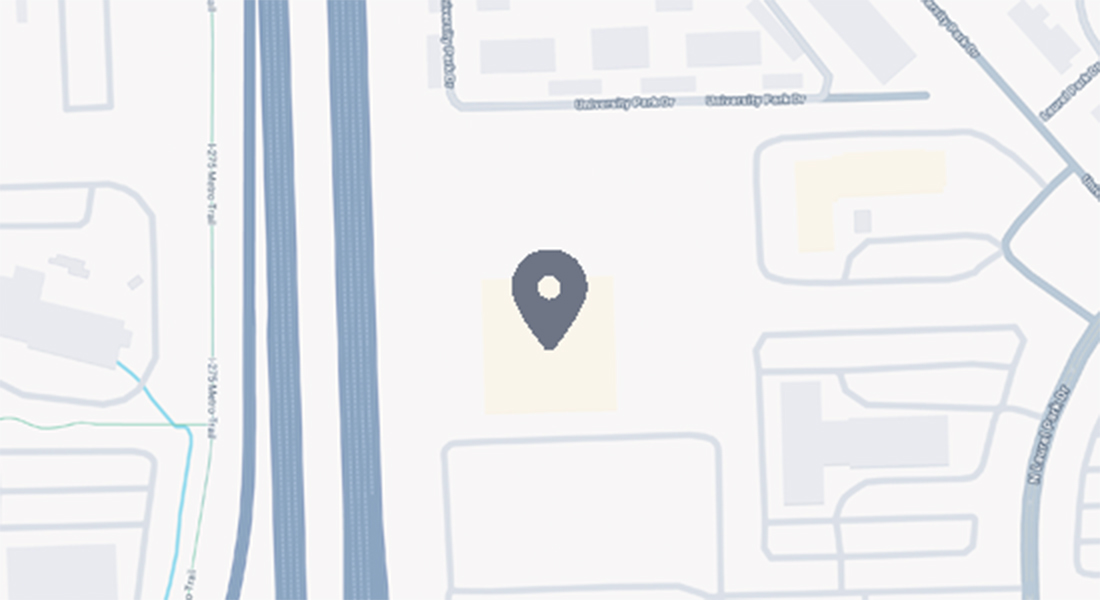
Fighting for injury victims across Michigan, proudly serving clients statewide from our office in Livonia.