Dedicated to Justice.
Devoted to You.
Winning for Your Future.
Devoted to You.
Winning for Your Future.


You fell in a store, a parking lot, or an apartment stairwell, and the owner’s insurer has a short answer: the hazard was open and obvious, so there is no claim. For about twenty years, that answer often won. A judge could dismiss your case before a jury ever heard it.
That changed in July 2023. If the property owner is relying on “it was obvious,” the argument now goes to whether the owner acted reasonably and how much of the fault was yours, not to whether you have a case at all. Vahdat Weisman Law, premises-liability attorneys, represent people hurt on someone else’s property across Michigan. Call (734) 469-4994 for a free consultation. No attorney fee unless we recover for you.
Under Lugo v. Ameritech Corp., Inc., 464 Mich. 512 (2001), an open and obvious danger was treated as part of the owner’s duty. If an average person would have seen the hazard on casual inspection, the owner generally owed no duty to protect you from it, unless the condition had “special aspects,” such as being unreasonably dangerous or effectively unavoidable. Hoffner v Lanctoe, 492 Mich 450 (2012), narrowed “effectively unavoidable” to situations where a person truly had no choice but to face the hazard.
Because duty is a question of law, judges often decided these cases on motions, before a jury heard anything.
On July 28, 2023, the Michigan Supreme Court decided two cases together (Kandil-Elsayed v F & E Oil, Inc.; Pinsky v Kroger Co of Michigan, 512 Mich 95 (2023)). In the first, a woman walked across a snowy, apparently unsalted gas station lot to pay and slipped. In the second, a shopper turned back into a Kroger and tripped over a thin cable strung across a closed checkout lane. Lower courts ruled for the owners in both cases. The Supreme Court reversed both.
The Court overruled Lugo’s holding that the open and obvious doctrine is part of duty. In the Court’s words, the open-and-obvious nature of a condition “remains a relevant inquiry.” Still, it is relevant “to the defendant’s breach and the plaintiff’s comparative fault” (read the opinion).
The Court also overruled the special-aspects doctrine to the extent it departed from the Restatement (Second) of Torts § 343A. The question now is whether the owner should have anticipated the harm despite the obviousness. If so, the owner is not relieved of the duty of reasonable care. That displaced the “effectively unavoidable” analysis from Hoffner, though later courts still cite Hoffner for how to judge whether a hazard was obvious.
The vote was 5-2. The Michigan Bar Journal’s February 2024 overview walks through the shift for lawyers.
The decision did not abolish the defense, and it did not make property owners insurers of everyone who walks in.
Your status on the property still sets the duty. Michigan keeps three categories (Kandil-Elsayed, 512 Mich 95). A shopper or customer is an invitee and is owed reasonable care against unreasonable risks. A social guest or church visitor is usually a licensee, and the owner’s duty is mainly to warn of hidden dangers it knows about. A trespasser is owed far less. Invitee status depends on whether the premises were held open for a commercial purpose (Stitt v Holland Abundant Life Fellowship, 462 Mich 591 (2000)). The Michigan Supreme Court heard argument in October 2025 on whether to replace these categories with a single reasonable-care standard, and as of this review, has not decided the question.
You still have to prove the owner knew or should have known. Notice did not move. You must show actual or constructive notice of the hazard, and the owner does not have to prove it lacked notice to win a motion (Lowrey v LMPS & LMPJ, Inc., 500 Mich 1 (2016)).
Not every case reaches a jury. The Court said that where the evidence on breach raises no genuine factual question, a judge can still decide it (Kandil-Elsayed, n 2). Owners still win motions on no-breach and no-notice grounds.
Statutes are untouched. Kandil-Elsayed is a common-law decision. It did not change the Recreational Land Use Act, which bars claims by people using someone’s land for free outdoor recreation unless the owner was grossly negligent or engaged in willful and wanton misconduct (MCL 324.73301(1)). Falls on public sidewalks and roads follow the governmental immunity rules covered on our sidewalk trip and fall page.
The owner’s defenses still exist; they now come in under breach, comparative fault, and notice.
The first is no breach: the owner acted reasonably, inspected, salted, or warned, and an ordinary person would have seen the hazard. In one recent unpublished case, the court found no breach where a pedestrian tripped over what it called “a typical construction barricade” that was not broken or hidden (Ford v City of Marshall, No. 371805 (Mich Ct App, June 20, 2025)).
The second is your own fault. The obviousness of the hazard, where you were looking, your footwear, and whether you had walked the same path minutes before all go to comparative fault.
The third is lack of notice, discussed below.
It can, but it does not bar the claim. Michigan is a comparative fault state, and your own fault does not by itself defeat recovery (MCL 600.2958). Your damages are reduced by your percentage of fault (MCL 600.2959).
There is one threshold. If your share of fault exceeds everyone else’s combined fault, you can still recover economic damages such as medical bills and lost wages, reduced by your percentage. Still, you cannot recover noneconomic damages such as pain and suffering (MCL 600.2959). Being found more than half at fault does not wipe out the whole claim.
It depends on where your case stood. Kandil-Elsayed itself did not decide whether it applied to older cases. A published Court of Appeals decision later held that it applies retroactively to cases pending on direct appeal (Gabrielson v Woods Condominium Ass’n, Inc., Docket Nos. 364809, 364813 (Mich Ct App, Jan 4, 2024)). The Supreme Court also sent several pending cases back to the lower courts for reconsideration under the new rule, and in at least one, the Court of Appeals later found a fact question that let the case continue (Vroman v. The Dessert Oasis, LLC, No. 371036 (Mich Ct App, July 11, 2025)).
There is a practical limit that matters more for most people. The general period to sue for a personal injury in Michigan is three years (MCL 600.5805(2)). A fall that happened before about mid-October 2023 is past that period unless a lawsuit was already filed or a tolling rule applies. If your case was dismissed under Lugo and the judgment became final, the new rule generally does not reopen it.
Michigan law does not treat ordinary winter weather as an excuse. A business owes its invitees reasonable measures within a reasonable time after ice and snow accumulate (Quinlivan v Great Atlantic & Pacific Tea Co, 395 Mich 244 (1975)). After Kandil-Elsayed, the fact that you could see the snow is a breach and comparative fault question, not an automatic dismissal. Several unpublished Court of Appeals decisions since 2024 have sent icy-lot and icy-entrance cases back to the trial court because the judge had relied on the old Lugo “effectively unavoidable” analysis (for example, Gohr v Kelly’s Drygoods and Grocery, Inc., No. 363479 (Mich Ct App, Apr 25, 2024), where the walkway was salted but the lot was not).
The same cases show the limits. The mere presence of ice does not, by itself, prove negligence, and a claim failed where the ice could have formed shortly before the fall (Bowers v Jacobson Brothers, LLC, No. 374793 (Mich Ct App, June 9, 2026)). By contrast, weather records showing the lot sat below freezing for about 49 hours after a thaw, plus testimony about snow piles, were enough to create a jury question on constructive notice (Creem v Singh Senior Living, LLC, No. 372823 (Mich Ct App, Oct 27, 2025)). Unpublished opinions are not binding precedent, but they show how courts are applying the new rule. Our snow and ice slip and fall page covers winter claims in more depth.
Tenants have an additional claim that doesn’t depend on the open-and-obvious debate. A landlord promises that the premises and all common areas are fit for the use intended by the parties (MCL 554.139(1)(a)). In July 2026, the Michigan Supreme Court held that whether a hazard is only an “inconvenience of access” may be relevant but is not dispositive, and found a fact question where an elderly resident fell into an uncovered, unmarked trench in her apartment complex’s parking lot before sunrise (Bowerman v. Red Oak Management Co., Inc., Docket No. 167718 (Mich., July 20, 2026)). This promise comes from the lease, so a visitor who is not a tenant generally cannot use it. See our apartment complex common area injury page.
After Kandil-Elsayed, a premises case turns on evidence of breach and notice: inspection and maintenance records, salting and plowing logs, incident reports, surveillance video, weather data, and witnesses who saw the condition before you fell. Much of that is in the owner’s hands, and video in particular may be recorded over. A written preservation demand sent soon after the fall can help preserve that evidence. Our slip-and-fall accident page explains the broader claim.
From our Livonia office, we represent injured people and their families throughout Michigan. Founding partners Kara E. Weisman and Jordan S. Vahdat have each been honored as Super Lawyers Rising Stars. Our attorneys are members of the State Bar of Michigan and active in the Michigan Association for Justice. We advance case costs, we work in English and Spanish, and we are available 24/7.
Jordan S. Vahdat is a founding partner of Vahdat Weisman Law in Livonia and handles negligence, premises liability, auto accident, and insurance dispute cases. He has been admitted to all Michigan state courts since 2014, practices in the Eastern District of Michigan, and has served as a case evaluator for the Washtenaw Circuit Trial Court and the 15th District Court since 2020. He is fluent in Spanish.
If a property owner says the hazard was obvious and your case is over, call Vahdat Weisman Law at (734) 469-4994 or contact us online for a free consultation. Available 24/7, serving all of Michigan, with Spanish-speaking staff.
Dedicated to Justice. Devoted to You. Winning for Your Future.
Reviewed by Jordan S. Vahdat, Vahdat Weisman Law. Last reviewed October 2026.
This information is for educational purposes only and does not constitute legal advice. Every case is unique, and prior results do not guarantee future success.




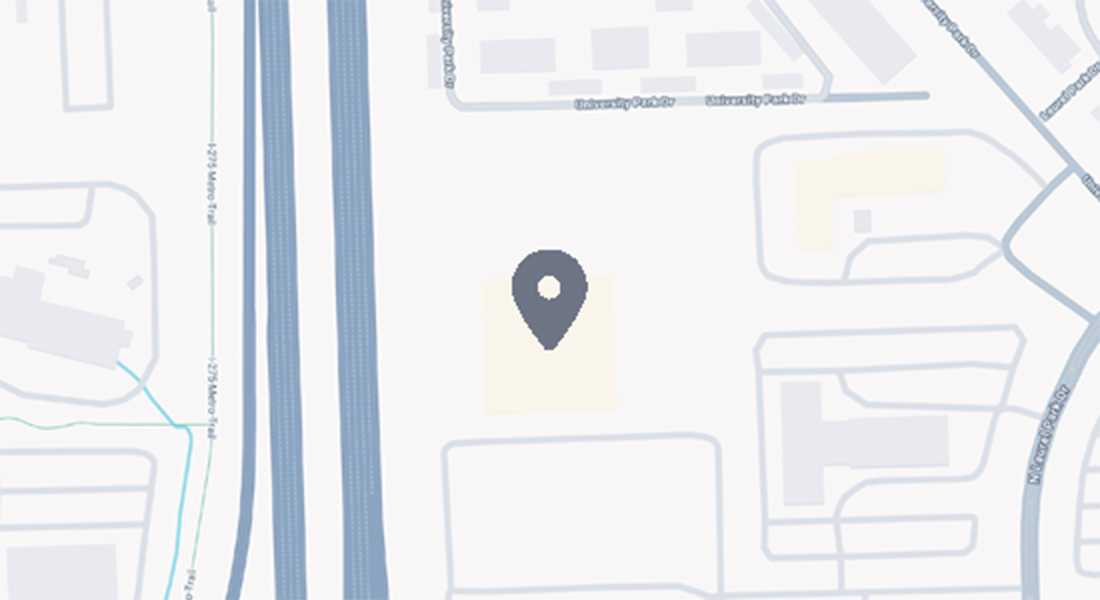
Fighting for injury victims across Michigan, proudly serving clients statewide from our office in Livonia.