Dedicated to Justice.
Devoted to You.
Winning for Your Future.
Devoted to You.
Winning for Your Future.


You were walking to the bus stop, or home from a neighbor’s, and the toe of your shoe caught the lip of a raised slab. Now there is a cast on your wrist or a knee that will not bend, and the sidewalk looks exactly as it did the day before you fell.
You can file a claim against a Michigan city, village, or township for a broken public sidewalk, but it follows its own statute and a notice clock that starts the day of the fall. Premises-liability attorneys at Vahdat Weisman Law handle sidewalk injury claims across Michigan. Call (734) 469-4994 for a free consultation. No attorney fee unless we recover for you.
Often, if the facts fit the statute, local governments are generally immune from injury suits. Still, the highway exception is one opening, and “highway” includes a “sidewalk” (MCL 691.1401). A municipal corporation with a sidewalk next to a municipal, county, or state highway “shall maintain the sidewalk in reasonable repair” (MCL 691.1402a(1)).
“Municipal corporation” means a city, village or township (MCL 691.1401(d)). The duty of the state and county road commissions stops at the improved portion of the road and “does not include sidewalks” (MCL 691.1402(1)). So the responsible party for a public sidewalk is usually the local government unit, even when the adjacent road is a state highway.
A walkway at a store, an apartment complex, or a parking lot is different. Those are ordinary premises liability claims against the owner, covered on our slip and fall accident page.
The city starts with a legal advantage: it “is presumed to have maintained the sidewalk in reasonable repair” (MCL 691.1402a(3)). That presumption can be overcome only by showing that a proximate cause of the fall was:
A judge, not a jury, decides whether the presumption has been overcome (MCL 691.1402a(4)).
This version dates from 2012 PA 50. The older statute treated a gap under two inches as a rebuttable inference, and the Michigan Supreme Court limited that rule to sidewalks next to county highways (Robinson v. City of Lansing, 486 Mich 1 (2010)). Any description of the two-inch rule as an “inference” is describing the old law.
The Supreme Court applied the current statute in a Detroit case, holding that a metal sign-post stub about five inches tall, embedded in the middle of the walkway, qualified under both branches (Mann v. City of Detroit, Docket No. 166619 (Mich., June 11, 2025) (order)).
The claim is harder, but that fact alone does not end it. The second branch covers a dangerous condition “in the sidewalk itself” that is not solely a height difference. A deep hole, a crumbled section, or a broken slab that tilts or rocks may fit, depending on its particular character.
Measurement matters too. A slab can be 1 3/4 inches at one corner and over 2 inches at another, and the number that counts is the one where your foot caught.
You must also show the municipality “knew or, in the exercise of reasonable diligence, should have known” of the defect “at least 30 days before” the fall (MCL 691.1402a(2)).
A companion section helps. Knowledge and time to repair are “conclusively presumed” when the defect was readily apparent to an ordinarily observant person for 30 days or more before the injury (MCL 691.1403). Proof of age can come from weathering on the broken edge, neighbors who remember the slab, Street View history, and the city’s own complaint and repair records.
This step has a fixed deadline and fixed contents. Within 120 days of the injury, the claimant must serve written notice on the government unit, and it “shall specify the exact location and nature of the defect, the injury sustained and the names of the witnesses known at the time by the claimant” (MCL 691.1404(1)).
It may be served on any individual who can lawfully accept civil process for that unit, personally or by certified mail, return receipt requested, and a city charter cannot change that rule (MCL 691.1404(2)).
Courts enforce the 120 days strictly, with no requirement that the city show a late notice harmed it (Rowland v. Washtenaw County Road Commission, 477 Mich 197 (2007)). The statute itself extends the period to 180 days if you were under 18 when you fell, or to 180 days after the disability ends if you were physically or mentally unable to give notice (MCL 691.1404(3)).
A timely notice can survive small imperfections in its contents if it brings the important facts to the agency’s attention (Plunkett v. Department of Transportation, 286 Mich App 168 (2009)). Location is not the place to be approximate. In a 2026 Detroit sidewalk case, a notice naming the wrong intersection was held deficient, and photographs and an amended complaint supplied after 120 days could not repair it (Smith v City of Detroit, No. 375270 (Mich Ct App, June 9, 2026) (unpublished)).
If you fell in Detroit
The City of Detroit’s claim form is headed “Notice of Claim Must Be Filed Not Later Than 45 Days from the Date of Accident,” must be notarized, and goes to the Law Department’s Claims Section at 2 Woodward Avenue, Suite 500. The city’s law claim page says filing that claim “is not a substitute for, nor does it excuse compliance with,” the state notice requirements. Treat them as two separate filings.
Plan on two years from the fall. Highway-exception claims carry a two-year limitations period (MCL 691.1411), shorter than the three years for most Michigan injury suits. The 120-day notice runs inside that window and does not extend it.
Usually not, if the sidewalk is public. “[T]here is no duty, absent a statute, of an abutting owner as to the condition of the sidewalk or public way,” unless the owner physically intruded on it or did something that increased the hazard or created a new one (Berman v LaRose, 16 Mich App 55 (1969)). A panel applied that rule again this year (Postlewait v Storage Group LLC, No. 376473 (Mich Ct App, Aug 11, 2026) (unpublished)).
An owner whose driveway project cracked the walk, or who routed a downspout across it, may be a second defendant. Many cities also bill owners for sidewalk repair by ordinance, which is a separate question from liability to a pedestrian. Sorting out the homeowner’s role should not delay the notice to the city.
Yes. The sidewalk statute lets the municipality raise any common-law defense, including “a defense that the condition was open and obvious” (MCL 691.1402a(5)).
What that defense does has changed. Open and obvious now goes to breach and comparative fault, not to whether a duty exists (Kandil-Elsayed v F & E Oil, Inc., 512 Mich 95 (2023)). Applying that to a city sidewalk, one panel held that the obviousness of the defect “no longer precludes the existence of a duty,” found that photographs showing more than two inches rebutted the presumption, and sent the case back (Logan v City of Southgate (On Remand), No. 348644 (Mich Ct App, June 27, 2024) (unpublished)). Our open and obvious doctrine page explains the 2023 change.
Your own share of fault still reduces what you recover, and if it exceeds everyone else’s combined share, noneconomic damages are barred (MCL 600.2959).
Ice on a public walk is analyzed differently from a broken slab, because the statute speaks of conditions “in the sidewalk itself”; see our snow and ice slip and fall page.
Once a city grinds or replaces a slab, the best evidence is gone. If you or a family member can go back:
Write down the nearest address, the distance from the corner, the lighting, and the names of anyone who stopped to help, since those names belong in the notice. If the fall broke a bone, our fractures and orthopedic injury page covers what the medical record needs to show.
A sidewalk claim turns on early documents: a notice stating the location, defect, injury, and witnesses within 120 days; measured photographs; and proof the condition existed long enough for the city to know. We start with the notice, because it cannot be fixed after the deadline, and we check whether an abutting owner or contractor contributed to the hazard.
From our Livonia office, we represent injured people and their families throughout Michigan. Founding partners Kara E. Weisman and Jordan S. Vahdat have each been honored as Super Lawyers Rising Stars. Our attorneys are members of the State Bar of Michigan and active in the Michigan Association for Justice. We advance case costs, we work in English and Spanish, and we are available 24/7.
Jordan S. Vahdat is a founding partner of Vahdat Weisman Law in Livonia and handles negligence, premises liability, auto accident, and insurance dispute cases. He has been admitted to all Michigan state courts since 2014, practices in the Eastern District of Michigan, and has served as a case evaluator for the Washtenaw Circuit Trial Court and the 15th District Court since 2020. He is fluent in Spanish.
If you were hurt on a broken public sidewalk, call Vahdat Weisman Law at (734) 469-4994 or contact us online for a free consultation. Available 24/7, serving all of Michigan, with Spanish-speaking staff. Our pothole and road defect accident pages cover related ground.
Dedicated to Justice. Devoted to You. Winning for Your Future.
Reviewed by Jordan S. Vahdat, Vahdat Weisman Law. Last reviewed October 2026.
This information is for educational purposes only and does not constitute legal advice. Every case is unique, and prior results do not guarantee future success.




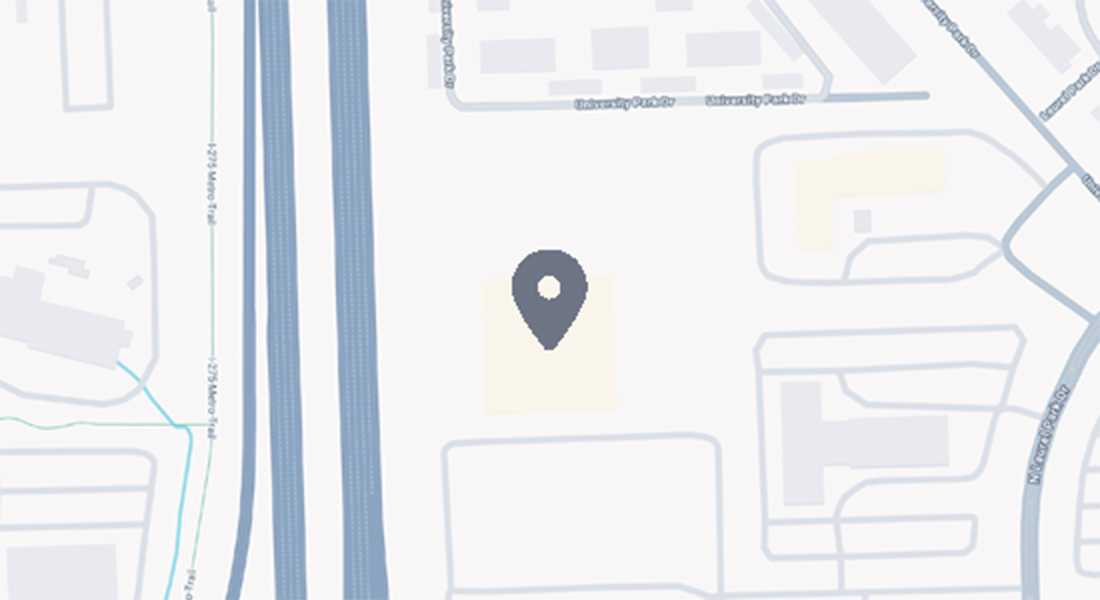
Fighting for injury victims across Michigan, proudly serving clients statewide from our office in Livonia.