Dedicated to Justice.
Devoted to You.
Winning for Your Future.
Devoted to You.
Winning for Your Future.


After a house fire, you may be living in a hotel or with relatives while an adjuster walks through what is left of your home. Then the paperwork arrives: a request for a room-by-room inventory, a notice of an examination under oath, a check made out to your mortgage company, and perhaps a letter saying they’ll hold back part of the money.
Vahdat Weisman Law property damage claims attorneys represent Michigan homeowners whose fire claims have been delayed, underpaid, or denied. Call (734) 469-4994 for a free consultation. No attorney fee unless we recover for you.
Michigan recorded 157 civilian fire deaths in 2023, a rate of 15.6 per million residents, compared with a national rate of 13.1 (U.S. Fire Administration).
Your declarations page and policy decide what is covered. Many Michigan homeowners policies have separate parts that matter after a fire:
Michigan law sets a floor for every fire policy. It must cover “the actual cash value of the property at the time of the loss,” and it must give at least the protection of the old standard fire policy (MCL 500.2833(1)(a), (2)).
Many policies pay replacement cost in two stages. First, you receive actual cash value, which is generally replacement cost minus depreciation. You receive the withheld depreciation, often called the holdback, only after you repair or replace.
No Michigan statute sets how long you have to rebuild and claim the holdback; section 2833 is silent on replacement cost (MCL 500.2833(1)(n)). Your policy sets the window. In one unpublished 2025 case, the policy allowed the difference to be claimed “within two years after the date of loss,” and homeowners who did not claim in time lost the withheld depreciation (MemberSelect Insurance Co v Yono, Docket No. 369756 (Mich Ct App, May 8, 2025)). Find your deadline and calendar it.
Replacement does not always mean rebuilding on the same lot. After a fire in Monroe, a homeowner bought a different house on a land contract, and the Court of Appeals held that purchase counted as complete replacement. Hence, the insurer owed the full holdback plus statutory interest (Batton-Jajuga v Farm Bureau General Insurance Co of Michigan, 322 Mich App 422 (2017)).
You bear the burden of documenting your contents. Most policies require an inventory listing each item, its quantity, age, and replacement cost.
Work room by room, using what survives outside the house: phone photos and videos, online order histories, card and bank statements, and warranty registrations. Note where each figure came from, and do not guess high. An inflated number can undermine the entire claim.
Many policies require you to submit to an examination under oath and to produce records the insurer reasonably requests. An examination under oath is sworn questioning, usually by a lawyer hired by the insurer, with a court reporter present. It is a policy condition, not a lawsuit, and you may bring your own attorney.
Refusing to appear, or ignoring document demands, can cost you the claim. A federal appeals court applying Michigan law upheld the denial of a second fire claim where resident family members refused examinations and the homeowners never produced the tax, bank, phone, and social media records requested (Durasevic v Grange Insurance Co of Michigan, No. 18-2035 (6th Cir, July 11, 2019) (unpublished)).
Your policy can also be voided “based on misrepresentation, fraud, or concealment” (MCL 500.2833(1)(c)). Michigan courts generally require that the statement be material and knowingly or recklessly false, not an honest mistake (Mina v General Star Indemnity Co, 218 Mich App 678 (1996), rev’d in part on other grounds 455 Mich 866 (1997)). Prepare with your records, and say “I don’t know” when you don’t. A recorded statement to an adjuster is a different thing; check what your policy actually requires before agreeing to one, and ask for a copy of anything recorded.
An undetermined fire cause, a prior claim, or financial strain can lead an insurer to investigate an intentional-act or concealment defense. Being investigated is not the same as being found responsible, and a coverage dispute is a civil matter decided separately from any criminal case.
If you face any criminal exposure, talk to a criminal defense lawyer before you give sworn testimony in the claim. You can generally obtain the fire department’s incident report, filed with the state (MCL 29.4), through a Freedom of Information Act request. However, records can be withheld where release would interfere with an open law enforcement proceeding (MCL 15.243(1)(b)(i)).
Michigan protects the innocent co-insured. If another person insured under your policy intentionally caused the loss and you had no part in it, the insurer cannot deny your fire coverage on that basis (Borman v. State Farm Fire & Casualty Co., 446 Mich 482 (1994)). The Court of Appeals held that the current statute preserves that protection (Williams v Auto Club Group Insurance Co, 224 Mich App 313 (1997)).
A mortgaged home’s policy normally names the lender under a mortgagee clause (MCL 500.2833(1)(j)), so dwelling checks often list both of you. Lenders commonly release the money in draws as repairs progress. Ask your servicer in writing for its loss-draft procedure.
Some Michigan communities hold part of a large fire settlement in escrow so a burned structure doesn’t sit unrepaired. Both programs below apply only in communities that have opted in by resolution, and only where the final settlement exceeds 49% of the insurance on the building. The insurer withholds 25% of the actual cash value or 25% of the settlement, whichever is less.
The municipality has 15 days after notice to ask that the money be held, and you have 10 days from the mailing to object, locally or in circuit court. The money is released on reasonable proof that you repaired, replaced, or removed the structure, or signed a contract to do so. If no proof arrives within 120 days after the treasurer receives the funds, the municipality may use it to secure, repair, or demolish the structure and return any unused funds. Under section 2845, you don’t have to withhold anything if you file a repair contract within 15 days after agreeing to the settlement and consent to direct payment to the contractor. The DIFS fire insurance withholding FAQ explains the program, and DIFS can tell you whether your community participates.
A public adjuster works for you, not the insurer, and must be licensed. The fee may not exceed 10% of what the insurer pays, and you can void a contract signed within 48 hours after the fire at your option for 10 days (MCL 500.1226(3), (4)). A public adjuster may not be connected with a fire repair contractor (MCL 500.1224).
Michigan does not allow damages for emotional distress or punitive damages for an insurer’s breach of the policy (Kewin v. Massachusetts Mutual Life Insurance Co., 409 Mich 401 (1980)). Your recovery is the policy benefits, the interest, and the costs the law allows. You can also file a complaint with the Department of Insurance and Financial Services. See our underpaid and delayed insurance claims page for more.
We start with the certified policy, the adjuster’s and cause-and-origin reports, the fire department’s records, and the dates of notice and denial that control your suit deadline, then hold the insurer to what the policy promises.
From our Livonia office, we represent injured people and their families throughout Michigan. Founding partners Kara E. Weisman and Jordan S. Vahdat have each been honored as Super Lawyers Rising Stars. Our attorneys are members of the State Bar of Michigan and active in the Michigan Association for Justice. We advance case costs, we work in English and Spanish, and we are available 24/7.
Jordan S. Vahdat is a founding partner of Vahdat Weisman Law in Livonia and handles negligence, premises liability, auto accident, and insurance dispute cases. He has been admitted to all Michigan state courts since 2014, practices in the Eastern District of Michigan, and has served as a case evaluator for the Washtenaw Circuit Trial Court and the 15th District Court since 2020. He is fluent in Spanish.
If your fire claim has been delayed, underpaid, or denied, call Vahdat Weisman Law at (734) 469-4994 or contact us online for a free consultation. Available 24/7, serving all of Michigan, with Spanish-speaking staff.
Dedicated to Justice. Devoted to You. Winning for Your Future.
Reviewed by Jordan S. Vahdat, Vahdat Weisman Law. Last reviewed October 2026.
This information is for educational purposes only and does not constitute legal advice. Every case is unique, and prior results do not guarantee future success.




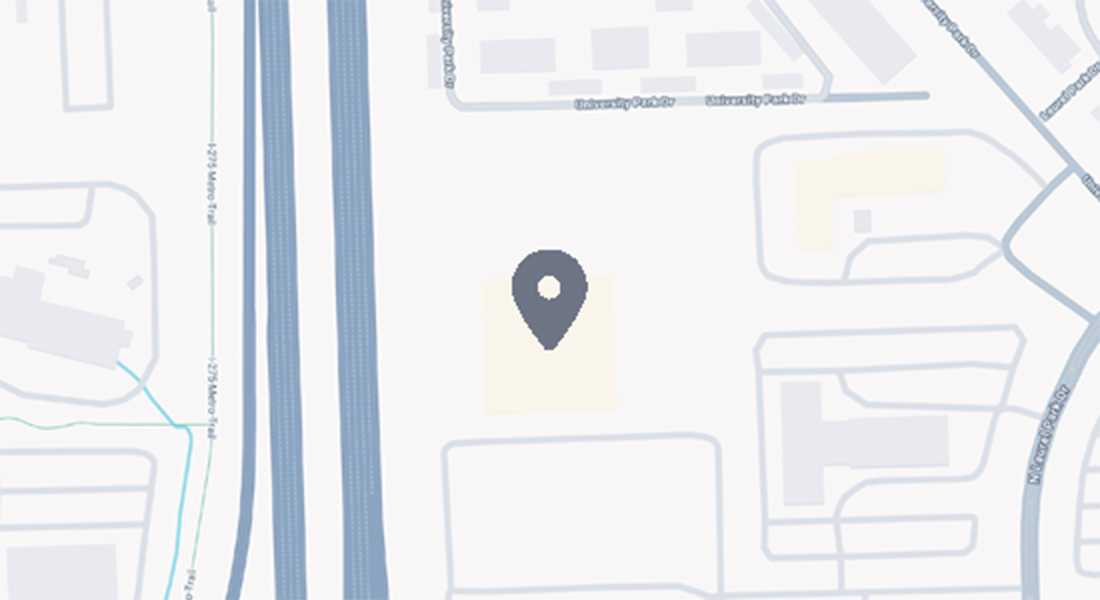
Fighting for injury victims across Michigan, proudly serving clients statewide from our office in Livonia.