Dedicated to Justice.
Devoted to You.
Winning for Your Future.
Devoted to You.
Winning for Your Future.


You were a young person in a place you could not leave. The adults who controlled when you ate, slept, showered, and called home were also the people responsible for keeping you safe. If one of them sexually abused you in a county detention center, a state facility, or a privately run residential treatment program, the questions that follow are hard ones: whether anyone will believe you, whether it is too late, and what happens to your record.
Sexual abuse attorneys at Vahdat Weisman Law represent survivors of sexual abuse across Michigan, including people who were abused as teenagers in juvenile placements. Call (734) 469-4994 for a free, confidential consultation. No attorney fee unless we recover for you.
Whatever was said at the time, Michigan law does not treat sexual contact between facility staff and a youth in their custody as a relationship. It is a crime that does not depend on force:
The federal standards for juvenile facilities define staff sexual abuse of a resident as covering acts “with or without consent” (28 CFR 115.6). That matters to your civil case, because Michigan’s longest filing periods attach to criminal sexual conduct.
Michigan generally does not make an employer automatically liable for an employee’s sexual assault (Zsigo v Hurley Medical Center, 475 Mich 215 (2006)). Claims against the facility or the agency behind it depend on who ran it and what it knew.
Private operators. Private companies or nonprofits run many Michigan placements under contract with counties or the state. A private operator has no governmental immunity (MCL 691.1407), so it can be sued for negligent hiring, retention, and supervision. Those claims turn on whether it knew or should have known of a staff member’s dangerous propensity (Hersh v Kentfield Builders, Inc., 385 Mich 410 (1971); Brown v Brown, 478 Mich 545 (2007)). A private company performing a traditional state function can also face federal civil rights claims. However, it is liable only for its own policy or custom (Street v. Corrections Corp of America, 102 F.3d 810 (6th Cir 1996)). A June 2024 U.S. Senate Finance Committee investigation of large private youth residential treatment operators reported that “horrific instances of sexual abuse persist unremediated” in such facilities (Senate Finance Committee, June 12, 2024).
Since 2024, former residents of Michigan youth facilities, both privately operated and county-run, have filed civil suits alleging sexual abuse by staff, and some name state officials as well. Those are allegations, and no other case predicts how yours would turn out.
You may be able to, but usually not through an ordinary negligence claim. A county operating a juvenile detention center is generally immune from tort liability while performing a governmental function (MCL 691.1407(1)). Individual employees can be reached when their conduct was grossly negligent and the proximate cause of your injury, and intentional torts such as sexual assault are analyzed separately (MCL 691.1407(2), (3)).
The stronger route against a county is often federal. Under 42 USC 1983, you can sue people who violated your constitutional rights while acting for the government. “If the ‘right to bodily integrity’ means anything, it certainly encompasses the right not to be sexually assaulted under color of law” (Doe v. Claiborne County, 103 F.3d 495 (6th Cir. 1996)). The staff member who committed the abuse can be sued directly. Supervisors and officials who knew of the risk and recklessly failed to act may be liable as well; for detained youth, Sixth Circuit courts apply a Fourteenth Amendment standard that does not require proof of what an official subjectively knew (Brawner v. Scott County, 14 F.4th 585 (6th Cir. 2021)).
The county itself is liable only for its own policy or custom, such as a clear and persistent pattern of abuse that officials knew about and tacitly allowed (Monell v. Department of Social Services, 436 US 658 (1978); Doe v. Claiborne County). Earlier complaints, ignored grievances, chronic understaffing, and inspection findings can supply that evidence.
The State of Michigan cannot be sued for damages under 1983 (Will v. Michigan Department of State Police, 491 US 58 (1989)), and it is generally immune from tort claims. Individual state employees can still be sued under 1983, and a state notice-of-claim rule does not apply to that federal claim (Felder v Casey, 487 US 131 (1988)).
For any state-law claim against the state, the clock is short and strict. A personal injury claim against the state requires filing a written claim or notice of intent with the Court of Claims within six months after the event (MCL 600.6431(4)), and the statute makes no exception for minors. Courts require strict compliance and dismiss claims that miss it, even without prejudice to the state (Christie v Wayne State University, Docket No. 162706 (Mich May 2, 2023)).
The Prison Rape Elimination Act (34 USC 30301 et seq.) led to national standards for juvenile facilities (28 CFR 115.311 to 115.393). Among them, secure juvenile facilities must keep security staffing of at least 1:8 during waking hours and 1:16 during sleeping hours (28 CFR 115.313(c)), and facilities must give residents at least one way to report abuse to an entity outside the agency (28 CFR 115.351(b)).
PREA itself does not give you a right to sue, and courts have consistently dismissed claims based on PREA alone. The standards still matter as evidence of what a reasonable facility does, and a facility that ignored them may have a harder time defending its supervision.
In the most recent National Survey of Youth in Custody, 7.1% of youth in juvenile facilities reported sexual victimization in 2018, and 5.8% reported sexual misconduct by staff (Bureau of Justice Statistics, December 2019).
Possibly. For abuse suffered as a minor, Michigan allows a claim based on criminal sexual conduct until you turn 28, or within three years after you discover, or reasonably should have discovered, both the injury and its connection to the abuse, whichever is later (MCL 600.5851b(1)). A separate 10-year period applies to criminal sexual conduct claims (MCL 600.5805(6)), and neither requires a criminal charge or conviction. These rules took effect June 12, 2018, and they do not revive claims that had already expired before that date (McLain v Roman Catholic Diocese of Lansing, 514 Mich 1 (2024)).
Federal civil rights claims follow a different clock. Courts in Michigan borrow the state’s three-year injury period (Wolfe v Perry, 412 F.3d 707 (6th Cir 2005)) along with Michigan’s tolling rules (Hardin v Straub, 490 US 536 (1989)), which for a minor generally allow at least one year after turning 18 (MCL 600.5851(1)). Bills to lengthen Michigan’s abuse deadlines have passed the Senate but are not law. Our sexual abuse statute of limitations page explains each clock.
The claim is about what an adult with power over a child did, not about why a court ordered the placement. Michigan’s evidence rule generally does not allow you to use a juvenile adjudication to attack your credibility in a civil case (MRE 609(e)). Juvenile court records are not open to the general public (MCL 712A.28(3)), and many adjudications are now set aside automatically, two years after court supervision ends or at age 18, whichever is later, with exceptions for certain serious offenses (MCL 712A.18t).
A defendant may still seek facility records about you, and your attorney can ask the court for a protective order limiting how sensitive information is used (MCR 2.302(C)). Michigan appellate courts have allowed survivors of childhood sexual abuse to proceed under initials. If you are still in custody, federal law generally requires you to use the facility’s grievance process before filing a federal suit, a requirement that no longer applies once you are released (42 USC 1997e(a)).
If you or a young person you know is in danger, call 911. Michigan’s child abuse hotline, MDHHS Centralized Intake, is 855-444-3911. Michigan renamed the Office of Children’s Ombudsman the Office of the Child Advocate in December 2023, and it now also reviews administrative actions at juvenile justice detention facilities (State of Michigan, December 13, 2023). A civil claim does not require a police report; see suing without criminal charges.
These cases depend on identifying who ran the facility, whether each defendant is private, county, or state, which notice and filing clocks apply, and what the operator knew before you were hurt. We handle them with discretion and without judgment about why you were placed there.
From our Livonia office, we represent clients throughout Michigan. Founding partners Kara E. Weisman and Jordan S. Vahdat have each been honored as Super Lawyers Rising Stars. Our attorneys are members of the State Bar of Michigan and active in the Michigan Association for Justice. We advance case costs, we work in English and Spanish, and we are available 24/7.
Kara E. Weisman is a founding partner of Vahdat Weisman Law in Livonia and handles medical malpractice, wrongful death, civil rights, and personal injury claims. She clerked at the Ingham County Probate Court and the Federal Defender’s Office for the Eastern District of Michigan, and is admitted to all Michigan state courts and the Eastern and Western Districts of Michigan.
If a staff member, contractor, or volunteer sexually abused you or your child in a Michigan juvenile detention center, residential treatment program, or other youth placement, call Vahdat Weisman Law at (734) 469-4994 or contact us online. The conversation is free and confidential. See also our foster care, group home abuse, and child sexual abuse pages.
Dedicated to Justice. Devoted to You. Winning for Your Future.
Reviewed by Kara E. Weisman, Vahdat Weisman Law. Last reviewed October 2026.
This information is for educational purposes only and does not constitute legal advice. Every case is unique, and prior results do not guarantee future success.




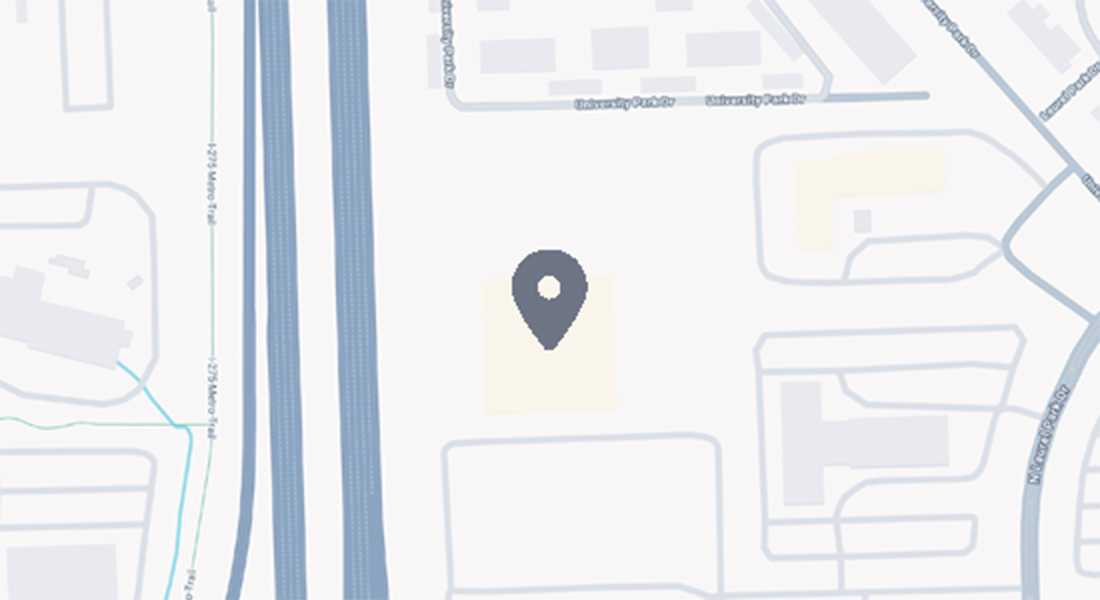
Fighting for injury victims across Michigan, proudly serving clients statewide from our office in Livonia.