Dedicated to Justice.
Devoted to You.
Winning for Your Future.
Devoted to You.
Winning for Your Future.


In the weeks after a fatal fire, the building is boarded up or torn down, an insurer’s investigator takes the appliance away, and your family is told the cause is under investigation. By then, much of what would prove a claim is gone.
Michigan’s Bureau of Fire Services recorded 104 fire deaths in 92 fatal fires in fiscal year 2025 in its annual report published in December 2025. Eleven were children, up from five the year before. The same report found no working smoke alarm in 75 percent of those homes.
Vahdat Weisman Law wrongful death attorneys represent Michigan families after fatal fires and explosions. Call (734) 469-4994 for a free, confidential consultation. No attorney fee unless we recover for you.
You will not file in your own name. A fatal fire claim is a wrongful death claim, and MCL 600.2922(2) requires the personal representative of the estate to bring it, not a spouse, parent, or child. Nothing is filed until a probate court issues letters of authority. Subsection (3) sets out who may be entitled to damages; subsection (6) sets out what may be awarded and how it is divided; our page on the personal representative and distribution process covers that.
If a public body was involved, the ground shifts. Where a public housing commission, municipal gas utility, public fire department, or code enforcement agency is involved, the governmental tort liability act, MCL 691.1401 and following, applies: immunity is the rule, the exceptions narrow. The public building exception, MCL 691.1406, carries its own notice requirement, a claim against the state, separate from the one in MCL 600.6431. Both periods are short.
It is usually dismantled during the property insurance claim, before your family knows a civil claim exists: the insurer’s investigator removes the suspected appliance, heater, or battery pack, subrogation counsel takes it, the building is gutted or demolished.
NFPA 921, the Guide for Fire and Explosion Investigations, is the recognized standard here and the basis for challenging a flawed investigation and for spoliation motions. It matters to admissibility too: MRE 702 governs expert testimony in Michigan, and the trial court is the gatekeeper on the reliability of the methodology (Gilbert v DaimlerChrysler Corp, 470 Mich 749 (2004)). An opinion departing from NFPA 921 without explanation is exposed there.
More of the official record is open to you than families expect: any writing prepared, owned, used, possessed, or retained in performing an official function under the Fire Prevention Code falls under the Freedom of Information Act, with the exceptions in subsections (10) and (11) (MCL 29.3b(9)).
MCL 29.4 adds two points. Under subsection (5), an insurer with reason to suspect a fire loss was incendiary must notify the Bureau of Fire Services and furnish what it gathered. Under subsection (4), fire and law enforcement officials can compel an insurer to release its policy, premium, claims history, and investigation materials, and subsection (7) directs them to hold it in confidence until release is required in the course of or pursuant to a criminal or civil proceeding. The State Fire Marshal’s authority under MCL 29.6 and MCL 29.7 includes subpoena power.
Whether Michigan required one depends on the building and where in the state it stands.
MCL 125.482a, part of the Housing Law of Michigan, requires smoke alarms in class “A” multiple dwellings, a violation being a misdemeanor. Two limits are easy to miss. By its terms, it does not reach single-family rental houses or duplexes. And the Housing Law is not statewide: MCL 125.401 applies it by population and geography: cities and organized villages of 100,000 or more, the area within two and a half miles of them, and municipalities of 10,000 or more, its private dwelling and two-family dwelling provisions reaching smaller communities outside that radius only if the local legislative body adopted them. So the claim that it makes every Michigan landlord install alarms is wrong twice over.
MCL 125.1504c, part of the state construction code act, covers buildings constructed before November 6, 1974 and directs rules requiring at least one single-station smoke alarm in each dwelling unit of single-family, duplex and multifamily dwellings, the obligation on the owner. That one applies statewide.
For existing buildings, Mich Admin Code R 408.30546 sets the practical requirements: alarms in each sleeping room or its immediate vicinity and on each floor level including the basement, audible in all occupiable dwelling areas. The owner is responsible for proper operation, testing, and maintenance; the occupant of a rental unit is responsible for “the periodic operational testing and periodic cleaning of the installed equipment,” with repairs done within 30 days if the system fails or goes out of service. New and substantially renovated dwellings fall under the current Michigan Residential Code: interconnected, hardwired smoke alarms with battery backup and carbon monoxide alarms.
On top sit the landlord’s general covenants under MCL 554.139: premises and common areas fit for the use intended, premises in reasonable repair and compliant with health and safety laws. Those operate independently of common law (Allison v AEW Capital Management, LLP, 481 Mich 419 (2008)).
Expect to hear that your relative removed a battery or disabled an alarm. It is not an open and obvious argument. Kandil-Elsayed v F & E Oil, Inc., 512 Mich 95 (2023), overruled Lugo and moved open and obvious into breach and comparative fault for common-law invitee claims. It does not change the statutory claim, because open and obvious was never a defense under MCL 554.139. Woodbury v Bruckner, 467 Mich 922 (2002); Allison v AEW Capital Management, LLP, 481 Mich 419, 425 n 2 (2008).
What gets fought over: whether the alarm system as installed and maintained satisfied the covenant, how much of the leased interior the landlord controlled, what the rule assigns to owner and occupant, and how a tenant’s conduct weighs as comparative fault under MCL 600.2959 rather than a bar.
Most deaths in residential fires come from smoke and carbon monoxide rather than flame, so detection and escape time decide these cases: a missing alarm, a blocked exit, a building alarm silenced for nuisance activations. The medical examiner’s findings drive which conditions your case is built around. Our burn injuries and carbon monoxide and toxic exposure pages cover related claims.
If anyone had been digging near your relative’s home, a statute covers exactly that. Michigan’s Underground Facility Damage Prevention and Safety Act, 2013 PA 174, MCL 460.721 and following, requires an excavator to call MISS DIG through 811 at least 72 hours, and not more than 14 calendar days, before excavating or blasting, not counting Saturdays, Sundays, and holidays. Facility owners must mark their lines within set timeframes, within three hours for an emergency. The tolerance zone is narrower than often described: no wider than the facility plus 24 inches on either side, or 18 inches on each side of the marked centerline where the diameter is unknown. If excavation damages a facility and flammable or toxic gas escapes, the statute requires a 911 call and immediate notice to the operator. MISS DIG tickets are time-stamped evidence of who called.
Gas is supposed to smell. Under 49 CFR 192.625, adopted in Michigan’s rules, it must be odorized to be detectable by a person with a normal sense of smell at one-fifth of the lower explosive limit. Operators must keep odorization records, an early discovery target, and the Michigan Public Service Commission enforces gas safety standards.
Propane is odorized on the same principle, but odorant fade, where the odorant is adsorbed onto new tank walls or rust and the gas loses its warning smell, is a separate theory against a supplier or installer.
The Consumer Product Safety Commission reported in April 2026 that micromobility products were associated with 533 deaths from 2017 through 2024, rising from 5 in 2017 to 135 in 2024, 45 of them from battery-related fires. In June 2026, CPSC issued a proposed safety standard for lithium-ion batteries in micromobility products. Being proposed rather than a final federal standard, it does not yet supply a compliance benchmark, though the rulemaking record can be evidence of what was known about the hazard.
The kind of defect changes the proof. A production defect claim, meaning this unit departed from its intended design, is governed by MCL 600.2946(2): you must establish that “a practical and technically feasible alternative production practice was available that would have prevented the harm without significantly impairing the usefulness or desirability of the product.”
A design defect claim is not. Michigan applies a common-law risk-utility test under Prentis v Yale Manufacturing Co, 421 Mich 670 (1984): you must show the risks of the design as chosen outweighed its utility and that a practical and technically feasible alternative design was available.
Subsection (4) of MCL 600.2946 creates a rebuttable presumption against liability where the aspect of the product alleged to have caused harm complied with relevant federal or state standards, which is why counterfeit certification matters in imported battery cases.
Non-economic damages in product cases are capped under MCL 600.2946a. Treasury set the 2026 figures at $596,400 and, for a defect causing death or permanent loss of a vital bodily function, $1,065,000.
That ceiling is not absolute. MCL 600.2946a(3) provides that the subsection (1) limitation for death or permanent loss of a vital bodily function does not apply where the trier of fact finds the defendant’s gross negligence caused the death or loss, or where the court finds the circumstances described in MCL 600.2949a.
MCL 600.2949a describes those circumstances: the court determines that at the time of manufacture or distribution the defendant had actual knowledge the product was defective and that there was a substantial likelihood the defect would cause the injury, and willfully disregarded it. Sections 2946(4), 2946a, 2947(1) to (4) and 2948(2) then do not apply. Our defective product wrongful death page covers product claims generally.
You will likely have two claims at once: workers’ compensation, and a third-party claim against a contractor, manufacturer, supplier, or property owner. Our industrial fire and explosion and third-party work injury pages explain how they fit together.
Much of what proves a fire death case is perishable: the scene before it is cleared, the appliance before it reaches a scrap yard, video and dispatch records on ordinary retention cycles. Our first work is preservation demands to the owner, the insurer, and the fire department. Where the evidence points to an accidental cause, you hear that too.
From our Livonia office, we represent families throughout Michigan. Founding partners Kara E. Weisman and Jordan S. Vahdat have each been honored as Super Lawyers Rising Stars. Our attorneys are members of the State Bar of Michigan and active in the Michigan Association for Justice. We advance case costs, we work in English and Spanish, and we are available 24/7.
Kara E. Weisman is a founding partner of Vahdat Weisman Law in Livonia and handles medical malpractice, wrongful death, civil rights, and personal injury claims. She clerked at the Ingham County Probate Court and for the Federal Defender’s Office for the Eastern District of Michigan, and is admitted in all Michigan state courts and in the Eastern and Western Districts of Michigan.
If your family lost someone in a fire or explosion, call Vahdat Weisman Law at (734) 469-4994 or contact us online for a free consultation. Available 24/7, serving all of Michigan, with Spanish-speaking staff.
Dedicated to Justice. Devoted to You. Winning for Your Future.
Reviewed by Kara E. Weisman, Vahdat Weisman Law. Last reviewed September 2026.
This information is for educational purposes only and does not constitute legal advice. Every case is unique, and prior results do not guarantee future success.




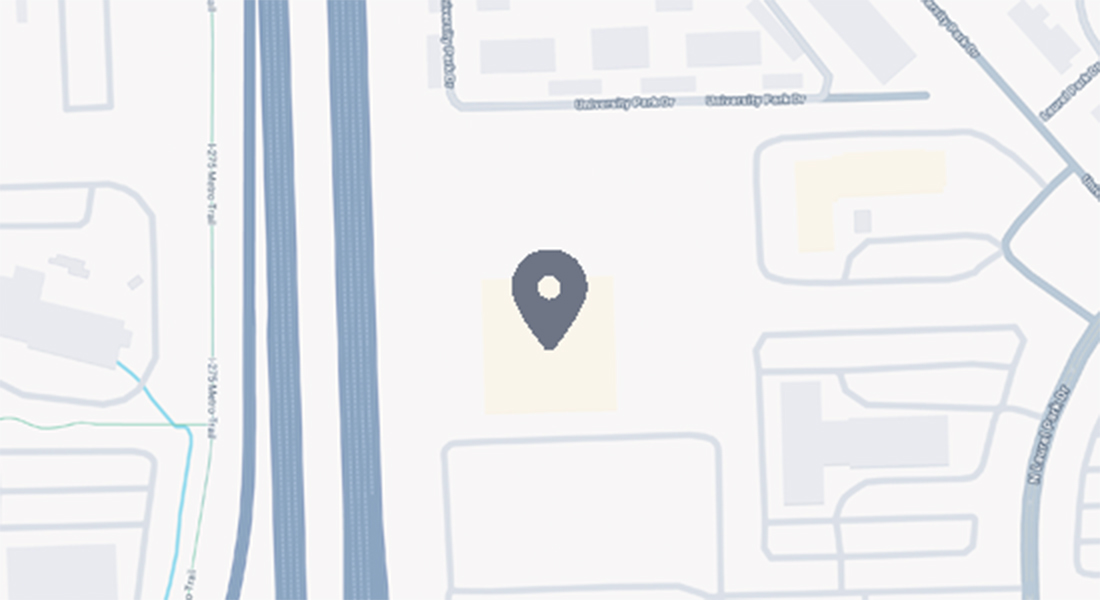
Fighting for injury victims across Michigan, proudly serving clients statewide from our office in Livonia.