Dedicated to Justice.
Devoted to You.
Winning for Your Future.
Devoted to You.
Winning for Your Future.


Researchers at Johns Hopkins estimate that roughly 371,000 American deaths each year are linked to diagnostic error, according to a 2023 study in BMJ Quality & Safety. It is a modeled estimate, and not every one of those deaths involves negligence. But if you are sitting with the feeling that your loved one’s death in a hospital did not have to happen, that question deserves a real answer, not a brush-off from the hospital’s risk management office.
Vahdat Weisman Law investigates deaths caused by medical negligence across Michigan. These cases carry some of the shortest deadlines and strictest technical requirements in Michigan injury law, and our wrongful death attorneys prepare each one from the first day as though a jury will hear it. Call (734) 469-4994 for a free, confidential consultation, any hour. You pay no attorney fee unless we recover compensation for your family.
Not every death in a hospital is malpractice. Medicine has limits; some conditions are fatal despite excellent care, and a devastating outcome does not by itself prove negligence.
What the law asks is narrower and answerable: did the doctor, nurse, or hospital violate the standard of care, what a reasonably careful provider in the same situation would have done, and did that violation cause the death? Answering it takes the complete medical record, sometimes an autopsy, and review by qualified medical experts. That is the investigation we run, at no cost to your family, and if the evidence shows the death was not preventable, we tell you so plainly.
The deaths that do turn out to be malpractice tend to follow patterns: a missed diagnosis of stroke, heart attack, cancer, or infection; a surgical error or anesthesia mistake; an emergency room discharge that missed a fatal condition; a medication overdose; sepsis recognized too late; a birth injury that took a mother or child.
One rule matters enormously in diagnosis cases, and few families have heard of it. When the argument is that a delayed diagnosis cost your loved one the chance to survive, Michigan law generally requires showing that the lost chance was greater than 50 percent. It is a harsh rule; it decides many failure-to-diagnose death cases, and evaluating it early, with experts, is part of giving your family a straight answer about whether a case exists.
A malpractice death case runs under two bodies of Michigan law at once.
The wrongful death act, MCL 600.2922, controls who sues and who recovers. Only the personal representative of your loved one’s estate, appointed by the probate court, can file, so an estate must be opened first; we handle those probate steps for families. The relatives who may share in a recovery are defined by statute, generally the spouse, children and descendants, parents, grandparents, siblings, and others the statute identifies, and at the end of the case the court approves how proceeds are divided.
Michigan’s malpractice statutes then control how the case must be built. Before suing, the estate must serve a notice of intent on every provider and, in most cases, wait 182 days under MCL 600.2912b. The complaint must be filed with an affidavit of merit signed by an appropriately qualified health professional. The experts who support the case must satisfy Michigan’s strict qualification rules, which the Michigan Supreme Court clarified in 2024: the reviewing expert generally must match the defendant’s board-certified specialty. A defective notice or a mismatched expert can end an otherwise strong case, which is a real part of why families need counsel who handle malpractice deaths regularly.
An ordinary Michigan negligence death case allows three years. A malpractice death usually does not.
The malpractice limitations period is generally two years from the negligent act under MCL 600.5805, with a narrow six-month discovery window in limited situations. Because the claim belongs to an estate, the saving provision in MCL 600.5852 can give the personal representative up to two years from the issuance of letters of authority, within strict outer limits. Under current Michigan law, serving a notice of intent does not pause that saving period, a rule that has ended cases families believed were timely. Layer the 182-day notice wait on top, and the practical window for investigating, retaining experts, and serving notice is far shorter than the calendar suggests.
So the advice is simple: if you suspect malpractice caused a death, have the timeline calculated for your specific facts now, not after the estate is settled or the records request comes back.
A malpractice death claim can recover reasonable medical, funeral, and burial expenses, the conscious pain and suffering your loved one endured between the negligence and death, which requires proof that they were conscious and is built from medical records and witness testimony, the loss of financial support the family reasonably would have received, and the family’s loss of society and companionship, the human loss of the person who died.
Two Michigan rules surprise almost every family we meet, and both deserve plain explanation at the first meeting.
The cap. Unlike car accident cases, Michigan caps non-economic damages in medical malpractice under MCL 600.1483, and the Michigan Supreme Court has held that the cap applies in wrongful death cases, including loss of society and companionship. For 2026, the ordinary cap is $596,400, with a higher cap of $1,065,000 reserved for specific catastrophic conditions defined by statute; the figures adjust each year. Death by itself does not trigger the higher cap, and the cap is a single aggregate limit for the claim, not a separate amount for each family member. Economic damages, such as medical bills and lost financial support, are not capped.
Lost earnings. In July 2024, the Michigan Supreme Court held in Daher v Prime Healthcare that the wrongful death act does not allow recovery of the lost future earnings your loved one would have earned for themselves. What remains recoverable is the loss of financial support the family would actually have received. In many households, those overlap substantially, but the support claim must be proven differently, through the family’s real financial life, with records and often an economist. Building that proof well is now one of the most consequential parts of a Michigan death case.
The foundation is the record and the expert work. We obtain the complete chart, including the audit trails that show who saw what and when, review the autopsy report or advise the family about a private autopsy when the cause of death is disputed, and retain physicians in the right specialties to review everything. We map every provider whose decisions touched the outcome, because hospitals often argue the negligent doctor was an independent contractor; whether the hospital remains responsible can turn on how it presented that doctor to your family, which is exactly the kind of fact we gather early.
Expert review in these cases is genuinely expensive, and it is an expense we advance. Then we serve the notice of intent, use the statutory waiting period to attempt resolution from a position of strength, and file with experts who can withstand Michigan’s specialty-matching scrutiny. Hospitals and their insurers defend these cases vigorously, and thorough preparation is what they respond to.
Request the complete medical records, or let us do it, and keep every bill, discharge paper, and prescription. Write down your memory of conversations with doctors and nurses while it is fresh, with names and dates. If the death was recent and the cause is uncertain, ask about an autopsy before burial or cremation; it is a hard conversation, and it can become the most important piece of evidence in the case. And before you sign any release, authorization, or settlement paper from the hospital or its insurer, have independent counsel read it.
None of this commits you to a lawsuit. It preserves the choice.
Malpractice death cases demand technical command of Michigan’s strictest procedural rules and patience with a grieving family’s pace. We handle the estate steps, the records, the experts, and the notices, and we explain each decision in plain language, in English or Spanish. When the evidence supports the case, we prepare it for trial. When it does not, we say so, without charge.
Founding partners Kara E. Weisman and Jordan S. Vahdat have each been honored as Super Lawyers Rising Stars, and our attorneys are members of the State Bar of Michigan and active in the Michigan Association for Justice. We advance case costs and serve families across Michigan from our Livonia office, with phones answered 24/7. Our medical malpractice pages explain specific errors in depth.
You trusted a hospital with the person you loved, and you are allowed to ask whether that trust was honored. Call Vahdat Weisman Law at (734) 469-4994 or contact us online for a free, confidential consultation. Available 24/7, serving all of Michigan, with Spanish-speaking staff.
Dedicated to Justice. Devoted to You. Winning for Your Future.
This information is for educational purposes only and does not constitute legal advice. Every case is unique, and prior results do not guarantee future success.




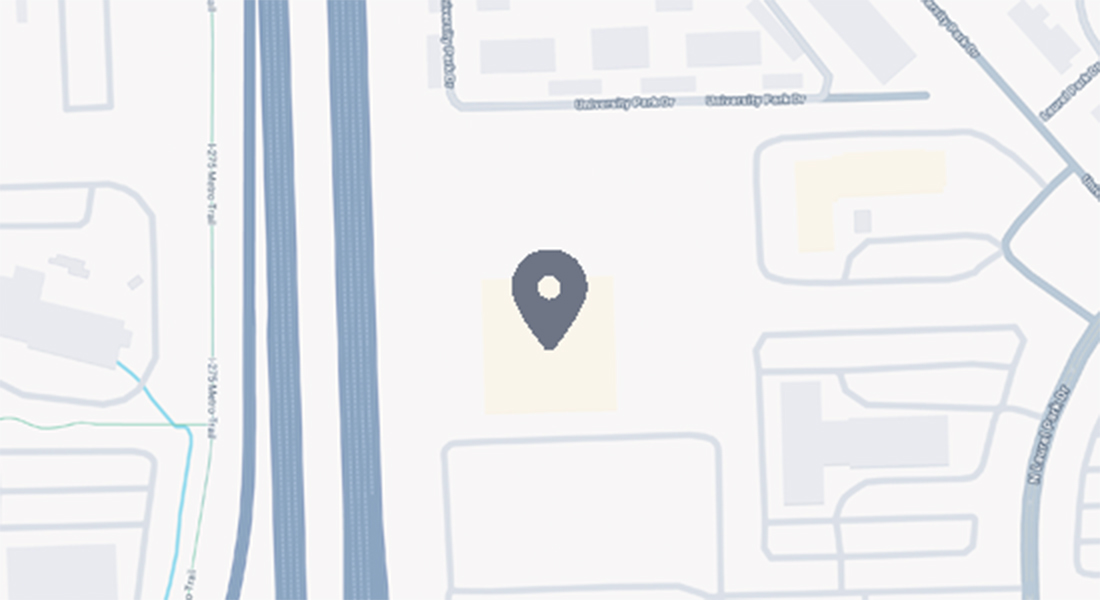
Fighting for injury victims across Michigan, proudly serving clients statewide from our office in Livonia.