Dedicated to Justice.
Devoted to You.
Winning for Your Future.
Devoted to You.
Winning for Your Future.


Your first question is probably whether anyone besides the shooter has to answer for it. Michigan’s answer is narrow, and this page sets out where the line falls.
Michigan recorded 1,228 firearm deaths in 2024, including 405 firearm homicides, in CDC mortality data compiled by the Johns Hopkins Center for Gun Violence Solutions. Fifty-two were among people aged 1 to 17.
Vahdat Weisman Law wrongful death attorneys represent Michigan families in fatal shooting and negligent security claims. Call (734) 469-4994 for a free consultation. No attorney fee unless we recover for you.
Michigan does not require a business to anticipate and prevent crime, and prior incidents at that address cannot establish that a later criminal act was foreseeable (MacDonald v PKT, Inc., 464 Mich 322 (2001)). That is hard to read if your relative was killed somewhere with a known history of violence. It is the rule. What triggers a duty is a situation unfolding on the premises posing “a risk of imminent and foreseeable harm to identifiable invitees,” and the duty is then “limited to reasonably expediting the involvement of the police.” Merchants are “not required to provide security personnel or otherwise resort to self-help.”
A merchant’s duty of reasonable care does not include armed, visible security guards, and a merchant “is not an insurer of the safety of his invitees” (Williams v Cunningham Drug Stores, Inc., 429 Mich 495 (1988)).
If your relative was shot where they lived, the same framework reaches the landlord: notice of a specific situation creating a risk of imminent harm to identifiable tenants or invitees in common areas under the landlord’s control brings the same duty to reasonably expedite police involvement (Bailey v Schaaf, 494 Mich 595 (2013)).
One clarification, because it is widely misstated: Kandil-Elsayed v. F & E Oil, Inc. (2023) changed Michigan premises law for dangerous conditions of land, moving open and obvious into breach and comparative fault. It did not address third-party criminal acts and did not loosen MacDonald.
Because prior crime does not establish the duty, your case is built on a narrow window: what the staff knew and did in the minutes before the shooting. That means the 911 call or its absence, dispatch and CAD records, guard logs and radio traffic, incident reports from earlier that night, surveillance footage, and what a manager was told.
Much of it is perishable. Surveillance retention is a setting rather than a rule, running from hours to months. A preservation letter does not stop an overwrite cycle, but it puts the recipient on notice that identified evidence must be kept, which matters if it is destroyed.
A history of prior incidents still helps on other questions: notice of a physical defect, causation, what the owner knew. It does not enlarge what a reasonable response required.
In a common area of a rental property, a second track runs alongside Bailey. MCL 554.139(1)(a) requires that “the premises and all common areas are fit for the use intended by the parties.” Subsection (1)(b) requires the landlord to keep the premises in reasonable repair during the term of the lease or license and to comply with applicable state and local health and safety laws.
Those protections arise from the lease and become mandatory lease terms, so a breach gives a contract remedy rather than a free-standing statutory tort (Allison v AEW Capital Management, LLP, 481 Mich 419 (2008)). The covenants differ in reach: (1)(a) covers the premises and the common areas, (1)(b) the premises. Subsection (2) allows parties to modify these obligations where the lease has a current term of at least one year.
Because the covenant runs with the lease, someone who was not a tenant or lessee cannot invoke the statute just by being lawfully on the property (Mullen v Zerfas, 480 Mich 989 (2007)). If the person you lost was visiting rather than renting, that matters. A claim under (1)(b) for a condition inside a leased unit also requires actual or constructive notice of the defect and a reasonable time to repair.
Broken exterior door locks, gates that no longer close, lighting dark for months, a call box that stopped working: these are conditions, not criminal acts, analyzed on different terms than the Bailey duty. Johnston v Harris, 387 Mich 569 (1972), involved an assault at an unlocked, poorly lit common entrance and recognized a landlord’s duty as to defects of that kind. But voluntarily providing security measures does not create an ongoing duty to protect patrons from third-party crime (Scott v Harper Recreation, Inc., 444 Mich 441 (1993); Stanley v Town Square Cooperative, 203 Mich App 143 (1993)). Our apartment complex common area injury and negligent security pages go further.
If alcohol was involved, Michigan’s dram shop act may reach the licensee. MCL 436.1801(1) prohibits a retail licensee from selling, furnishing, or giving alcoholic liquor to a minor or to an individual who is visibly intoxicated, and subsection (2) creates the civil right of action. The mechanics are strict, and the first can end your claim before you know you have one:
Visible intoxication carries the heaviest proof burden. Someone has to have seen the person actually appear drunk: visible manifestations of intoxication, observable by a reasonable person when served (Reed v Breton, 475 Mich 531 (2006)). A blood alcohol result cannot substitute for that evidence, though it can reinforce it. Reed also applied the clear and convincing standard to rebutting the subsection (7) presumption. Our dram shop and bar injury and drunk driving wrongful death pages go further.
A claim that the bar failed to respond to an armed patron is analyzed under MacDonald and Bailey, not the alcohol statute. Subsection (9) makes the dram shop act the exclusive remedy for money damages against a licensee arising out of the selling, giving, or furnishing of alcohol. The question is whether the claim arises out of furnishing alcohol, in which case the act is exclusive, or rests on an independent common law duty, in which case it is not (Millross v Plum Hollow Golf Club, 429 Mich 178 (1987); Jackson v PKM Corp, 430 Mich 262 (1988)).
Two issues arise in nearly every case. The first is whether there is coverage for your family to reach. Policies written for bars, commercial general liability and liquor liability alike, often carry an assault and battery exclusion, and an insurer will argue it bars coverage even for the business’s own failure to prevent the shooting. Some policies restore that coverage by endorsement, sometimes with a sublimit. None of this is Michigan law; the answer is in the policy.
The second is allocation of fault, which can feel like an insult to your family: a defendant is allowed to point at the shooter. Under MCL 600.2957(1), the trier of fact considers the fault of each person “regardless of whether the person is, or could have been, named as a party,” and a defendant may file a notice naming the shooter as a nonparty at fault. That section is expressly subject to MCL 600.6304, whose definition of fault lets intentional conduct, and therefore a shooter, into the allocation. Michigan still requires a legal duty before fault can be assessed (Romain v Frankenmuth Mutual Insurance Co, 483 Mich 18 (2009)). The notice is generally due under MCR 2.112(K)(3)(c) within 91 days after the defendant’s first responsive pleading, though the court is to permit a later one where the facts could not reasonably have been discovered earlier and no unfair prejudice results. Under (K)(4), a party served may amend to state a claim against that nonparty within 91 days of service, with later amendment possible under MCR 2.118. Statute and rule work together (Stenzel v Best Buy Co., Inc., 503 Mich 199 (2019)).
You will not file in your own name. The claim proceeds under MCL 600.2922, brought by the personal representative of the estate, an appointment we handle in probate. What your family can recover includes funeral, burial, and medical expenses, conscious pain and suffering before death, loss of financial support, and loss of society and companionship for those listed in subsection (3) who sustained it.
The act supplies no deadline of its own. Yours follows the underlying claim: three years under MCL 600.5805(2) for ordinary negligence, two years under subsection (3) for assault and battery, subject to the exceptions in subsections (4) to (6), and two years for a dram shop action under MCL 436.1801(3). MCL 600.5852 can supply additional time, measured from the date the letters of authority issue. The dram shop notice period is shorter than any of them.
How the money is divided among your family goes through its own process, which our page on the personal representative and settlement approval explains.
These cases turn on a small set of records kept on ordinary retention schedules. We pursue those before the schedules run and read the lease and the policies rather than assuming what they say. Where the evidence shows no notice and no duty under MacDonald and Bailey, you hear that from us early.
From our Livonia office, we represent families throughout Michigan. Founding partners Kara E. Weisman and Jordan S. Vahdat have each been honored as Super Lawyers Rising Stars. Our attorneys are members of the State Bar of Michigan and active in the Michigan Association for Justice. We advance case costs, we work in English and Spanish, and we are available 24/7.
Jordan S. Vahdat is a founding partner of Vahdat Weisman Law in Livonia and handles negligence, premises liability, auto accident, and insurance dispute cases. He has been admitted to all Michigan state courts since 2014, practices in the Eastern District of Michigan, and has served as a case evaluator for the Washtenaw Circuit Trial Court and the 15th District Court since 2020. He is fluent in Spanish.
If your family lost someone in a shooting, call Vahdat Weisman Law at (734) 469-4994 or contact us online for a free, confidential consultation. Available 24/7, serving all of Michigan, with Spanish-speaking staff. See also our main wrongful death page.
Dedicated to Justice. Devoted to You. Winning for Your Future.
Reviewed by Kara E. Weisman, Vahdat Weisman Law. Last reviewed September 2026.
This information is for educational purposes only and does not constitute legal advice. Every case is unique, and prior results do not guarantee future success.




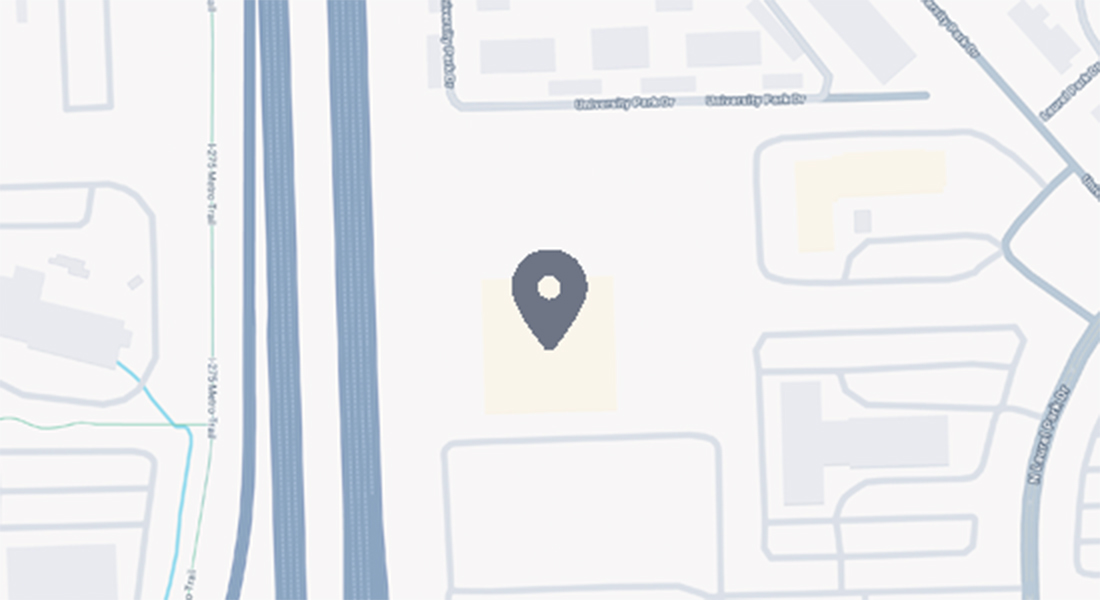
Fighting for injury victims across Michigan, proudly serving clients statewide from our office in Livonia.