Dedicated to Justice.
Devoted to You.
Winning for Your Future.
Devoted to You.
Winning for Your Future.


In 2024, 5,340 people died in large-truck crashes in the United States, and 70 percent of them were riding in other vehicles, not the truck, according to National Safety Council analysis of federal data. Truck-crash deaths have climbed roughly 30 percent over the past decade, and Michigan’s freight corridors along I-94, I-96, I-75, and US-23 carry their share of that toll.
A fatal truck crash produces a different kind of case than a car accident: federal safety regulations, layered corporate defendants, commercial insurers that begin investigating within hours, and evidence that starts disappearing within days. Our wrongful death lawyers investigate fatal truck crashes across Michigan and level the field for grieving families. Call (734) 469-4994 for a free, confidential consultation, any hour. You pay no attorney fee unless we recover compensation for you.
Critical evidence in a fatal truck crash is temporary, and much of it sits in the trucking company’s hands.
Modern tractors can record speed, braking, and throttle data in engine and safety modules, but that data can be lost when the tractor is repaired, salvaged, or returned to service. Electronic logging device records document the driver’s hours, and federal rules require some supporting records to be kept for as little as six months. Fleet dashcam footage gets overwritten. Dispatch records, load documents, inspection histories, and the driver’s qualification file all live with the carrier. At the scene, physical evidence fades with traffic and weather.
Early in every fatal truck case, we send preservation demands, formal spoliation notices requiring the carrier and its insurer to hold every category of evidence, and where needed, we pursue court orders and conduct our own inspection of the tractor and trailer with accident reconstruction experts. The difference between acting in week one and month three can be the difference between proving a fatigued driver ran past his hours and arguing about a two-page police report.
Driver fatigue remains a persistent killer despite the hours-of-service rules, because delivery schedules and pay-by-the-mile economics push drivers past safe limits, and log falsification did not disappear when paper logs became electronic. Speeding and following too closely turn ordinary slowdowns into rear-end and underride tragedies, because a loaded semi needs far more distance to stop than the traffic around it. Distracted and impaired driving, inadequate training, brake and tire failures traceable to skipped maintenance, and shifting or improperly loaded cargo drive many of the rest.
Behind the driver’s error there is often a company-level failure: a carrier that hired a driver with a disqualifying record, kept a truck rolling past inspection findings, or looked the other way on hours. Those facts are not speculation when the case is built properly. They are documented in ECM downloads, ELD records, inspection histories, and the carrier’s own federal safety data, which is exactly why the evidence race matters.
A fatal truck crash in Michigan typically produces two coordinated claims, the same structure we explain on our car accident wrongful death page.
The no-fault claim. Survivor’s loss benefits under MCL 500.3108 replace up to three years of the support and services your loved one provided to dependents, capped at a monthly maximum that adjusts every year, $7,201 per month for accidents from October 1, 2025 through September 30, 2026, plus funeral and burial expenses set by the policy between $1,750 and $5,000. Which insurer pays follows statutory priority rules, and when no household policy exists, the Michigan Assigned Claims Plan provides a path. The notice deadline is one year, and it is unforgiving.
The wrongful death lawsuit proceeds under MCL 600.2922 against the driver, the carrier, and every other company whose conduct contributed. Only the personal representative of the estate can file it; the family members who may share in the recovery are defined by statute, and the court approves the final distribution. Recoverable damages include medical, funeral, and burial expenses, the conscious pain and suffering your loved one endured, the financial support the family lost, and the loss of society and companionship, which Michigan does not cap in these cases. The general filing deadline is three years from the crash under MCL 600.5805, with a saving provision tied to the personal representative’s appointment in limited circumstances. As explained above, the deadlines that actually decide truck cases are measured in days and weeks.
Beyond the driver’s negligence, claims for negligent hiring, retention, training, supervision, and maintenance reach the carrier’s own conduct, owner liability reaches the vehicle’s owners, and after Montgomery, negligent broker selection reaches the company that put an unsafe carrier on the road. Each theory changes what evidence matters and what insurance is available, which is why we map all of them at the start.
The advice that most affects the outcome: do not give the trucking company’s insurer a statement, do not sign anything, and do not accept an early offer, no matter how large it sounds against this month’s bills. Early settlement money in fatal truck cases buys a closed file before the family sees what the ECM data and the driver’s logs would have shown. Your own auto insurer is different: it needs timely notice for the no-fault claim, and we handle that communication for you.
Beyond that, keep the crash report number, photographs, witness names, medical and funeral bills, and your insurance policy in one place, write down every contact from the trucking company or its representatives, and ask where the vehicles are being held. Then get a lawyer involved while the evidence still exists. The consultation costs nothing, and preservation demands can go out immediately.
Fatal truck cases reward preparation and punish delay, so we front-load the work: preservation demands, reconstruction experts, ECM and ELD analysis, and a complete map of the corporate chain and its insurance. We handle the estate steps, the no-fault claim, and the liability case as one coordinated effort, and we prepare for trial from the first day because that is what commercial insurers respond to. Through all of it, your family gets plain language, straight answers, and a team that remembers whom it works for, in English or Spanish.
Founding partners Kara E. Weisman and Jordan S. Vahdat have each been honored as Super Lawyers Rising Stars, and our attorneys are members of the State Bar of Michigan and active in the Michigan Association for Justice. We advance case costs and serve every corner of Michigan from our Livonia office, with phones answered 24/7.
The trucking company’s team started working the day of the crash. Your family deserves a team of its own. Call Vahdat Weisman Law at (734) 469-4994 or contact us online for a free, confidential consultation. Available 24/7, serving all of Michigan, with Spanish-speaking staff.
Dedicated to Justice. Devoted to You. Winning for Your Future.
This information is for educational purposes only and does not constitute legal advice. Every case is unique, and prior results do not guarantee future success.




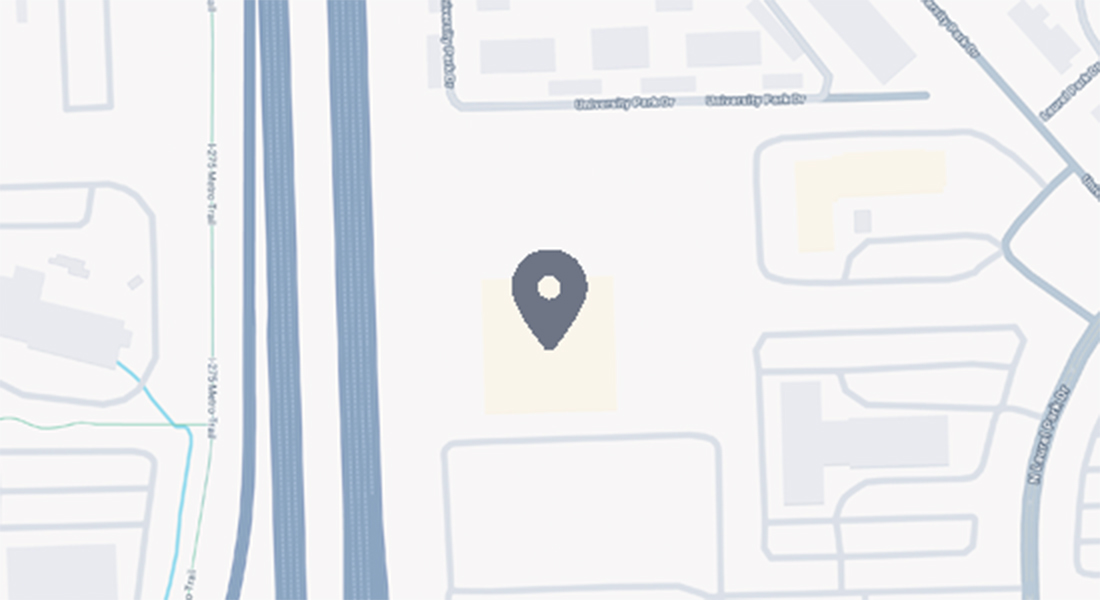
Fighting for injury victims across Michigan, proudly serving clients statewide from our office in Livonia.