Dedicated to Justice.
Devoted to You.
Winning for Your Future.
Devoted to You.
Winning for Your Future.


Black ice gives no warning. One second the car is tracking, the next it is not, and the other driver is already saying there was nothing he could do.
On the morning of January 19, 2026, more than 100 vehicles piled up on I-196 in Zeeland Township in whiteout conditions. Both directions were closed, crews worked more than seven hours, and between nine and twelve people were taken to hospitals. Michigan State Police described the conditions that day: “Road conditions are treacherous. Blowing winds and blinding snow are creating dangerous travel conditions.”
Three weeks earlier, a snow squall over I-75 in Detroit produced what MSP counted as approximately 25 separate crashes involving 59 passenger cars and semi-trucks, closing the freeway for about four hours.
Michigan Traffic Crash Facts counts a winter weather crash as one occurring between October and April where the road was reported icy, snowy, or slushy. For the winter of 2023 to 2024, the state recorded 22,713 such crashes, with 38 people killed in 36 fatal crashes and 3,938 people injured. Just under half of all winter crashes were single-vehicle. Among the fatal ones, 13 of 36 were head-on collisions.
Auto accident attorneys at Vahdat Weisman Law represent people injured in Michigan winter crashes. Call (734) 469-4994 for a free consultation. No attorney fee unless we recover for you.
Not by itself. Michigan’s basic speed rule and assured clear distance requirement oblige a driver not to travel faster than will permit stopping within the distance the driver can see ahead (MCL 257.627). Violating that statute is negligence, though the rule is reasonably construed and subject to recognized exceptions (Vander Laan v Miedema, 385 Mich 226 (1971)).
A driver also may not follow another vehicle more closely than is reasonable and prudent, with regard for speed, traffic and the condition of the highway (MCL 257.643). The statute itself contemplates that a safe following distance on dry pavement is not a safe following distance on ice.
If you were rear-ended while traveling in the same direction or lawfully stopped, the driver behind you is deemed prima facie guilty of negligence (MCL 257.402). That is a rebuttable presumption, not a determination of liability, and there is an exception where the struck vehicle lacked a visible rear light between sunset and sunrise. Our rear-end collision page covers it further.
This is the argument you will hear from the other driver’s insurer.
Vander Laan holds that the circumstances must be “unusual or unsuspected.” The Court defined both terms. “Unusual” is used “in the sense that the factual background of the case varies from the everyday traffic routine confronting the motorist.” “Unsuspected” “connotes a potential peril within the everyday movement of traffic,” and “it is essential that the potential peril had not been in clear view for any significant length of time.”
Vander Laan explains that an “unusual” emergency is typically associated with a phenomenon of nature, and it points to Patzer v. Bowerman-Halifax Funeral Home, 370 Mich 350 (1963), an Upper Peninsula blizzard case, as the example. So the argument that Michigan drivers should simply expect winter, and that weather therefore never qualifies, does not reflect what the Supreme Court has said. An abrupt whiteout or a snow squall that eliminates visibility in seconds is much closer to Patzer than to an ordinary snowy commute.
That cuts both ways. A defendant who drove into a sudden squall may have a genuine defense. An ordinary, forecast, all-day snowfall is a considerably weaker basis for the argument, because nothing about it was unsuspected.
What decides your case is the specific sequence: how abruptly visibility changed, what the driver knew before it changed, the speed and following distance being kept for the conditions, whether other vehicles had already lost traction at that spot, whether advisories had been issued, and whether the driver’s own conduct contributed. An emergency the defendant had reason to anticipate is not a sudden emergency. A truck driver who claimed a sudden medical blackout still faced a jury question on whether the event was truly unexpected, because there was evidence he had felt ill beforehand (White v Taylor Distributing Co, 482 Mich 136 (2008)).
In a chain-reaction crash, the question is not which single driver was at fault. It is causation and allocation.
Michigan requires the trier of fact to consider the fault of each person, whether or not that person is a party (MCL 600.2957). Fault being allocated to someone is not the same as that person owing you money, and the fact that twenty vehicles were involved does not mean you have viable claims against twenty drivers, or even more than one.
The harder problem is medical causation. Where a vehicle is struck several times, which impact caused or aggravated which injury becomes a real evidentiary question, and it is answered with scene evidence, damage patterns, vehicle data and medical records rather than with the order of the police report.
Commercial vehicles add another layer. A commercial driver must use extreme caution when hazardous conditions such as snow and ice adversely affect visibility or traction, must reduce speed, and must discontinue operation if conditions become sufficiently dangerous (49 CFR 392.14). What shows whether that happened is electronic logging records, engine and event data, dashcam footage, dispatch communications, and the weather information available to the driver. Our truck accident page covers those claims.
Coverage is worth checking early in a pileup, because the number of claimants against one policy can exceed its limits. Uninsured and underinsured motorist coverage is contractual, so whether it helps you depends on the policies in your own household. Our uninsured and underinsured motorist page explains how those claims work.
Sometimes, but rarely for the reason people expect. Natural accumulations of snow and ice on a roadway are generally not actionable standing alone. The highway exception does not reach defective design theories, and accumulation by itself is not enough (Plunkett .v. Department of Transportation, 286 Mich App 168 (2009)). What can support a claim is a persistent physical defect in the improved portion of the road that itself rendered the highway unsafe and that acted together with the ice or water to cause the crash. An allegation that a road was engineered to drain poorly is a design theory and runs into that limit.
Where such a claim exists, the agency must have known or should have known of the defect and had a reasonable time to repair it, and both are conclusively presumed where a readily apparent defect existed for 30 days or longer (MCL 691.1403). You must serve written notice within 120 days (MCL 691.1404), and the limitations period is two years (MCL 691.1411(2)). Our pothole and road defect page covers all of it in detail.
Private snow removal contractors are analyzed differently. “A contracting party’s assumption of contractual obligations does not extinguish or limit separately existing common-law or statutory tort duties owed to noncontracting third parties” (Loweke v Ann Arbor Ceiling & Partition Co, 489 Mich 157 (2011)). What decides these cases is the difference between simply failing to perform contractual snow removal, which generally does not create third-party liability, and affirmative conduct that creates a new hazard, such as piling snow where it blocks sight lines.
If you fell rather than crashed, Kandil-Elsayed v. F & E Oil, Inc. (Mich., 2023) moved the open and obvious analysis out of duty and into breach and comparative fault, and replaced the old special aspects test. It did not make property owners insurers against winter conditions. Obviousness still matters, and you would still have to prove breach, causation, and damages. Our snow and ice slip and fall page covers those claims.
Michigan no-fault benefits pay your medical expenses and wage loss without regard to fault, so they are there even if you lost control on ice with no one else to blame. How much depends on the PIP medical limit selected (MCL 500.3107c) and on eligibility (MCL 500.3113). Our no-fault PIP benefits disputes page explains that system.
A claim against another driver for pain and suffering is a different thing. Noneconomic damages are permitted only where the injury was death, serious impairment of body function or permanent serious disfigurement (MCL 500.3135(1)). Subsection (2)(b) bars those damages if you were more than 50 percent at fault, and subsection (2)(c) bars them for a person who was operating their own vehicle without the required security. MCL 600.2959 governs how comparative fault reduces an award more generally.
Photograph the road surface if you can do so safely, before anything is plowed or salted. Note the time, the exact location and the direction of travel, including whether you were on a bridge deck, an overpass or a shaded curve.
Save dashcam footage, preserve the vehicle before repairs where the crash was serious, and save the forecast and road condition advisories from that day. Mi Drive and National Weather Service records are time-stamped.
Report facts accurately and avoid speculating about your own speed or fault at the scene.
Get medical attention if you are hurt. Michigan’s no-fault deadlines are governed by MCL 500.3145, which sets a one-year notice and filing framework with a one-year-back limit on recovery and tolling from a specific claim until a formal denial. Those are claim deadlines, not treatment deadlines.
Winter cases turn on the specific sequence, and the evidence that establishes it disappears fast. We pursue plowing and maintenance records, the forecast and advisory history, the impact sequence in a pileup, and the electronic records that show what a commercial driver knew and when. The sudden emergency doctrine cuts both ways, and you will hear from us which way it cuts in your case, because it protects defendants in genuine squalls and does not protect them in ordinary snowfall.
From our Livonia office we represent clients throughout Michigan. Founding partners Kara E. Weisman and Jordan S. Vahdat have each been honored as Super Lawyers Rising Stars. Our attorneys are members of the State Bar of Michigan and active in the Michigan Association for Justice. We advance case costs, we work in English and Spanish, and we are available 24/7.
Jordan S. Vahdat is a founding partner of Vahdat Weisman Law in Livonia and handles negligence, premises liability, auto accident and insurance dispute cases. He has been admitted in all Michigan state courts since 2014, practices in the Eastern District of Michigan, and has served as a case evaluator for the Washtenaw Circuit Trial Court and the 15th District Court since 2020. He is fluent in Spanish.
If a black ice crash or a winter pileup injured you or someone you love, call Vahdat Weisman Law at (734) 469-4994 or contact us online for a free consultation. Available 24/7, serving all of Michigan, with Spanish-speaking staff.
Dedicated to Justice. Devoted to You. Winning for Your Future.
Reviewed by Jordan S. Vahdat, Vahdat Weisman Law. Last reviewed September 2026.
This information is for educational purposes only and does not constitute legal advice. Every case is unique, and prior results do not guarantee future success.




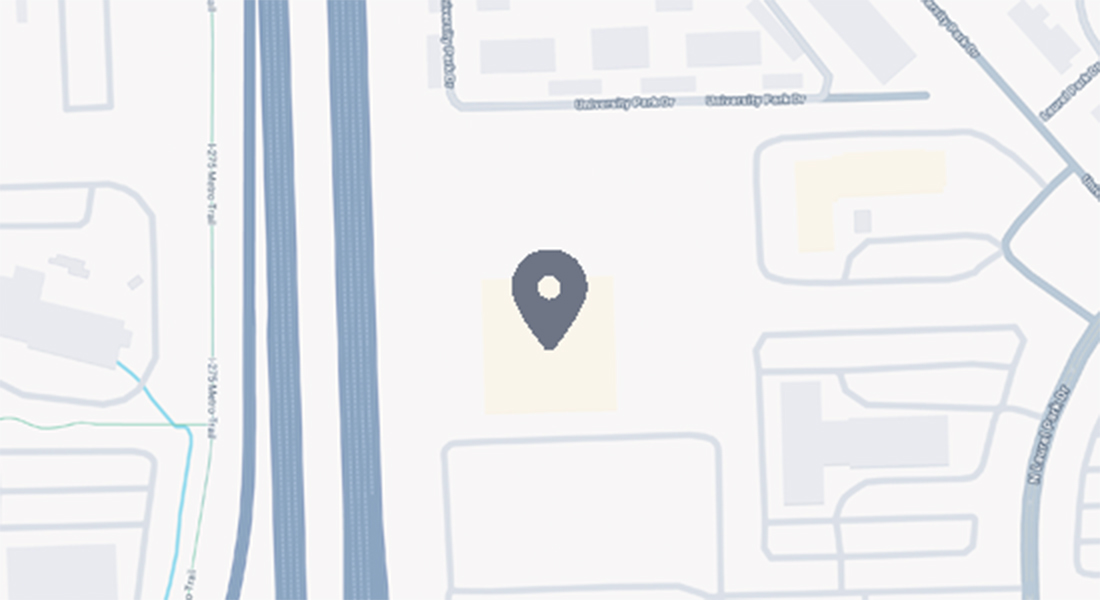
Fighting for injury victims across Michigan, proudly serving clients statewide from our office in Livonia.