Dedicated to Justice.
Devoted to You.
Winning for Your Future.
Devoted to You.
Winning for Your Future.


No family is prepared for this suspicion. A urinary tract infection that keeps returning. Torn or missing undergarments. Bleeding or bruising no one at the facility can explain. A father with dementia who becomes frantic when one particular caregiver is assigned to him, in a way that looks less like confusion and more like fear.
Let us say something plainly before anything else: none of these signs is proof. Recurring infections have many causes, fragile skin bruises easily, and dementia produces fear responses that have nothing to do with abuse. But a cluster of unexplained signs deserves prompt medical evaluation and a real investigation, not reassurance from the facility that would be investigating itself. Sexual abuse does happen in nursing homes; it happens most often to residents who cannot report it, and what you do in the first days matters, because this is the kind of case where physical evidence disappears fastest. Vahdat Weisman Law investigates nursing home sexual abuse claims across Michigan with the discretion these cases demand and the urgency they require. Call (734) 469-4994 for a free, confidential consultation, any hour. You pay no attorney fee unless we recover compensation.
Many victims of sexual abuse in nursing homes cannot describe what happened to them. Residents with advanced dementia, residents who lost speech after a stroke, residents who are physically helpless. Abusers know that, and facilities have too often treated an unprovable allegation as a closable file. When CNN examined federal inspection records, it identified more than 1,000 nursing homes cited between 2013 and 2016 for mishandling suspected sexual abuse, failing to investigate allegations, or failing to protect residents, and found that at least a quarter of the alleged incidents involved facility staff.
The abuser is not always an aide. Sexual aggression by other residents is a documented problem in dementia units, and a facility that knows a resident has a history of sexually inappropriate behavior has a duty to assess that risk, plan around it, and supervise. Visitors and intruders appear in these cases too, which is why unexplained access, unsupervised corridors at night, and broken door alarms become evidence.
Sexual contact with a resident who cannot consent is a felony in Michigan in every form. Under MCL 750.520b, sexual penetration of a person who is mentally incapable, mentally incapacitated, or physically helpless is first-degree criminal sexual conduct, punishable by up to life in prison, when the abuser is a relative or holds a position of authority over the victim and used it to coerce submission. A caregiver who controls a dependent resident’s daily life sits close to what that provision was written for. Even without those aggravating circumstances, penetration of a victim the abuser knew or should have known was incapacitated is third-degree criminal sexual conduct, and sexual contact short of penetration is prosecuted under the second- and fourth-degree provisions.
Consent is where these cases are won and lost, and Michigan’s definition is functional: a person is mentally incapable when a condition like advanced dementia leaves them unable to appraise the nature of the conduct. A diagnosis alone does not decide that question, but the facility’s own cognitive assessments, charted month after month, are usually powerful evidence of what the facility knew about your loved one’s capacity. When a facility answers an allegation by calling the contact consensual while its own chart describes severe impairment, that contradiction becomes central to the case.
Caregiver abuse of a vulnerable adult is separately criminalized under MCL 750.145n, and Michigan’s Attorney General prosecutes facility caregivers through its Health Care Fraud Division, with an Elder Abuse Task Force coordinating enforcement statewide.
Federal law prohibits nursing homes from employing individuals with court findings or nurse-aide registry findings of abuse, neglect, or mistreatment, and Michigan requires criminal background checks for people with direct access to residents. Under 42 CFR 483.12, every facility must have systems to prevent abuse, must report any allegation of abuse to the administrator, the state, and adult protective services within two hours, must protect the resident while it investigates, and must report its findings within five working days. A separate federal statute, part of the Elder Justice Act, requires individual staff members who suspect a crime against a resident to report it to law enforcement and federal authorities, within two hours if there is serious bodily injury and within 24 hours otherwise.
Civil claims against the facility usually rest on failures of those duties. Negligent hiring, when screening was skipped or ignored. Negligent retention and supervision, when complaints about an employee accumulated and nothing changed. Failure to protect, when a resident with known sexually aggressive behavior was housed beside vulnerable people as if the risk did not exist. And failure to report, which matters doubly here, because delay is not just a paperwork violation: a victim who is bathed and changed before a forensic examination may lose physical evidence that can never be recovered. Whether a delay was confusion or concealment is exactly what the investigation has to establish.
In most nursing home cases, the medical chart holds the story: In a sexual abuse case, the most important evidence often lives on a body and in a room, and much of it degrades quickly. A timely examination by a sexual assault nurse examiner can document injuries and collect evidence no later review can reconstruct. Clothing and bedding matter, and should be set aside unwashed. Hallway video, where it exists, is often overwritten on a short retention cycle unless someone demands preservation in writing.
So act on the suspicion even without proof: If you believe your loved one is in immediate danger, call 911. Have them examined at a hospital or emergency department, not by the facility, and tell the clinicians plainly what you suspect so a forensic examiner can be involved; be aware that consent for that examination may need to come from a guardian or patient advocate, which is something we help families sort out quickly. Resist the urge to question your loved one repeatedly about what happened; repeated questioning distresses a cognitively impaired person and can complicate the case later. Report to Adult Protective Services at 855-444-3911 and file a complaint with LARA, the state agency that inspects nursing homes; Michigan’s Long-Term Care Ombudsman can also advocate for your resident. Then call us. We send preservation demands immediately for video, staffing schedules, personnel records, and the facility’s internal reports, and we work alongside any criminal investigation rather than waiting for it to finish.
If police charge the abuser, the criminal case punishes the individual. It does not compensate your loved one, and it rarely reaches the questions that matter most to a family: who hired this person, what warnings were ignored, why he worked alone at night with vulnerable residents. Those questions belong to the civil case, which can proceed whether or not prosecutors bring charges, because the civil standard of proof is lower than proof beyond a reasonable doubt. A conviction or guilty plea, where one exists, can become powerful evidence for your family. Where prosecutors decline to charge, often because the victim cannot testify, a civil case may still be viable, because it is built on records, forensics, staffing evidence, and the facility’s own conduct rather than on the victim’s testimony alone. We will be honest with you about that too: cases without physical evidence or testimony are harder, and we tell families where their case is strong and where it is not.
Deadlines run on separate tracks. Michigan allows ten years to bring civil claims for damages caused by the criminal sexual conduct itself, a period the Legislature adopted in 2018. But the claims against the facility, which often carry the meaningful recovery, are generally negligence claims with a three-year period, and where a claim involves professional medical judgment it may be treated as medical malpractice, with a two-year period and pre-suit requirements. We treat the earliest possible deadline as the real one and sort the classification questions so your family does not have to.
Michigan law compensates the harm that was actually done: the physical injuries, the medical and psychological care that follows, the cost of moving to a safe facility, and the pain, fear, and mental anguish of the abuse itself. A resident who cannot narrate her own suffering can still prove it; behavior changes, fear responses, and clinical observations speak where words cannot, though we will not pretend that proof is easy, and building it carefully is much of the work. Michigan law does not provide punitive damages, so the case is measured in your loved one’s real harm. Where abuse contributes to a death, the claim proceeds under the wrongful death act through the estate, as our nursing home wrongful death page explains. We also review admission paperwork for arbitration clauses, which cannot lawfully be required as a condition of admission and are often challengeable, and we handle Medicare and Medicaid lien issues, reducing them where the law allows.
These cases demand urgency and restraint at the same time: urgency, because forensic evidence will not wait, and restraint, because accusing an innocent caregiver serves no one. We investigate before we conclude, we test the innocent explanations as hard as the guilty ones, and when the evidence is there, we pursue the facility’s role fully rather than stopping at the individual, because hiring, supervision, and reporting failures are usually what made the assault possible.
Founding partners Kara E. Weisman and Jordan S. Vahdat have each been honored as Super Lawyers Rising Stars, and our attorneys are members of the State Bar of Michigan and active in the Michigan Association for Justice. We advance all case costs, our phones are answered 24/7, and we serve families in English and Spanish from our Livonia office. Our main nursing home abuse and neglect page covers the full range of facility failures, and our physical abuse page addresses warning signs that often accompany sexual abuse.
You do not need proof to make this call, and you will not be pressured when you make it. You will get straight answers, complete confidentiality, and immediate action if your family wants it. Call Vahdat Weisman Law at (734) 469-4994 or contact us online for a free, confidential consultation. Available 24/7, serving all of Michigan, with Spanish-speaking staff.
Dedicated to Justice. Devoted to You. Winning for Your Future.
This information is for educational purposes only and does not constitute legal advice. Every case is unique, and prior results do not guarantee future success.




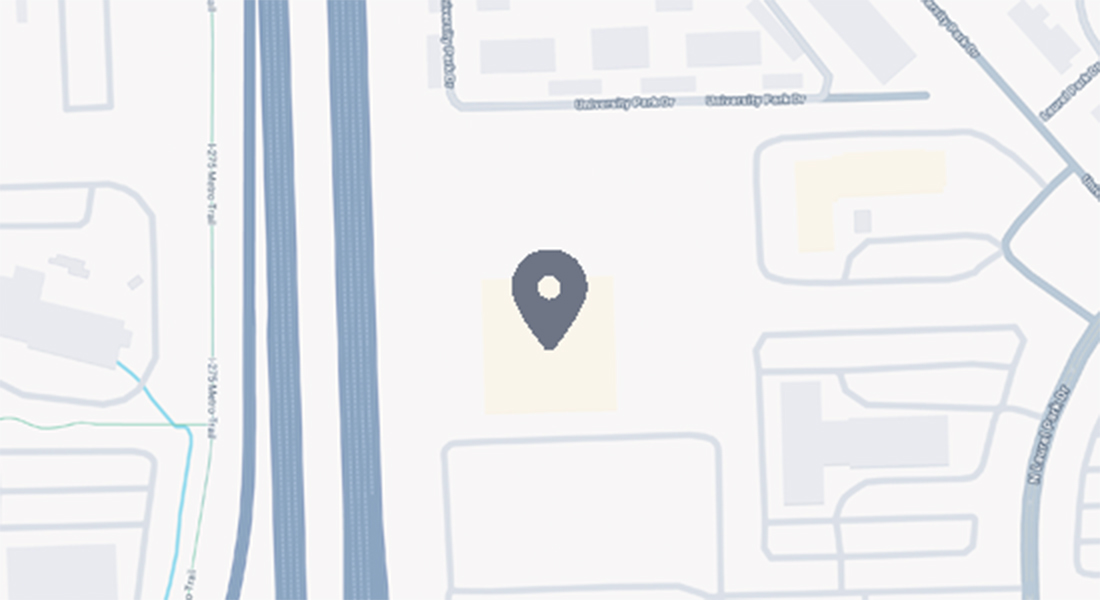
Fighting for injury victims across Michigan, proudly serving clients statewide from our office in Livonia.