Dedicated to Justice.
Devoted to You.
Winning for Your Future.
Devoted to You.
Winning for Your Future.


You were lying still, partly undressed, with your eyes closed, trusting that the hands on you were doing what you paid for. Then they went somewhere they had no reason to go. Many people say nothing in that moment and leave without a word to the front desk. That doesn’t change what the law says happened.
Unwanted sexual touching by a massage therapist, spa worker, chiropractor, or personal trainer can be a crime, a licensing violation, and a civil claim, and the business that put that person in the room can sometimes be held responsible too. Sexual abuse attorneys at Vahdat Weisman Law represent survivors across Michigan. Call (734) 469-4994 for a free, confidential consultation. No attorney fee unless we recover for you.
It can be, and it does not require penetration. Fourth-degree criminal sexual conduct covers sexual contact accomplished by force or coercion (MCL 750.520e(1)(b)). “Sexual contact” means intentionally touching intimate parts, or the clothing over them, in a way that can reasonably be construed as sexual, and “intimate parts” include the genital area, groin, inner thigh, buttock and breast (MCL 750.520a(f), (q)). Penetration is charged under the more serious degrees.
“Force or coercion” does not mean a struggle. One listed circumstance is “When the actor, through concealment or by the element of surprise, can overcome the victim” (MCL 750.520b(1)(f)(v)), and the same circumstance appears in the fourth-degree statute. Another covers medical treatment or examination done “in a manner or for purposes that are medically recognized as unethical or unacceptable” ((1)(f)(iv)). Whether a court would treat massage or personal training as “medical treatment” under that second prong has not been settled in a published Michigan decision, so the surprise prong is usually the more natural fit.
A separate felony, MCL 750.90, as amended effective October 10, 2023, applies to “an individual who undertakes medical treatment of a patient” and misrepresents that sexual contact or penetration “is necessary or will be beneficial to the patient’s health.” Statute defines massage therapy as excluding medical diagnosis (MCL 333.17951(1)(d)), so whether a massage therapist or trainer can be charged under this section remains an open question.
No. Michigan law says it directly: “A victim need not resist the actor” in a criminal sexual conduct prosecution (MCL 750.520i). The surprise provision applies exactly when you have no chance to object before the touching happens.
For a licensed provider, there is a second answer. The Public Health Code makes it a ground for discipline when a licensee engages in conduct with a patient that is sexual, “including conduct initiated by a patient or to which the patient consents” (MCL 333.16221(e)(vi)). That rule covers every profession licensed under Article 15 of the Code, which includes massage therapists and chiropractors. The question is what the provider did, not whether you objected.
Massage therapists. Michigan requires a license: “An individual shall not engage in the practice of massage therapy unless licensed under this part” (MCL 333.17957). The rules are in Part 179A of the Public Health Code, added by 2008 PA 471, and the Michigan Board of Massage Therapy sits within the Department of Licensing and Regulatory Affairs (MCL 333.17955). Some practices, such as Reiki and reflexology, are exempt when not held out as massage.
Chiropractors and physical therapists are separately licensed health professionals and subject to the same sexual-misconduct rule.
Personal trainers and fitness instructors are not on the list of 28 health professions LARA licenses (LARA Health Professional Licensing). Athletic trainers are licensed, but most gym trainers are not, so you usually can’t file a licensing complaint, and a claim against the gym rests on ordinary negligence law.
You can sue the person who assaulted you. Whether the business is also liable depends on what it did, not simply on whom it employed. The Michigan Supreme Court has declined to make employers vicariously liable for an employee’s intentional sexual misconduct under an “aided by the agency” theory (Zsigo v Hurley Medical Center, 475 Mich 215 (2006)).
The business is reached through its own conduct: negligent hiring, retention, and supervision. Those claims turn on what the business knew or should have known about the person’s dangerous propensity (Hersh v Kentfield Builders, Inc., 385 Mich 410 (1971); Brown v Brown, 478 Mich 545 (2007)). The facts that matter are concrete: earlier client complaints, what the business did with them, whether anyone checked license status or prior discipline, and whether draping and complaint procedures were followed.
Franchises. Many spas and gyms are independently owned franchises. A franchisor’s control over uniform standards and products is not enough by itself; liability turns on control over the franchisee’s day-to-day operations (Little v Howard Johnson Co, 183 Mich App 675; 455 NW2d 390 (1990)). The questions are what the franchise agreement and operations manual required about screening, training, and complaints, and who actually ran those processes.
In November 2017, the Associated Press, citing a BuzzFeed News investigation, reported more than 180 sexual assault complaints involving one national massage franchise and said its franchisees controlled day-to-day operations, including misconduct investigations.
Licensed providers and the malpractice framework. Because massage therapists and chiropractors are licensed under Article 15, a business may argue that your claim is really medical malpractice, which carries a notice of intent, an affidavit of merit, and a two-year clock (MCL 600.5838a(1)(b)). Courts decide by asking whether the claim raises questions of professional judgment beyond common knowledge (Bryant v Oakpointe Villa Nursing Center, 471 Mich 411 (2004)). Whether sexual touching on a massage table raises any such question is doubtful, but cases are often pleaded in the alternative, so a characterization fight does not end the claim.
Usually yes, for at least part of the case. A signed release cannot excuse gross negligence in Michigan (Lamp v Reynolds, 249 Mich App 591 (2002); applied in Swanson v Bittersweet Ski Resort, Inc., Mich Ct App, January 12, 2026). A release can bar ordinary negligence claims only if it clearly says so, and its scope depends on what the parties intended; a waiver aimed at sprains and equipment injuries is a poor fit for an assault by staff. The release does not protect the person who assaulted you from their own intentional act.
Arbitration clauses. Federal law lets you refuse arbitration. Under the Ending Forced Arbitration of Sexual Assault and Sexual Harassment Act, “at the election of the person alleging conduct constituting a sexual harassment dispute or sexual assault dispute,” a predispute arbitration agreement or class-action waiver is not valid or enforceable as to that case (Pub L 117-90, 9 USC 401-402). A “sexual assault dispute” is any dispute involving a nonconsensual sexual act or sexual contact, and the statute is not limited to employment. A court, not an arbitrator, decides whether it applies. It covers claims that arose or accrued on or after March 3, 2022.
For damages caused by criminal sexual conduct, including fourth-degree contact, you have 10 years, and no criminal charge or conviction is required (MCL 600.5805(6), (16)(b)). A claim framed only as negligence or assault and battery carries a shorter period (three and two years under MCL 600.5805(2) and (3)), and a malpractice framing carries two. If you were under 18, MCL 600.5851b extends the time to age 28 or three years from discovery, though it does not revive claims that were already time-barred before June 12, 2018 (McLain v Roman Catholic Diocese of Lansing, 514 Mich 1 (2024)). See our sexual abuse statute of limitations page.
There is no required order, and you can bring a civil case either way. If the assault was recent, a forensic medical exam is available within 120 hours; you will not be billed for it, and you do not have to file a police report to get one (Michigan Campus Sexual Assault, medical care). Michigan’s crime victim compensation program generally requires police records showing the crime was reported (not prosecuted), and claims are due within five years (MCL 18.360; MCL 18.355(2)).
A complaint against a licensed massage therapist or chiropractor goes to LARA’s Bureau of Professional Licensing, which accepts massage therapy complaints online through MiPLUS (LARA complaint page). LARA can summarily suspend a license when public health, safety, or welfare requires emergency action. What you write in that complaint can later be compared with your testimony, which is a reason to have help drafting it, not a reason to wait.
Whatever you decide, keep your booking confirmation, receipts, intake forms, membership contract, and any messages. You do not need to confront the provider or reply to the business.
These cases turn on whether the provider was licensed, what the business knew, who controlled hiring and complaints under a franchise agreement, and whether an arbitration clause or waiver can be set aside. We handle them discreetly, and civil courts have procedures that can protect your identity, including filing under a pseudonym when a judge allows it. See also our pages on doctor sexual assault, therapist and counselor sexual exploitation, hotel sexual assault, and suing without criminal charges.
From our Livonia office, we represent clients throughout Michigan. Founding partners Kara E. Weisman and Jordan S. Vahdat have each been honored as Super Lawyers Rising Stars. Our attorneys are members of the State Bar of Michigan and active in the Michigan Association for Justice. We advance case costs, we work in English and Spanish, and we are available 24/7.
Kara E. Weisman is a founding partner of Vahdat Weisman Law in Livonia and handles medical malpractice, wrongful death, civil rights, and personal injury claims. She clerked at the Ingham County Probate Court and the Federal Defender’s Office for the Eastern District of Michigan, and is admitted to all Michigan state courts and the Eastern and Western Districts of Michigan.
If a massage therapist, spa worker, chiropractor, or personal trainer touched you sexually without your consent, call Vahdat Weisman Law at (734) 469-4994 or contact us online. The conversation is free and confidential. Available 24/7, serving all of Michigan, with Spanish-speaking staff.
Dedicated to Justice. Devoted to You. Winning for Your Future.
Reviewed by Kara E. Weisman, Vahdat Weisman Law. Last reviewed October 2026.
This information is for educational purposes only and does not constitute legal advice. Every case is unique, and prior results do not guarantee future success.




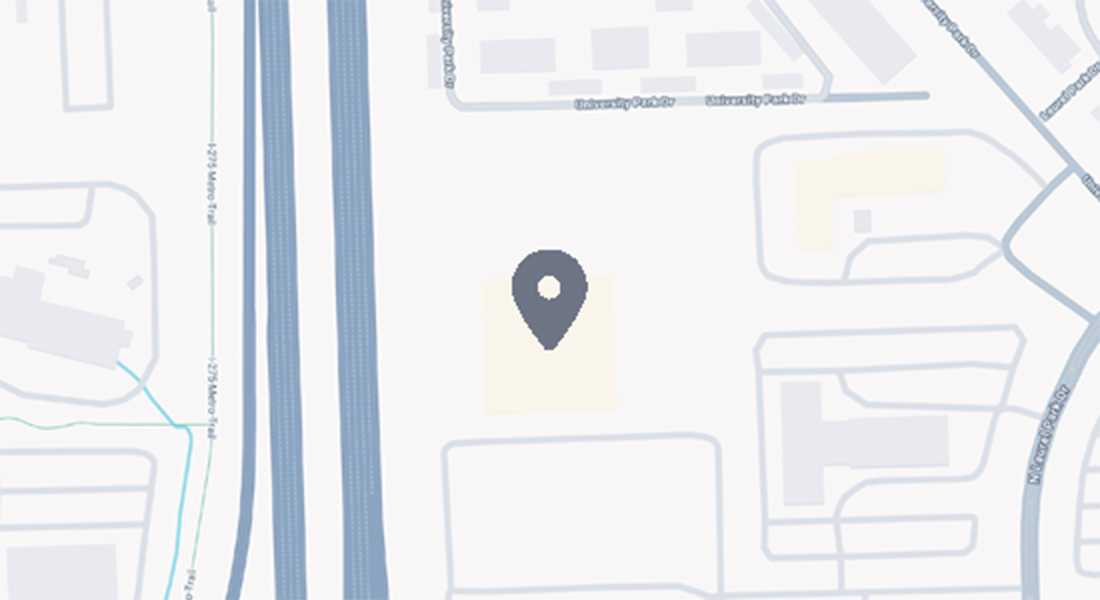
Fighting for injury victims across Michigan, proudly serving clients statewide from our office in Livonia.