Dedicated to Justice.
Devoted to You.
Winning for Your Future.
Devoted to You.
Winning for Your Future.


Parents send their children to school trusting the adults inside it. When the harm comes from one of those adults- a teacher, a coach, a counselor, a volunteer- families discover a legal landscape that surprises and angers nearly all of them: public schools in Michigan have broad governmental immunity, and the path to accountability is narrower and more technical than it should be.
There are real paths. Federal law reaches districts that ignored known danger. The individual abuser can be sued. Contractors and private schools have no governmental immunity at all. But choosing the right claims at the start matters enormously in these cases, and Michigan legislators are actively debating bills that would change the rules. Vahdat Weisman Law sexual assault attorneys represent children and families in school sexual abuse cases across Michigan. Call (734) 469-4994 for a free, confidential consultation. You pay no attorney fee unless we recover compensation.
Under Michigan’s governmental immunity statute, MCL 691.1407, public school districts are generally immune from ordinary negligence lawsuits, and the statutory exceptions were not written with abuse in mind. A straightforward state-law claim that a district negligently hired or supervised an abusive teacher usually fails against a public district. A bill that would strip that immunity in school sexual abuse cases, Senate Bill 260, passed the Michigan Senate in May 2025 and awaits action in the House; until something like it becomes law, public school cases have to be built through the routes immunity does not block.
Those routes exist. The abuser can be sued individually; Michigan’s immunity framework protects good-faith governmental action, and courts do not treat sexual abuse as good-faith anything. Individual officials who ignored known danger can face claims too, though their qualified immunity requires careful pleading, and one strategic reason to name individuals is that gross-negligence claims are often what reach an insurance policy. The district itself can be reached through federal law. And here is a door many families never hear about: the bus company, the substitute-teacher staffing agency, the private coaching organization, the after-school vendor. Contractors working in public schools are private entities with no governmental immunity, and abuse cases involving them proceed on ordinary negligence principles.
Title IX applies to schools that accept federal funds, which covers Michigan’s public districts and many private schools. Under the U.S. Supreme Court’s Gebser and Davis decisions, a school is liable for damages when an official with authority to take corrective action had actual knowledge of the abuse or harassment and responded with deliberate indifference; for harassment by other students, the conduct must also be severe, pervasive, and objectively offensive enough to deprive the student of educational access. Demanding standards, but they fit the pattern these cases keep producing: complaints to an administrator that went nowhere, a teacher warned and watched instead of removed, rumors treated as gossip instead of reports. Who at the school knew, exactly what they were told, and what they did next, usually decides the federal case, which is why our investigation reconstructs that chronology first.
Federal damages law has a complication worth naming. Since the Supreme Court’s 2022 Cummings decision, courts including the Sixth Circuit, which covers Michigan, have held that emotional distress damages are not available under Title IX, which reshaped how these cases are valued and pled. School cases now often pair Title IX with civil rights claims under 42 U.S.C. § 1983, where Sixth Circuit precedent recognizes a student’s constitutional right to bodily integrity against sexual abuse by a public school employee. The right combination depends on your facts, and it is genuinely strategy, not formula.
Parents of teenagers sometimes hear the word relationship from investigators, other parents, or the school itself. Michigan law rejects that framing. Under MCL 750.520d, sexual penetration involving a 16- or 17-year-old student is third-degree criminal sexual conduct when the other person is a teacher, substitute teacher, or administrator of the student’s school, and related provisions reach other school employees, contractors, and volunteers who use their position to gain access to the student. A separate provision protects students up to age 25 who receive special education services, a detail that matters to families no one else tells. A 17-year-old cannot legally consent to a teacher, whatever anyone at the school implies.
The same conduct supports the civil case. Michigan gives survivors of criminal sexual conduct ten years to sue, and survivors abused as minors have until at least age 28, though claims that expired before Michigan’s 2018 reforms generally were not revived, and claims against schools and their officials can carry far shorter deadlines, including formal notice requirements for governmental defendants measured in months. Early legal advice protects options that waiting quietly destroys.
Michigan requires criminal history and FBI fingerprint checks for school employees under MCL 380.1230 and bars employment for those convicted of listed offenses, including criminal sexual conduct. Teachers, administrators, counselors, and school social workers are mandated reporters under Michigan’s Child Protection Law, MCL 722.623, required to report suspected abuse to Children’s Protective Services immediately at 855-444-3911, and the law imposes civil liability for harm proximately caused by a failure to report.
Abuse in schools rarely begins with an assault. It begins with grooming: private messages, rides home, gifts, special attention, adults bending rules for one student. When we investigate, that is the record we build, from hiring files and the checks that were or were not run, to earlier complaints and how each one traveled through the administration, to discipline history, transfer patterns, and quiet resignations. School districts hold most of this on paper, in email, and in student information systems, and preserving it early is part of why the timing of your call matters.
Governmental immunity protects government. Private and religious schools do not have it, and claims against them proceed on ordinary negligence principles: negligent hiring, retention, supervision, and failure to report, all still requiring proof of what the school knew or should have known. Michigan’s Catholic diocese investigations have documented how long private institutions can carry known risks. If your child’s school is private, the immunity discussion above does not apply to it, and nothing you have read about suing public schools should keep you from calling.
The route matters. In 2024, the Michigan Supreme Court held in a case involving Alpena Public Schools that Michigan’s civil rights statute does not make a district vicariously liable for student-on-student sexual harassment, while sending the direct-liability question back for further litigation. Title IX’s peer-harassment standard, meanwhile, was built for exactly this: a school with actual knowledge of severe, pervasive, and objectively offensive harassment that responds with deliberate indifference can be liable in federal court. If your child reported another student and the school did nothing meaningful, do not assume there is no case. Bring us the timeline.
School cases punish wrong turns: the intuitive state-law claim against a public district can end at immunity before discovery begins. We choose claims that survive, against the people and entities that can actually be held liable, and we coordinate the civil case with the criminal prosecution, CPS, and the forensic interview process at children’s advocacy centers, because your child should tell this story as few times as possible. Throughout, the family sets the pace, with pseudonym filings and protective orders where the court allows.
Founding partners Kara E. Weisman and Jordan S. Vahdat have each been honored as Super Lawyers Rising Stars, and our attorneys are members of the State Bar of Michigan and active in the Michigan Association for Justice. We advance case costs, our phones are answered 24/7, and we serve families in English and Spanish from our Livonia office. Related pages: child sexual abuse and college and campus sexual abuse.
You will get a straight explanation of your family’s legal options and what we would do about them, in plain language, in confidence. Call Vahdat Weisman Law at (734) 469-4994 or contact us online for a free consultation. Available 24/7, serving all of Michigan, with Spanish-speaking staff.
Dedicated to Justice. Devoted to You. Winning for Your Future.
This information is for educational purposes only and does not constitute legal advice. Every case is unique, and prior results do not guarantee future success.




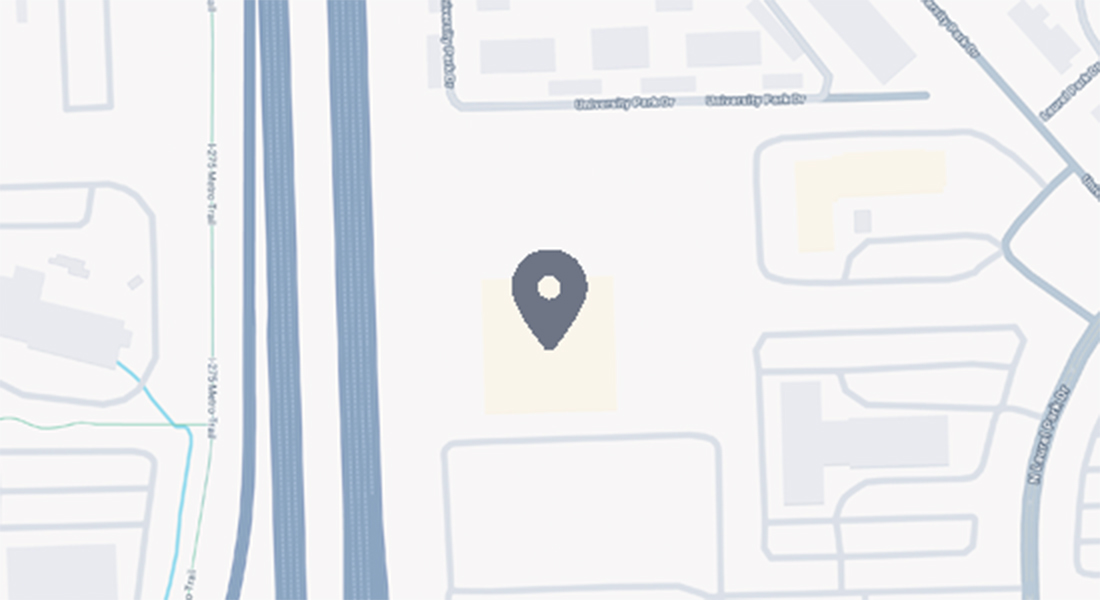
Fighting for injury victims across Michigan, proudly serving clients statewide from our office in Livonia.