Dedicated to Justice.
Devoted to You.
Winning for Your Future.
Devoted to You.
Winning for Your Future.


Since 2018, the Michigan Attorney General has been conducting a statewide investigation of child sexual abuse in the Catholic church, built on records seized from Michigan’s six dioceses and the Archdiocese of Detroit. The Diocese of Saginaw report, released in June 2026, runs roughly 250 pages and names dozens of clergy across a 75-year span. It is the sixth report, after Marquette, Gaylord, Kalamazoo, Lansing, and Grand Rapids, and the Archdiocese of Detroit report is still to come. The AG is careful to say that inclusion in a report is not a finding of guilt, and the reports are investigative documents, not judgments. What they are, for many survivors, is the first public confirmation that their experience fits a documented institutional history.
If you were abused by a priest, pastor, deacon, youth minister, or other religious leader in Michigan, in any denomination, the state’s reports are not compensation, and they do not file your civil claim. Vahdat Weisman Law sexual abuse victim attorneys represent survivors of clergy and church abuse across Michigan, with the confidentiality this decision requires. Call (734) 469-4994 for a free, private consultation, any hour. You pay no attorney fee unless we recover compensation.
The abuser is responsible for the abuse itself, and a civil claim against him, or against his estate, is available. In most clergy cases, though, the more consequential claim runs against the institution around him, because the records that decades of litigation and the AG’s investigation have surfaced describe recurring institutional conduct: complaints received and not reported to police, abusers moved from parish to parish, files kept quiet while access to children continued. Whether a particular diocese, parish, religious order, school, or camp actually knew and actually had authority over the abuser is what a civil case has to prove, and the answer lives in that entity’s own records.
Michigan law lets survivors pursue an institution for its own conduct, including retaining and supervising a man it knew or should have known was a danger, and failing to report what individuals within it were legally required to report. Religious defendants raise First Amendment doctrines, ecclesiastical abstention and the ministerial exception, and Michigan courts take those seriously: a court will not second-guess religious doctrine or purely ecclesiastical decisions. But courts can apply neutral principles of law to secular conduct; a fact pattern of concealed complaints and continued access is secular conduct, and framing the claims to stay on that ground is a core part of the lawyering. Michigan also abolished charitable immunity decades ago, so “we are a church” is not, by itself, a defense.
Michigan’s Child Protection Law has required members of the clergy, among others, to report suspected child abuse since the early 2000s, subject to a narrow privilege for confessions and similar confidential communications, and the statute makes a person who failed to report civilly liable for the harm that failure caused. Because reporting duties changed over the years, which version of the law applied to your abuser’s era is part of the date-specific analysis.
Most clergy abuse happened years or decades ago, so limitations law decides more of these cases than any other issue. Michigan currently gives survivors of criminal sexual conduct ten years to sue, and survivors abused as minors have until age 28, or three years from discovering both the injury and its connection to the abuse. No criminal charge or conviction is required.
There is a harder side to this. In 2024, the Michigan Supreme Court held in a case against the Diocese of Lansing that these extended periods do not revive claims that had already expired before the current law took effect in June 2018, and some older claims are barred under that decision. A 2026 Court of Appeals decision added an important refinement: survivors abused as minors whose claims were still alive on that June 2018 date can use the extension to age 28. Meanwhile, bills to extend the deadlines further and open a one-year revival window for expired claims passed the Michigan Senate in 2025 and are awaiting action in the House. Whether your claim is alive today, barred today, or would be revived by pending legislation is a date-specific legal analysis, and it can change. The right first step for any survivor, even one told “too late” years ago, is a current review of the actual dates, not an assumption in either direction.
Survivors of clergy abuse often carry the added weight of faith, family, and community, and many have never said the words out loud. Nothing about calling a lawyer requires you to confront anyone, appear anywhere, or tell your family. A consultation is confidential and free. Where a case is filed, we can ask the court for permission to proceed under a pseudonym and to structure filings so identifying details stay out of the public file; courts weigh those requests case by case, and we make privacy part of the strategy from the first call. A civil case also keeps you in the driver’s seat in a way a prosecution cannot: in a criminal case you are a witness, while in a civil case you are the client, and settlement decisions are yours.
There are also steps that cost nothing and preserve your options. You can report to the Attorney General’s clergy abuse investigation, which continues to accept information. Write down what you remember, including names, places, years, and who you told, because corroboration is often assembled from small records: a school photo, a parish bulletin, an assignment directory that puts him exactly where you remember him. In litigation, we pursue the institution’s records, including personnel and assignment files, prior complaints, review-board materials, and treatment-center referrals. Michigan’s Crime Victim Compensation program may help with counseling costs; it has filing deadlines and generally requires a report to law enforcement, so it needs its own timely look.
We will not tell you the process is easy. Reliving old abuse in a legal case is hard, and a lawyer’s job includes pacing the case with you and keeping as much of the weight off you as the process allows.
Compensation in clergy abuse cases addresses the therapy and psychiatric care that often spans decades, the addiction and interrupted education and lost earnings that research ties to childhood sexual abuse, and the injury itself. Michigan resolutions in institutional abuse cases have ranged widely, and no honest lawyer quotes a number before knowing your facts. What we can commit to is a case built on the institution’s own records, and straight answers at every stage about what those records show.
These cases require proving what an institution knew across decades while representing someone disclosing something they may never have said aloud. We handle both parts, in English and Spanish, and we do it discreetly, with preservation demands going to every relevant entity early, because dioceses, parishes, orders, and their insurers each hold different pieces of the record. Founding partners Kara E. Weisman and Jordan S. Vahdat have each been honored as Super Lawyers Rising Stars, and our attorneys are members of the State Bar of Michigan and active in the Michigan Association for Justice. We advance all case costs, and you owe nothing unless we recover for you. Related pages: apartment sexual abuse, child sexual abuse, and school and teacher sexual abuse.
Whether your claim can be brought now or depends on the dates, you deserve a straight answer, privately, from someone on your side. Call Vahdat Weisman Law at (734) 469-4994 or contact us online for a free, confidential consultation. Available 24/7, serving all of Michigan, with Spanish-speaking staff.
Dedicated to Justice. Devoted to You. Winning for Your Future.
This information is for educational purposes only and does not constitute legal advice. Every case is unique, and prior results do not guarantee future success.




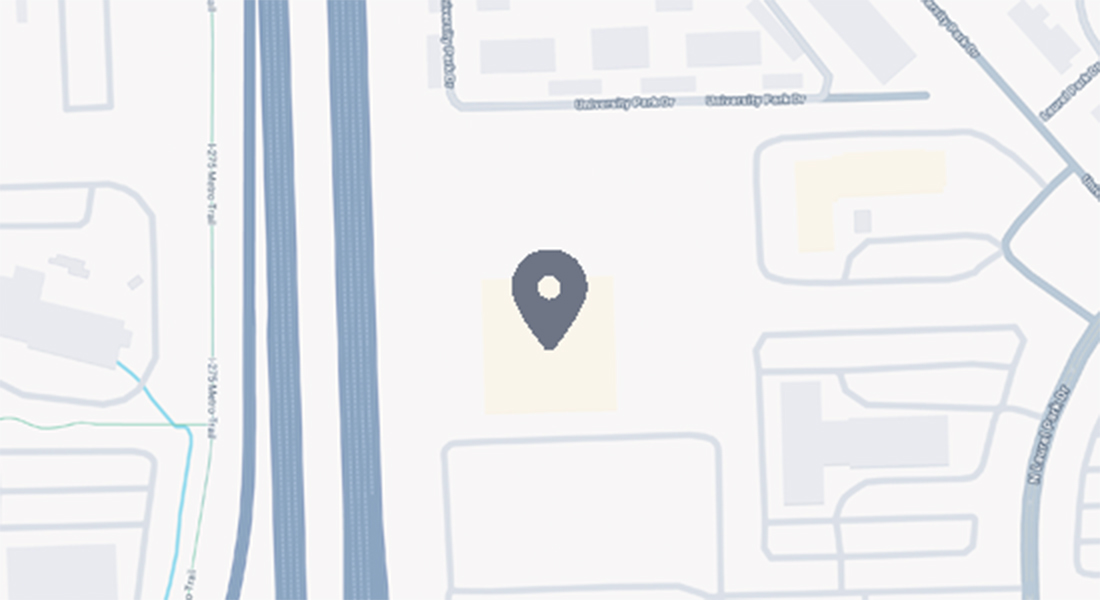
Fighting for injury victims across Michigan, proudly serving clients statewide from our office in Livonia.