Dedicated to Justice.
Devoted to You.
Winning for Your Future.
Devoted to You.
Winning for Your Future.


There is no version of this page that will be adequate to what your family is carrying. What it can offer is accurate information about how Michigan law treats the death of a child.
Some children die, and no one is at fault. Others die because a driver, a company, a property owner, a caregiver, or a hospital made a choice.
Michigan recorded 1,136 deaths of children from birth through age 18 in 2023, in the Michigan Department of Health and Human Services report on child death causes and trends, published March 2026. Among 15- to 18-year-olds, more than a quarter of those deaths were classified as accidents.
Vahdat Weisman Law wrongful death attorneys represent Michigan families after the death of a child. Call (734) 469-4994 whenever you are ready. The consultation is free and confidential. No attorney fee unless we recover for you.
You will not file this case in your own name. One person, appointed by the probate court as your child’s personal representative, brings it for the whole family (MCL 600.2922(2)). That is a filing rule, not a statement about whose loss this is.
Subsection (3) names who can be paid: a spouse, children, descendants, parents, grandparents, brothers and sisters, and certain others, and where none survive, it reaches whoever would inherit by intestate succession. Siblings and grandparents are on that list in their own right and need not prove financial dependence. Each must show a real loss: the statute pays only listed relatives who survived and suffered damages.
Within 30 days of filing, subsection (2) requires the personal representative to serve the complaint and a statutory notice on everyone who may be entitled to damages. Expect your relatives to get an envelope from a law office; deadlines run against them on arrival.
A Michigan court can award what is “fair and equitable, under all the circumstances” under subsection (6): your child’s reasonable medical, hospital, funeral and burial expenses; the pain and suffering your child consciously experienced between injury and death; the financial support your family lost; and the loss of your child’s society and companionship.
One category came off the list recently. What your child might have earned over a working life is no longer recoverable (Daher v Prime Healthcare Services-Garden City, LLC, 515 Mich 254; 29 NW3d 136 (2024)). Daher overruled Denney v Kent Co Rd Comm and Thorn v Mercy Memorial Hosp Corp to the extent they were inconsistent, and overruled Palomo v Dean Transportation, Inc. It did not touch what your family lost: loss of financial support and loss of society and companionship remain recoverable under subsection (6), as do conscious pain and suffering and funeral, burial and medical expenses.
A young child has no earnings history, so that category was rarely the largest part of the claim.
Shares are not equal, and they are not set by inheritance rules. A judge divides the money according to what each person actually lost, which the statute calls “the relative damages sustained by each” (MCL 600.2922(6)(d)). There is no automatic fifty-fifty split.
A court looks at behavior: the time and activities actually shared with your child (McTaggart v Lindsey, 202 Mich App 612 (1993), where a father who had largely shirked his parental duties was denied recovery). That is why the school pickups, the coaching and the medical appointments belong in the file from the beginning.
McTaggart also names a problem worth knowing early. The personal representative owes a duty to everyone claiming, and a parent in that role is also asking for a share, alongside the other parent, siblings, and grandparents. Where those interests diverge, a family member may want their own lawyer at the distribution hearing, which our page on the personal representative and distribution process covers.
If your child survived any period after the injury, Michigan allows compensation for the pain and suffering consciously experienced. Survival alone does not establish it. It takes no expert or proof that your child cried out (Brown v Oestman, 362 Mich 614 (1961), where proof that the injuries were inflicted and that the child was conscious afterward reached the jury).
Where that money goes differs. An award for conscious pain and suffering belongs to your child’s estate and is exposed to estate creditors. In re Thornton, 192 Mich App 709, 714 to 716 (1992). Loss of society money passes outside the estate under subsection (6)(d), which directs that those proceeds “shall not be applied to the payment of any other charges against the estate of the decedent” beyond medical, hospital, funeral and burial expenses.
Your family does not simply have three years from the date of death. The act supplies no limitations period of its own, so the deadline and its starting date follow whatever went wrong underneath: a crash, a product, a hospital. Hawkins v Regional Medical Laboratories, PC, 415 Mich 420, 436 to 437 (1982).
For ordinary negligence, MCL 600.5805(2) sets three years from the death or injury. For medical malpractice, the period is two years, governed by the accrual and outside-limit rules in MCL 600.5838a: accrual at the act or omission, a six-month discovery branch, and a six-year repose period subject to the statute’s exceptions.
MCL 600.5852 can give your family more time, but it is four rules rather than one number. Subsection (1) applies only where the person dies before the limitations period expires or within 30 days after, and gives the personal representative two years from issuance of letters. Subsection (2) runs those two years, in malpractice, from the first personal representative’s letters. Subsection (3) gives a successor one year if the first dies or is adjudged legally incapacitated in that window. Subsection (4) caps everything at three years after the underlying period ran.
One old trap is gone. For two decades, Waltz v Wyse (2004) held that the notice period under MCL 600.2912b did not toll that saving period, ending valid claims. The Michigan Supreme Court overruled Waltz in Estate of Ernest v. Brown, Docket No. 168462 (Mich., July 29, 2026), holding that MCL 600.5852 incorporates a period of limitations and is subject to tolling under MCL 600.5856.
Your child’s age does not buy time. The claim is brought by the personal representative under MCL 600.2922(2), so the minority of the child who died does not push the filing date out, and neither do minor siblings. MCL 600.5851(1) gives a person under 18 when a claim accrues one year after the disability is removed, and does not shorten the period in MCL 600.5852. Malpractice is different: subsection (1) yields to subsections (7) and (8). Vance v Henry Ford Health System, 272 Mich App 426 (2006).
Nothing can be filed until someone holds letters of authority. A child ordinarily leaves no will and no spouse, so priority falls to the heirs, usually both parents equally (MCL 700.3203). Subsection (3) requires persons of equal priority who do not renounce to concur in nominating someone or in applying themselves, so two parents either agree or go to a judge.
If a judge decides, subsection (2)(b) lets the court, on objection by an heir or devisee with a substantial interest, appoint someone acceptable to holders of more than half the probable distributable value, or any suitable person; (2)(a) is a separate creditor’s-petition exception.
Informal appointment is an application at the probate register and is faster, though notice of your intent still goes to persons of prior or equal priority who have not renounced. Formal appointment takes a petition, notice, and hearing.
If your child was under seven, that argument is not available. A child under seven is incapable of contributory negligence as a matter of law, regardless of actual conduct (Baker v Alt, 374 Mich 492 (1965)). A child seven or older is judged by the care a reasonably careful minor of the same age, capacity, discretion, knowledge, and experience would use. The exception is an activity normally undertaken by adults, such as operating a motor vehicle, where Michigan applies the adult standard. Constantino v. Wolverine Insurance Co., 407 Mich. 896 (1979).
Fault, if assigned, counts against the award. MCL 600.2959 applies to wrongful death actions: damages are reduced by the percentage of fault attributed to the decedent, and if that share is greater than the aggregate fault of everyone else, noneconomic damages are barred entirely.
Michigan has a separate statute. MCL 600.2922a(1) provides that “a person who commits a wrongful or negligent act against a pregnant individual is liable for damages if the act results in a miscarriage or stillbirth by that individual, or physical injury to or the death of the embryo or fetus.”
It contains no viability requirement, broader than many descriptions allow. In one respect it is narrower: it reaches an act, and an omission or a failure to act does not satisfy MCL 600.2922a. Johnson v. Pastoriza, 491 Mich 417 (2012).
Subsection (2) excludes an act by the pregnant individual herself, the lawful dispensation, administration, or prescription of medication, and a medical procedure performed by a licensed health professional within the scope of practice, whether with her consent, with the consent of someone legally authorized to consent for her, or without consent as necessitated by a medical emergency. So a stillbirth during consented obstetric care is not litigated here. That does not leave you without a claim: subsection (3) preserves other causes of action, which proceed as medical malpractice and wrongful death.
Each setting has its own law and evidence: car accidents, drowning and boating, defective products, swimming pool injuries, and child injuries at school, sports, and daycare.
If the claim is that medical care caused the death, the noneconomic caps in MCL 600.1483 apply. The trigger is the nature of the claim, not the setting. Treasury set the 2026 figures at $596,400 and, for the specific catastrophic categories the statute identifies, $1,065,000. Death alone does not place a case in the higher tier.
We handle the probate and litigation sides together: getting one of you appointed, serving the statutory notices, investigating, and appearing at the distribution hearing. In the first meeting, we tell you what Michigan law permits after Daher and what it does not.
From our Livonia office, we represent families throughout Michigan. Founding partners Kara E. Weisman and Jordan S. Vahdat have each been honored as Super Lawyers Rising Stars. Our attorneys are members of the State Bar of Michigan and active in the Michigan Association for Justice. We advance case costs, we work in English and Spanish, and we are available 24/7.
Kara E. Weisman is a founding partner of Vahdat Weisman Law in Livonia and handles medical malpractice, wrongful death, civil rights, and personal injury claims. She clerked at the Ingham County Probate Court and for the Federal Defender’s Office for the Eastern District of Michigan, and is admitted in all Michigan state courts and in the Eastern and Western Districts of Michigan.
If your family lost a child because of someone else’s conduct, call Vahdat Weisman Law at (734) 469-4994 or contact us online for a free, confidential consultation. Available 24/7, serving all of Michigan, with Spanish-speaking staff.
Dedicated to Justice. Devoted to You. Winning for Your Future.
Reviewed by Kara E. Weisman, Vahdat Weisman Law. Last reviewed September 2026.
This information is for educational purposes only and does not constitute legal advice. Every case is unique, and prior results do not guarantee future success.




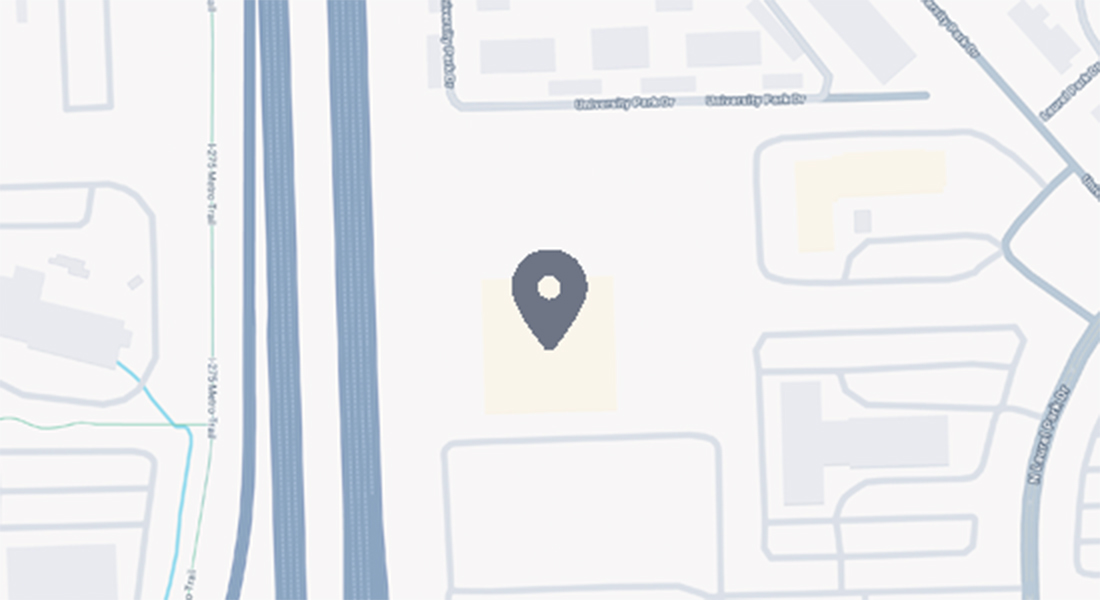
Fighting for injury victims across Michigan, proudly serving clients statewide from our office in Livonia.