Dedicated to Justice.
Devoted to You.
Winning for Your Future.
Devoted to You.
Winning for Your Future.


Rideshare asks people to get into a stranger’s car alone and trust that technology will keep them safe. The companies’ own published safety data measures how often that trust is broken: Uber’s most recent full U.S. safety report counted 2,717 reports in its five most serious categories of sexual assault over two years, and Lyft’s counted 2,651 over three. Those figures are reports made to the companies, in the companies’ own documents.
Before going further, one thing should be said clearly, because many survivors quietly wonder about it: you do not need to have experienced the most severe category of assault to have a case or to deserve a call back. Unwanted sexual touching, groping, forced kissing, and explicit sexual conduct by a driver are serious, criminal, and actionable. Vahdat Weisman Law sexual abuse victim attorneys represent rideshare passengers and drivers assaulted by passengers across Michigan. Call (734) 469-4994 for a free, confidential consultation, any hour. You pay no attorney fee unless we recover compensation.
Michigan’s rideshare law, the Limousine, Taxicab, and Transportation Network Company Act of 2016, MCL 257.2101 and following, actually writes the companies’ main defense into statute: TNC drivers are treated as independent contractors when statutory conditions are met. So these cases are rarely won by arguing the driver was an employee. They are built on the companies’ own conduct, and on agency principles courts are actively applying.
Screening is where the analysis starts. Michigan requires the companies to run criminal background checks on drivers annually, using commercial databases and the National Sex Offender Registry, and disqualifies drivers for certain recent felonies. What the statute does not require is fingerprint-based screening of the kind police departments and school districts use, and litigation nationwide has focused on what the companies’ chosen screening methods miss and what the companies knew about particular drivers. Prior rider complaints that ended with the driver still on the app are among the most important evidence these cases produce, because Michigan negligence law turns on what a company knew or should have known about the specific risk.
The national litigation is instructive but should be understood precisely. Thousands of passenger claims against Uber are consolidated in one federal proceeding, and a separate consolidated proceeding for Lyft claims was created in 2026. The first Uber bellwether trial, in early 2026, produced a substantial compensatory verdict for a survivor, and notably, the jury reached it through an agency theory after rejecting the negligence claims, a reminder that these cases are legally winnable and legally demanding at the same time. No verdict elsewhere decides a Michigan case. What the litigation has ended is the era when these claims disappeared quietly into arbitration.
Two changes opened the courthouse. In 2018, Uber and Lyft each publicly ended mandatory arbitration for individual sexual assault claims. And in 2022, Congress passed the Ending Forced Arbitration of Sexual Assault and Sexual Harassment Act, which lets survivors invalidate pre-dispute arbitration clauses for claims arising on or after March 3, 2022. The app’s terms of service are not the final word on where your case is heard, and neither is any NDA, because federal law now makes pre-dispute nondisclosure clauses unenforceable in these disputes as well.
Michigan’s rideshare law requires $1 million in liability coverage during a prearranged ride. That is auto coverage, written for crashes, and auto policies broadly exclude intentional acts, so survivors should not expect the ride policy itself to simply pay an assault claim. The recovery analysis instead runs through the companies and their corporate insurance, the driver personally, and the specific legal theories that fit your facts. We map every available source of recovery and tell you honestly which ones are likely to pay before you make any decisions.
A rideshare trip generates records most assault cases never have: who the driver was, when and where the ride started, the route, where it deviated, where it stopped, and for how long. That data corroborates a survivor’s account of the ride with unusual precision, though it documents the trip rather than what happened inside the car, which is why medical evidence, prompt disclosures to people you trust, and your own written timeline still matter.
Most ride data lives on the company’s servers, and your app shows only a fraction, so preserve what you control now. Screenshot the trip receipt, the driver’s name and photo, the route map, and any messages. Report the assault in the app, briefly and factually, which creates a timestamped record in the company’s own system; keep it short, because anything written becomes part of the record. Report to police if you can. If the assault was recent, a forensic exam within Michigan’s 120-hour window preserves evidence without committing you to anything, and its direct costs are not billed to you. Then let a lawyer send the preservation demand for the complete ride data, the driver’s screening and complaint file, and any dashcam footage, because inward-facing cameras exist in many rideshare vehicles and their recordings do not last.
Deactivating the driver, which the companies usually do quickly, protects future passengers. It does not compensate you, and it is often the moment the driver’s file stops growing, which makes preserving that file promptly matter more.
The deadlines differ by defendant, and the difference is the trap. Michigan generally allows ten years for civil claims arising from the criminal sexual conduct itself, with longer periods for survivors who were minors. Negligence claims against the companies are generally governed by Michigan’s three-year period. Treat the shorter clock as yours until a lawyer maps your dates. Compensation covers therapy and medical care, lost income, and the fear, humiliation, and lasting harm of the assault itself, including what many rideshare survivors specifically describe: losing the transportation their daily life was built on.
Hard cases deserve straight answers too. An off-app ride arranged in cash falls outside the statutory rideshare framework and changes the theory. An assault by someone impersonating a driver, or by a person driving on someone else’s account, shifts the case toward identity, account security, and other defendants. An assault by a co-passenger on a shared ride raises different questions about the driver’s response. None of these automatically ends a case; each changes how it must be built.
Rideshare cases combine a criminal act, a national corporate defendant, and fast-decaying digital evidence, and they are ultimately Michigan cases about a Michigan survivor. We handle the preservation, the police coordination, and the choice between Michigan courts and the consolidated federal litigation, and we keep the case at your pace, in confidence, with pseudonym filings where the court allows. Privacy is usually a survivor’s first question, so it gets engineered into the case from the first filing, not addressed later.
Founding partners Kara E. Weisman and Jordan S. Vahdat have each been honored as Super Lawyers Rising Stars, and our attorneys are members of the State Bar of Michigan and active in the Michigan Association for Justice. We advance case costs, our phones are answered 24/7, and we serve clients in English and Spanish from our Livonia office. Related pages: hotel sexual assault, clergy and church sexual abuse, and college and campus sexual abuse.
What happened on that ride was not part of the service, and it is not something you have to sort out alone. Call Vahdat Weisman Law at (734) 469-4994 or contact us online for a free, confidential consultation. Available 24/7, serving all of Michigan, with Spanish-speaking staff.
Dedicated to Justice. Devoted to You. Winning for Your Future.
This information is for educational purposes only and does not constitute legal advice. Every case is unique, and prior results do not guarantee future success.




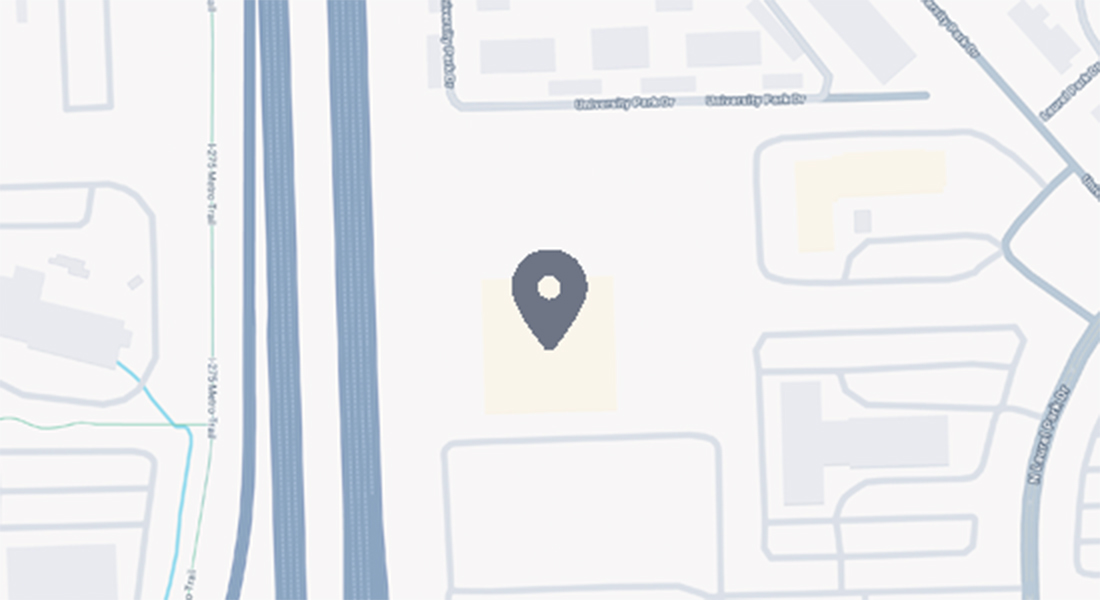
Fighting for injury victims across Michigan, proudly serving clients statewide from our office in Livonia.